Banana Ripening Room Operator
You're controlling a gas chamber that ripens 40 tons of bananas at a time using ethylene and heat. It sounds like a lab job, but you're working in a massive industrial facility where everything moves fast and precision matters. Most people have no idea this job exists, which means less competition and steady demand.
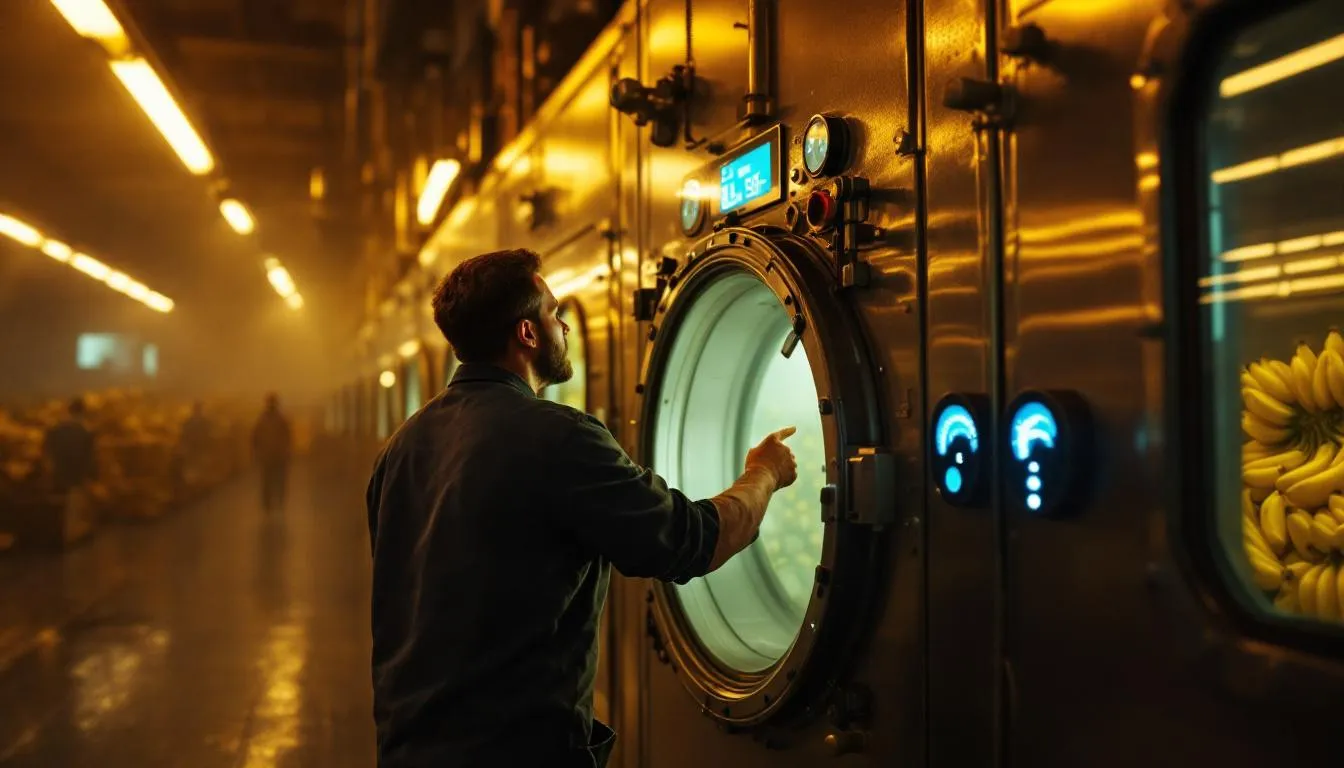
You're working in a climate-controlled ripening facility, often in a warehouse or processing plant. The environment is warm and humid, filled with the smell of ripening fruit. Your day is built around monitoring and adjusting ethylene gas levels, temperature, and humidity in massive sealed chambers. You're checking readings constantly, logging data, loading and unloading fruit pallets, and making adjustments to keep everything within spec. It's technical work, but it's hands-on. You're not sitting at a desk. The pace is steady but not frantic, though you do have deadlines. Fruit moves on a schedule, and your job is making sure it hits the right ripeness window so it ships on time and doesn't arrive at stores rotten or green.
Your shift starts with checking the chambers. You walk through, reading temperature and ethylene concentration on gauges or digital displays, comparing them to the target specs for whatever type of banana is currently ripening. If a chamber is running cold or the ethylene is drifting, you adjust the heating system or the gas injection. You're also logging everything in a spreadsheet or system, because distributors and stores need documentation proving the fruit was handled correctly. You coordinate with the forklift operators and warehouse team who are moving pallets in and out of the chambers. You tell them when a batch is ready to come out, which means it's hit the right color and firmness. You're inspecting the fruit as it moves, looking for splits, bruises, or signs that something went wrong in the chamber. If a batch isn't ripening right, you troubleshoot. Is the ethylene mixing evenly? Is there a temperature dead spot? Are the vents blocked? You also do basic maintenance. Checking hoses for leaks, cleaning sensors, replacing filters, making sure the ethylene injection system isn't clogged. Nothing complex, but you need to understand how the equipment works. If something breaks and you catch it early, you call maintenance. If you miss it, a whole chamber of fruit can be lost.
You need to be detail-oriented and comfortable with repetition. You're checking the same gauges, making the same adjustments, logging the same data, day after day. You also need to be someone who notices when something is slightly off. A gauge reading that's 2 degrees too high might not seem urgent, but catching it early saves thousands in fruit loss. You work best if you're independent and can self-manage your tasks without someone hovering, but you also need to communicate clearly when something needs help from maintenance or management. This isn't a job for someone who needs constant stimulation or variety.
Most ripening facilities hire people straight off the street with no experience and train them on the job. You need a high school diploma or GED, and that's it. Some places prefer someone with basic mechanical aptitude or warehouse experience, but it's not required. Start by applying directly to fruit distribution centers, banana importers, or produce processing plants in your area. Look for facilities that handle tropical fruit. Once hired, you'll spend your first few weeks shadowing someone who knows the job, learning how to read the gauges, understanding the ripening stages, and getting comfortable with the equipment. You're not certifications-heavy in this role, though some employers want you to get a basic forklift certification if you're also moving pallets, which usually costs $150-300 and takes a day. After 3-6 months of doing the job, you'll be running chambers solo. Pay starts as soon as you're hired, even during training. There's no long apprenticeship waiting period.
The smell never fully goes away. You're working in warm, humid rooms filled with ripening bananas all day. It gets into your clothes, your hair, your skin. After your shift, you smell like a fruit stand. Some people acclimate and stop noticing. Others hate it enough to leave the job. It's not dangerous, but it's real. The work is also very seasonal. Peak banana ripening happens in spring and summer, which means long hours and sometimes mandatory overtime. Winter is slower, and some facilities cut hours or lay people off. If you work full-time year-round, you need to either be at a large enough facility that always has work, or be prepared for income to drop during off-season. Some operators pick up side work at other facilities or shift to other jobs during the winter slowdown. Additionally, the technology in ripening rooms is gradually becoming more automated. Some newer facilities have computerized climate control systems that reduce the amount of manual monitoring. That's not happening overnight, but it's something to know if you're thinking long-term in this role.