Hop Yard Manager
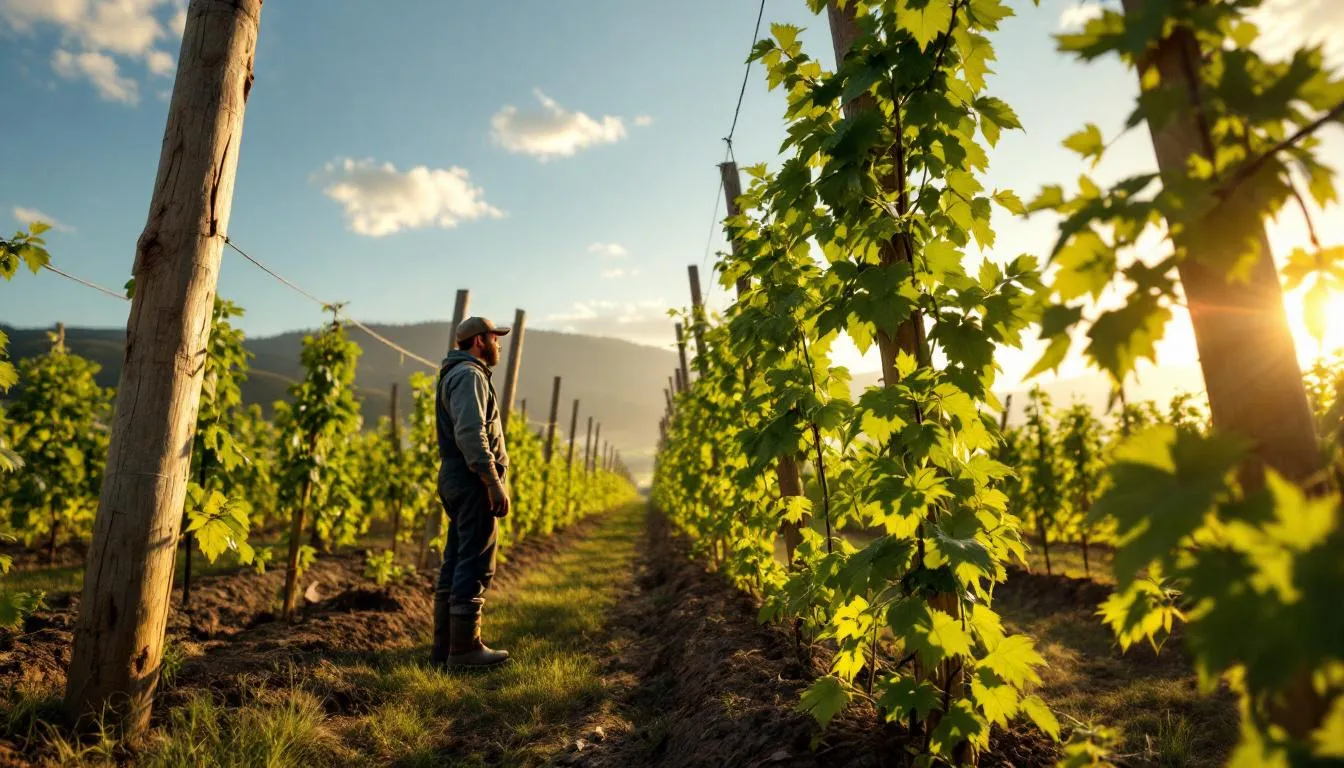
You're managing a 20-foot vertical farm where every plant directly feeds the brewing industry. The work is seasonal but intense, and you're responsible for thousands of bines that take serious skill to keep healthy. Most hop yards are small operations in the Pacific Northwest, so you're not just farming, you're part of a tight community of people who know their craft.
Hop yard management is seasonal work with a hard peak. You're outside most of the day during growing season (April through September), monitoring bines on tall trellis systems, checking for disease, managing irrigation, and dealing with pests. The work happens on specialized farms, most concentrated in Oregon, Washington, and Idaho. You work with a small crew during peak season, often just a handful of people who know what they're doing. Outside peak season, you're maintaining equipment, repairing trellises, and planning for next year. The pace shifts dramatically: quiet winter work to frenetic harvest time.
Your day starts with walking the rows, looking for signs of disease, pest damage, or stress. Hops grow fast and high, so you're constantly adjusting irrigation systems to keep soil moisture right, not too wet or dry. You scout for spider mites, aphids, and powdery mildew, the main threats to yield. During the growing season, you're training new shoots up the trellis, removing damaged growth, and making sure the bines climb properly. In July and August, you're managing the harvest crews, making sure bines are picked at peak ripeness when the lupulin (the powder inside the cone) is fully developed. You also handle post-harvest: drying, baling, and testing samples so breweries know what they're buying. Outside season, you're fixing trellis systems that take a beating, ordering seeds and inputs for next year, and keeping detailed records on what worked and what didn't. Equipment maintenance is constant, from irrigation lines to harvesters.
You need patience and attention to detail. Hops punish carelessness, and missing early signs of disease or pest pressure costs money. You're also someone who likes understanding systems, not just following orders. Successful hop managers know why they're doing something, not just what. You should be comfortable with seasonal intensity: you'll work long hours during peak season and learn to pace yourself when things slow down. People who thrive here like being outdoors and don't mind getting their hands dirty, but they're also comfortable reading data, keeping records, and talking to breweries about what they want.
Start as a harvest assistant or general farm laborer at a hop yard. No degree required. Most farms hire seasonal workers for August and September, and if you show up on time, work hard, and don't complain, you can move into year-round roles within a season or two. The real path to management is learning the crop through repetition. Spend 2-3 years in hands-on roles, watching what works and asking questions. Some farms have informal apprenticeships where they'll mentor someone who shows aptitude. The Pacific Northwest Hop Growers Association and Oregon State University offer extension programs and workshops on hop cultivation that give you credibility and technical knowledge. A few community colleges in hop country run agriculture programs with hop-specific modules. Getting certified in pesticide application (required in most states) takes a weekend and costs about $200, and it matters for employment. Once you've got 3-4 years of hands-on experience plus basic certifications, you can apply for assistant manager or manager roles. Salary starts coming at that point.
Hop farming is cyclical and vulnerable to crop failure. A disease outbreak, bad weather, or pest explosion can wipe out a significant portion of your crop and tank your income that year. You're also at the mercy of brewing trends. Hops that were hot five years ago might be worthless now as breweries chase different flavor profiles. This affects what gets planted and what you're managing. The work is also physically demanding in ways that add up. You're climbing ladders, hauling equipment, and bending over plants for months at a time. Repetitive strain injuries are real. Harvest is intense and exhausting, and not everyone bounces back from it year after year. Finally, the industry is consolidating. Small independent hop yards are getting bought up by larger operations or going under. Job security at the management level is tied to whether the farm stays independent or gets absorbed into a bigger outfit.