Ice Diver
You go down through a hole in frozen water and cannot come back up anywhere else. Ice divers work in the most hostile environment on the planet, collecting data for climate research, inspecting subsea infrastructure, or recovering bodies and equipment from beneath the ice. The pay is serious. The risk is permanent.
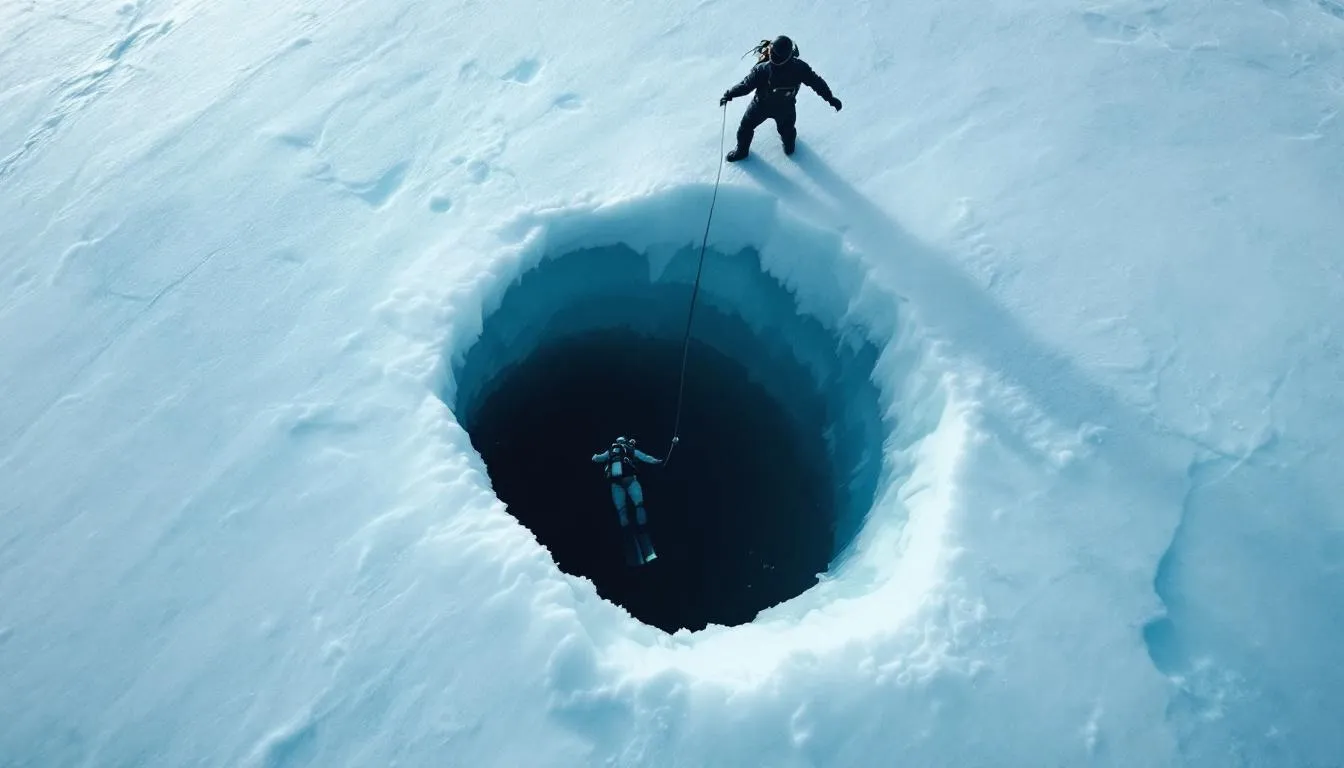
Ice diving happens on frozen lakes, rivers, and arctic seas. You descend through a hole cut in ice that can be 3 to 10 feet thick, tethered to a line that your tender controls from topside. The water below is black, often below 32 degrees, and visibility ranges from a few feet to nothing. You cannot surface anywhere except through that entry hole. The work includes scientific sample collection, structural inspection of pipes or cables, or recovery operations. Your bottom time is measured in minutes, not hours. Teams are small and highly coordinated. Every dive is planned in detail beforehand.
Before any dive, you and your tender review the plan multiple times. You check your gear, your air supply, your decompression schedule, and your emergency procedures. You rehearse what happens if the line tangles or if visibility drops to zero. Once you enter the water, you work on a precise tether, moving slowly and deliberately. You might collect ice core samples, measure water temperature and salinity at specific depths, inspect the underside of pilings or subsea cables, or locate and recover equipment or bodies. You stay acutely aware of your position relative to the entry hole at all times. You manage your air consumption carefully because every cubic foot matters. Decompression stops happen on the way up, hanging beneath the ice on your line while your body offgasses. Once you surface through that hole, your team helps you out of the water and immediately begins warming you up.
You need absolute discipline and the ability to stay calm when visibility is zero and everything is dark. You follow procedures exactly because improvisation under ice is how people die. You pay attention to detail obsessively and you do not skip steps or cut corners when tired. You work well in small teams where communication happens through touch and line signals because you cannot radio topside. You are comfortable with isolation and extended time away from home during peak dive seasons.
Start as a recreational or commercial diver first. You need to be certified as a commercial diver through programs like those offered by the Commercial Diving Center or the Association of Diving Contractors International (ADCI). From there, seek out ice diving specialty certification. The International Association of Underwater Contractors (IAUC) and some military or polar research programs offer ice diving schools. Most ice diving work comes from scientific institutions, environmental agencies, or military contracts. Government research facilities like NOAA and university arctic research programs hire ice divers regularly. The path typically takes 2-3 years of commercial diving experience before you are ready for ice. Once certified, entry-level ice diving work pays immediately.
Ice diving is seasonal work. Most contracts run winter through early spring, which means you are hunting for other diving work or other income the rest of the year. The cold is relentless. Even in a quality dry suit, diving in 28-degree water for 20 minutes drains your core temperature fast. Rewarming takes time and you feel it in your joints for days. The psychological pressure is constant. You cannot helicopter-escape if something goes wrong. You cannot surface to get oriented. If the line tangles or snaps, the entry hole becomes unreachable and you die. Every ice diver knows divers who did not come back. The military and research programs that hire ice divers sometimes require extended deployments to remote locations with minimal communication with home. Equipment costs are high: specialized dry suits, redundant air systems, and tether gear run into five figures. Insurance in this field is expensive and not every dive operation carries it.