Perfumer (Nose)
You train your nose to recognize and blend hundreds of distinct molecules until you can build a fragrance from memory. Master perfumers can identify a scent by smelling it once. That skill takes years to develop, but it pays like it's worth it.
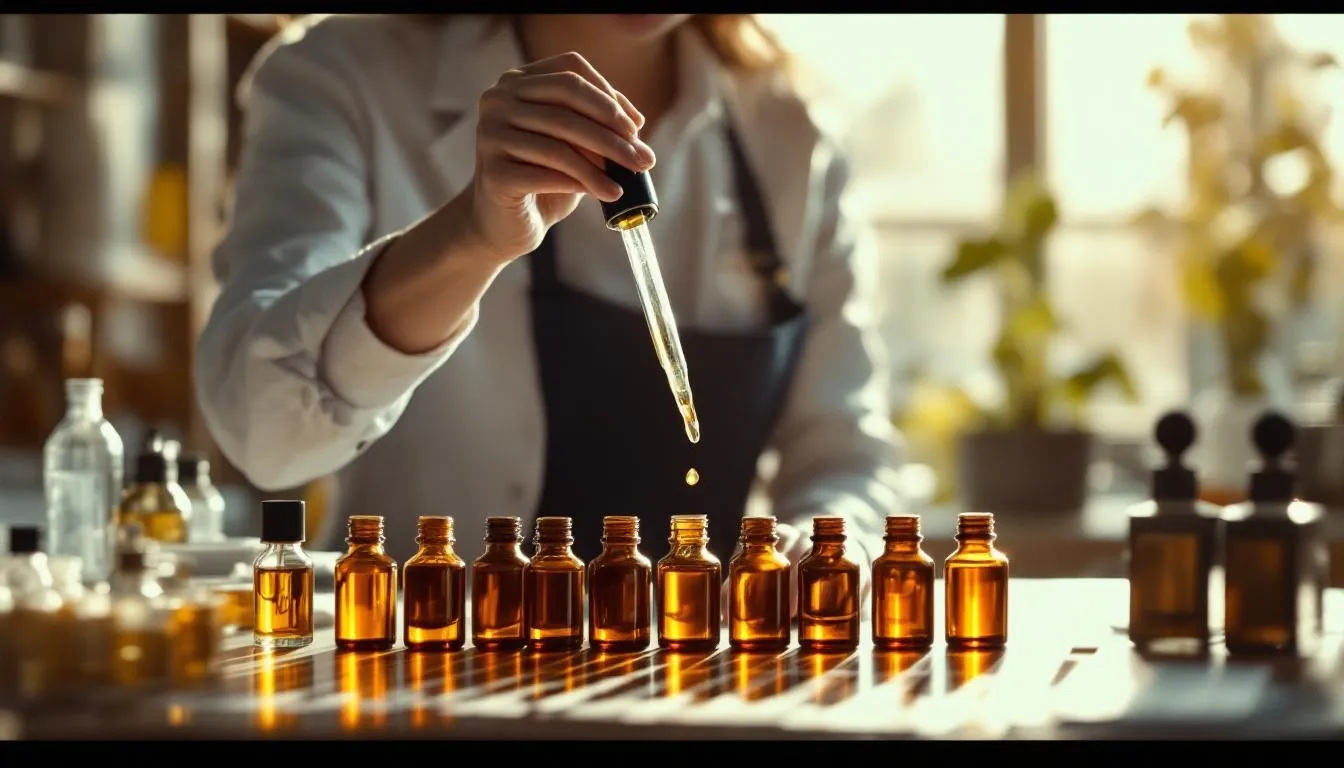
You spend most of your time in a lab or studio with rows of scent bottles and a notebook. Your workspace is climate-controlled and organized because humidity and temperature wreck your ability to smell accurately. You work with perfume houses, cosmetics companies, or fragrance suppliers, collaborating with marketing teams who need a scent that fits a brand's image and budget. The work is methodical but creative—you're building invisible products that people will buy or reject based entirely on how they smell. Some days are testing and tweaking existing formulas. Other days you're pitching new compositions to teams who may or may not understand what you're doing.
You start by understanding a brief: a brand wants something floral and fresh for a summer line, or woody and bold for a men's cologne, or a specific price point that limits your material costs. You pull bottles from your library of scent materials—some cost pennies, others hundreds per milliliter—and begin blending small test batches. You smell each stage, take notes, adjust ratios, smell again. You're training yourself to remember how molecules interact, how certain combinations last on skin, how top notes fade and base notes hold the scent for hours. You'll test formulas on strips of paper, on skin, sometimes in submission kits sent to clients. You attend meetings where you explain why a formula works or doesn't, defend your choices against feedback, and sometimes start over. You document everything. You may visit factories to see how your formula scales up from a small batch to thousands of bottles. You network with other perfumers, attend industry events, and stay current on what materials are available—some fade out of production, new synthetics are created, regulations change what you can use.
You need a genuinely good sense of smell and the discipline to train it like an athlete trains muscles. You're detail-oriented enough to keep precise notes and patient enough to spend hours on variations that might differ by 2%. You're someone who enjoys the creative problem-solving of chemistry—how to hit a brief with materials that cost X amount, perform for Y hours, and stand out against Z competitors. You're self-directed and willing to spend years building expertise before you see real money. Ego can hurt you here because your work gets critiqued constantly and sometimes rejected for reasons outside your control.
There is no standard path. Most perfumers start by studying chemistry, but some come from art or music backgrounds because fragrance composition is part science, part creativity. The most common entry is through a fragrance school: ISIPCA in France (gold standard but expensive and competitive), Quest International University, or programs in the US like the American University of Fragrance or local community colleges with perfumery certificates. These programs take 1-3 years. Some perfumers start as lab technicians at fragrance suppliers or cosmetics companies and train on the job, moving into composition over years. You need a strong sense of smell (trainable, but some people are naturally better at it) and patience to build the skill. Many perfumers work for fragrance supply companies like IFF, Givaudan, or Firmenich before striking out as independent consultants. The industry is small and reputation-driven, so networking and finding a mentor matters as much as formal training.
Your sense of smell gets fatigued. Spend three hours smelling fragrances and your nose stops registering properly—you have to step away, breathe fresh air, and reset. This limits how much work you can do in a day, which frustrates people new to the field. You're also at the mercy of trends and brand budgets. You can create something beautiful that never sells because the market wanted something different. Some of your formulas will be knocked off or stolen—it happens in the industry and there's not much legal recourse. The field is small enough that politics matter: who you know, whose friends with whom, whether you're inside a major company or freelancing. Independent perfumers often struggle to find steady work. Factory jobs are more stable but more routine. And honestly, most people can't smell the difference between a $200 bottle of fragrance and a $50 one, which can be demoralizing when you've spent months perfecting a formula.