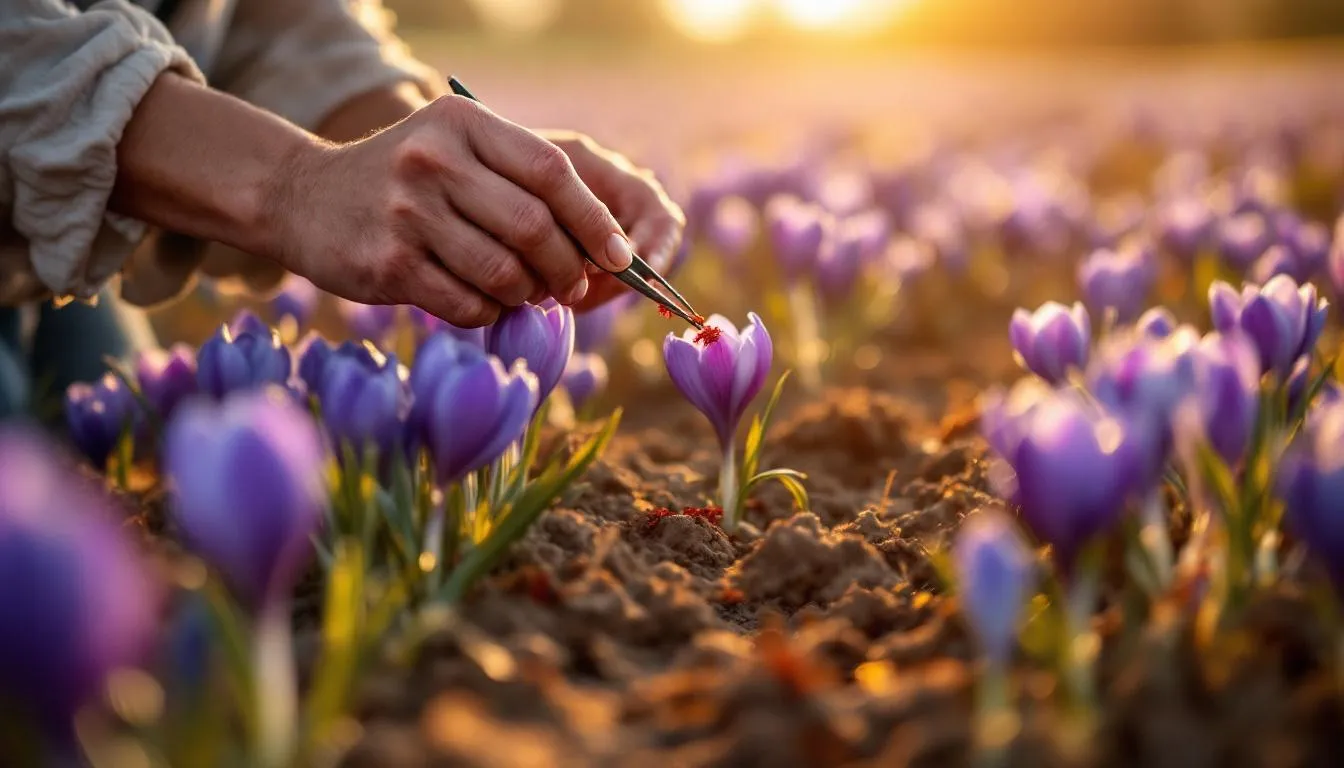
Saffron Harvester
You're picking threads worth more than gold by weight. Saffron harvesting is a global skill shortage, and the work window is tight—but the pay during harvest season can be serious. This is seasonal, physically demanding, and requires patience most people don't have.
Saffron harvesting happens in a compressed window, usually 4-8 weeks in autumn depending on location and weather. You're working in fields or greenhouses, bent over for hours at a time, using small tweezers or your fingers to extract three tiny red threads from each crocus flower. The work is repetitive, requires total focus, and there's no room for mistakes—damaged threads mean lost money. You work alongside other harvesters, often in teams managed by a supervisor who tracks your output and quality. The pace is relentless during peak harvest. Once the season ends, the work stops until next year. The environment varies by region. Middle Eastern growers (Iran, Afghanistan, Kashmir) work outdoors in fields. Some operations use greenhouses for climate control. The work is done standing or crouching for 8-12 hours at a stretch. Weather matters—rain or early frost can shorten the season or reduce yield. You're paid based on how much you harvest and how clean your threads are.
Your day starts before dawn, usually around 4-5 AM, because the flowers open in the morning and must be harvested early. You walk through rows of crocus flowers with a small container, tweezers or specialized harvest tools, and a small brush. For each flower, you gently open the petals, locate the three red stigma threads in the center, and extract them without tearing. The threads are placed directly into a collection container and later dried. This continues for 10-12 hours with short breaks. Your hands work the same precise motion thousands of times a day. As the day heats up, the flowers wilt and become harder to harvest, so speed matters most in the early hours. You're also watching for flowers ready to open the next day and noting any that are damaged or diseased. Once you finish your assigned section, your threads are weighed and inspected for quality. Threads that are broken, discolored, or too short are rejected and don't count toward your pay. At the end of the season, your total harvest is calculated and you're paid in a lump sum or regular installments depending on your arrangement.
You need patience and the ability to do the same precise motion for hours without losing focus or speed. Harvesters who succeed have steady hands, good eyesight, and the physical tolerance to work bent or crouched for 10+ hours a day. You also need to be detail-oriented enough to extract threads cleanly without damaging them, because rejects don't pay. People who hate monotony or need constant variety should skip this. The best harvesters are methodical, not flashy, and treat the work like a craft rather than a race.
Saffron harvesting requires no formal certification or degree. Most harvesters learn on the job in their first season. If you're in a region where saffron is grown (Iran, Afghanistan, Kashmir, Spain, Italy, parts of the US like Pennsylvania), you can approach farms directly during pre-harvest season (August-September) and ask about work. Online job boards and local agricultural agencies sometimes post harvest positions. Some farms recruit through word-of-mouth, so connecting with other harvesters is useful. A few agricultural programs in saffron-producing regions offer seasonal training workshops, but these are optional and not required for employment. You need to be physically able to work outdoors in repetitive positions for long hours. Most farms expect you to commit for the full harvest season—jumping in and out isn't practical for them. Once you're hired, the farm provides basic tools and shows you the technique. Your first season will be slower than your second or third as your fingers get faster and your eye improves. The key is proving you can maintain quality while increasing speed. Experienced harvesters earn significantly more because they're faster and produce fewer rejects.
This work destroys your hands and back. After a full harvest season, your hands will be cut, stained bright red, and sore for weeks. Your lower back and knees take a beating from standing or crouching for 80+ hour weeks. Some harvesters develop repetitive stress injuries that can linger into the off-season. The pay window is narrow and non-negotiable. If frost hits early, the season ends abruptly and you lose weeks of potential income. If demand drops, prices per thread can fall significantly, cutting your hourly rate even if you're harvesting the same volume. In some regions, there's seasonal glut of harvesters competing for the same jobs, which can drive rates down and make securing steady work harder. The work is also heavily weather-dependent, so you can't control when you work or how much you earn. Additionally, in some countries, saffron harvesting relies on migrant or contract labor with uneven protections, so wages and working conditions vary wildly. Do your research on the specific farm and region before committing.