Sake Brewer (Toji — Master)
A toji doesn't follow a recipe. You read fermentation by smell, taste, and touch, adjusting temperature and humidity in real time based on how the koji mold and yeast are moving. In Japan, the best toji are celebrities in their region, respected like chefs at three-star restaurants. The skill takes years to build but once you have it, you own something no one can copy.
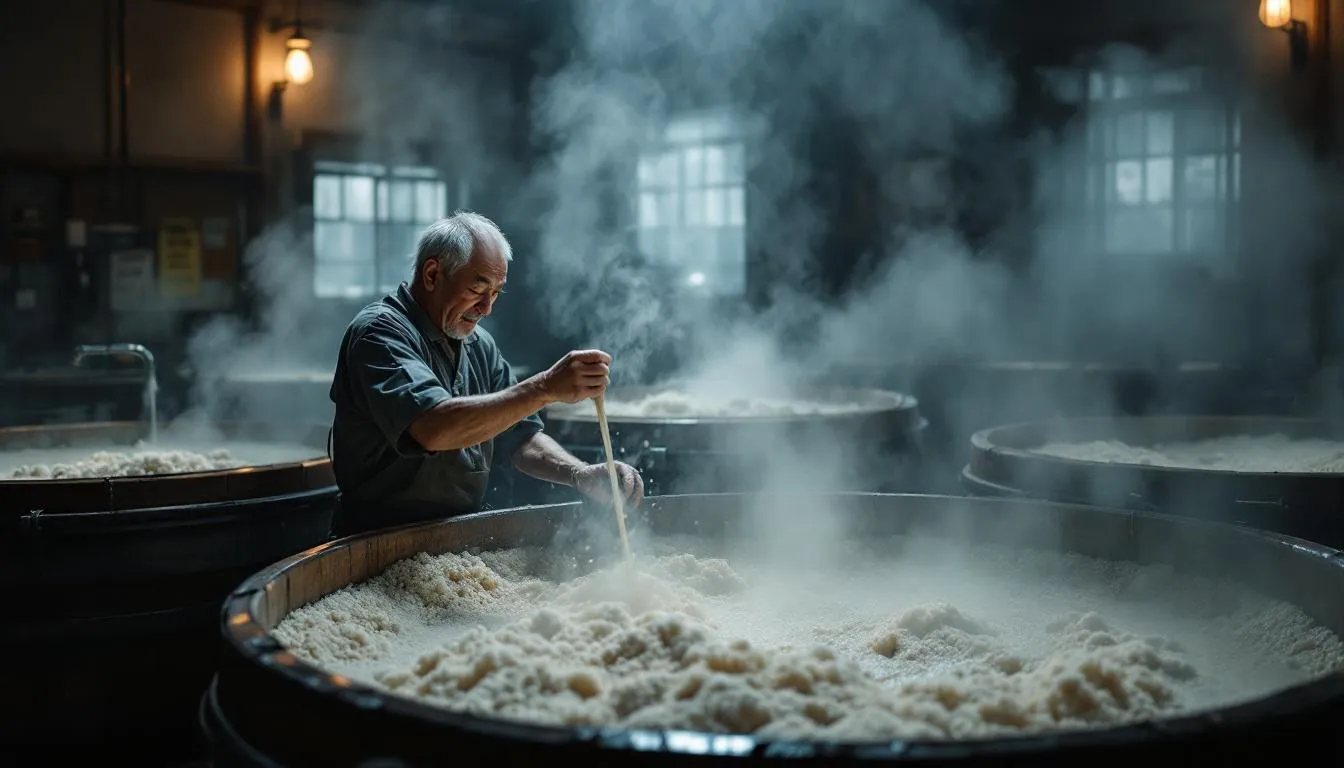
You work inside a brewery year-round, though the main production season runs autumn through spring. The environment is cold and humid by design, often around 45-55 degrees Fahrenheit. You spend your days in fermentation rooms monitoring massive wooden or steel vats, checking the smell and color of the mash, tasting samples, and making adjustments to temperature and humidity that can shift by the hour. The work is methodical but not routine. Sake fermentation is alive. A batch can surprise you, and you need to catch it early. You work with a small team of apprentices and junior brewers who follow your lead. In traditional breweries, the toji position carries real authority. You are responsible for the final product and the reputation of the brewery. The work is physical in short bursts, standing for hours at a time, moving between fermentation rooms, hauling samples, and occasionally moving heavy equipment. Most traditional breweries operate on a harvest-to-market cycle, which means intensity builds in fall and winter, then tapers in summer.
Your mornings start early, usually by 5 or 6 AM. You walk through the fermentation rooms first, checking temperature readings, humidity levels, and the koji mold growth on the steaming rice. You sample the moromi, the fermenting mash. You're tasting for sweet notes, acidity, alcohol progression, and any off-flavors that signal a problem. You might adjust the temperature up or down by a few degrees. You might add yeast or koji if fermentation is lagging. You communicate with your team about what they need to do during the day. Mid-morning, you review yesterday's notes and plan adjustments for the next batch. You taste finished sake and decide if it's ready to bottle. You might consult with the brewery owner or the head of quality about a batch that's unusual. You train apprentices on technique, which means showing them how to smell koji at different stages and how to judge the viscosity of the mash by hand. You show them why timing matters. Afternoon work varies. Some days you're monitoring fermentation closely because a batch is at a critical stage. Other days you're planning next season's production, sourcing rice varieties, or traveling to other breweries to learn new techniques. If a batch is in trouble, you might stay late or come back at night to adjust conditions. You keep meticulous notes because fermentation is a conversation with time, and your notes are how you remember what worked and what didn't.
You need to be someone who loves working with your hands and reading subtle signals in a physical environment. Patience is essential because mastery takes years and requires accepting low pay early. You have to be comfortable with repetition, meticulous note-taking, and feedback delivered through failure batches. A toji thrives on responsibility and the pride of making something people respect. You should also be comfortable with cold, humid environments and physically demanding work, and you need to genuinely enjoy mentoring younger brewers. This job rewards people who are curious about fermentation science but skilled at making intuitive adjustments based on sensory judgment.
There is no toji certification in the Western sense. You become a toji through apprenticeship in Japan, typically a 5 to 10 year commitment to a single brewery. The path starts as an entry-level worker in a brewery, learning to handle rice, manage koji mold, and assist senior brewers. You start by doing basic fermentation room work and gradually move into sensory training. After several years, if you show aptitude and commitment, you move into a junior brewer role where you take more responsibility for specific batches under supervision. The critical skill is built through repetition and mentorship. You need to taste hundreds of batches, smell koji at every stage of growth, and adjust fermentation conditions thousands of times before your instincts become reliable. Most Japanese breweries recruit apprentices directly and expect them to stay 5 to 10 years before considering them ready for the toji title. A few breweries outside Japan, particularly in the US and Europe, are now training toji-level brewers, but the standard remains Japanese apprenticeship. If you're serious, you need to move to Japan, commit to a brewery, and accept that mastery takes a decade of low pay and long hours before you earn toji status and the compensation that comes with it. Some Western craft breweries are now seeking people with strong fermentation fundamentals and offering accelerated training programs, but these typically produce skilled brewers rather than full toji-level masters.
The apprenticeship phase is genuinely hard. You work long hours for low pay in cold, damp conditions. In Japan, traditional breweries often house apprentices on-site, which means your work and personal life blur together. You're on call during critical fermentation stages. Your first 3-5 years, you will make mistakes, and those mistakes can cost the brewery money. You absorb criticism and keep going. The role is also deeply tied to Japanese culture and tradition, which means if you're learning outside Japan, you're swimming upstream and will always be slightly outside the core community. Another reality: the sake industry is contracting in Japan. Consumption is declining, breweries are consolidating, and some regions are losing breweries entirely. Your job security depends on the brewery staying viable, and small breweries can struggle. Additionally, the work is seasonal with intense peaks and quieter periods. During fermentation season, you might work 12-hour days for months. In summer, you might have reduced hours and pay. If you're running your own brewery or have equity, the financial upside is there, but as an employee toji, you're dependent on the brewery's success and management's willingness to pay you appropriately.