Aerial Banner Tow Pilot
You're the pilot pulling advertising banners at 500 feet over packed beaches and football stadiums. It's visible, it's skilled, and most people will never do it. The work is seasonal and geographically scattered, but the flying itself demands absolute precision.
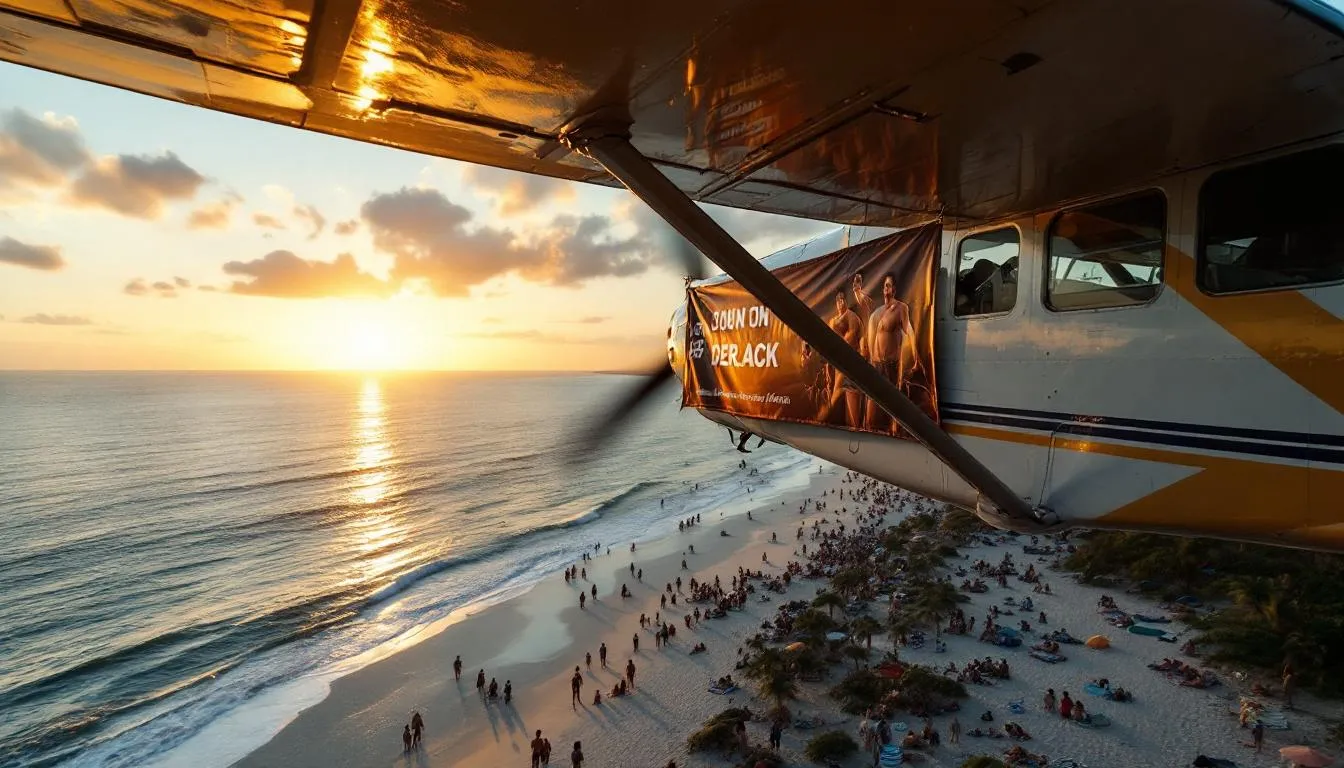
You fly a small aircraft, usually a Cessna or Piper, towing a banner rig designed to snag a banner off the ground and carry it over a specific route at low altitude. The work happens over beaches, sporting events, music festivals, and major highways during peak seasons. Spring through fall is busy; winter is slow or nonexistent depending on location. Your workday is short and intense: multiple 15-30 minute flights, each one requiring full concentration. You're flying in restricted or controlled airspace over populated areas, so every movement matters.
Before flight, you inspect the aircraft, the tow rig, and the banner attachment system. You coordinate with ground crews who'll have the banner ready at a designated point. You taxi into position, gain altitude, and execute a precise approach to snag the banner hook without destroying it or the plane. Once hooked, you maintain exact altitude and airspeed while flying the predetermined route at 500-1000 feet, watching for power lines, buildings, and other obstacles. The banner creates drag and turbulence, especially in crosswinds. You're communicating constantly with ground crew and air traffic control. After the drop, you return to base, debrief the client or coordinator, and prep for the next flight. Some days you fly five circuits. Other days weather cancels everything.
You need absolute precision under pressure and comfort flying low altitude where mistakes show up immediately. You're detail-oriented, unfazed by repetition, and genuinely interested in the technical mechanics of flying. You're entrepreneurial enough to market yourself to event coordinators and build relationships that extend your season. You can handle boredom on some days and intense focus on others without losing edge.
You need a commercial pilot license with at least a single-engine rating. That's 250 hours of flight time minimum, ground school, and checkrides, which typically takes 12-18 months and costs $40,000-60,000. Some flight schools offer accelerated programs. Once licensed, you'll need to find a banner tow company that will hire you and provide type-specific training on their aircraft and rig system. Many operators want you to have at least 500 hours total time before you start banner towing, so you may need to build hours in other flying first (instructing, bush flying, or charter work). Banner tow companies are concentrated in Florida, California, Arizona, and other warm-weather regions with high seasonal demand. Start by contacting companies directly with your commercial license and logbook. Training on the actual banner tow rig takes 1-2 weeks.
The income is wildly seasonal. You might make $12,000-18,000 in summer and zero in winter unless you're in a year-round warm market or you've built enough of a reputation to drum up winter work. Weather cancels days constantly, and there's no backup pay. The flying itself is monotonous: same route, same altitude, same aircraft, hour after hour. Low-altitude flying over populated areas carries real consequences if something goes wrong. You're also competing with pilots who own their own aircraft and can undercut your rates. The job has a narrow skill set, so if you get hurt or burnt out on flying, you don't have an obvious exit into other aviation work without starting from scratch.