Rope Access Technician
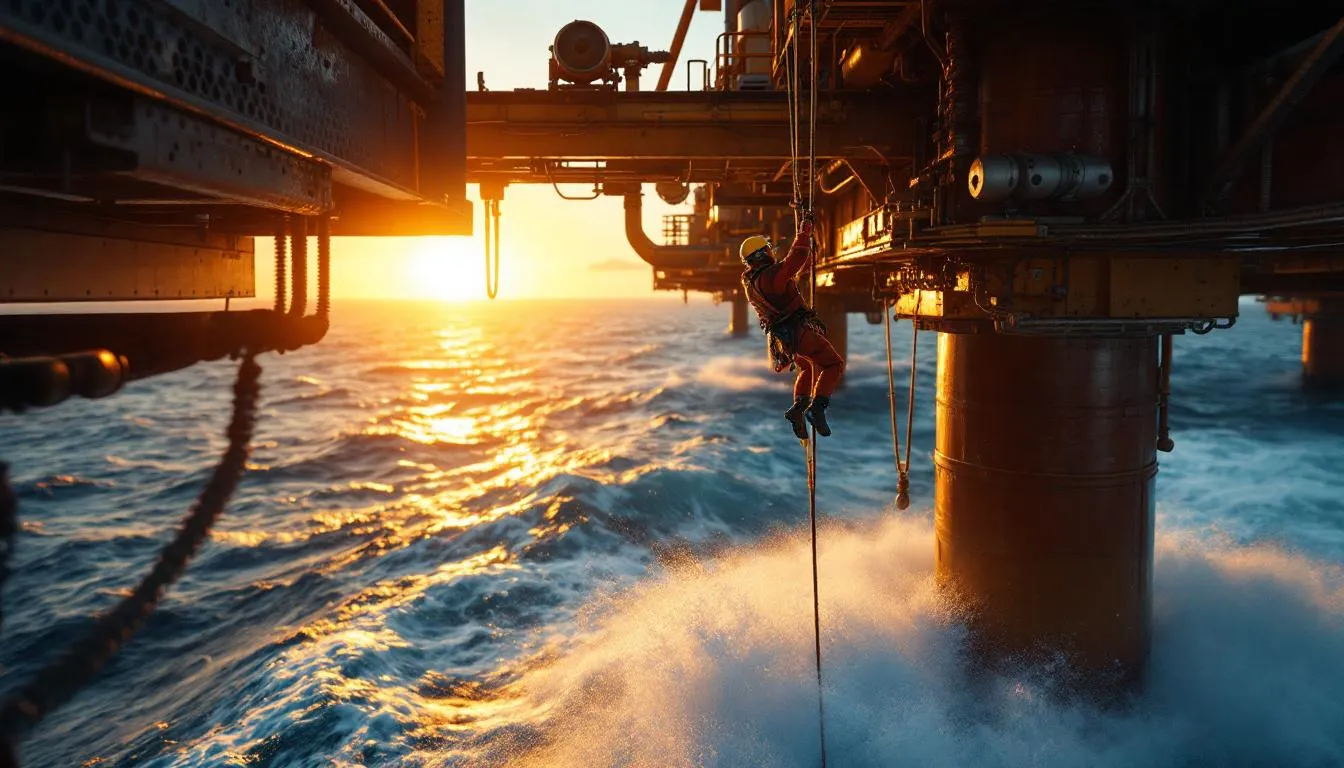
You're suspended 400 feet above the ocean working on an oil rig, or rappelling down the side of a skyscraper to inspect concrete. Rope access technicians go places where scaffolding won't work and helicopters cost too much. The work is specialized, the pay is solid, and you're one of maybe a few hundred people in your region who can do it.
You work on structures that can't be scaffolded: offshore platforms, wind turbines, suspension bridges, cliff faces, the sides of high-rises. Every job is different. You might spend three weeks on an oil rig in the North Sea doing inspection and maintenance, then work a few days rappelling down a dam in Colorado, then get called for a building cleaning contract in the city. Your crew is small, usually 2-4 people, and everyone relies on each other completely. The work is methodical but high-consequence. One mistake doesn't just cost time, it costs lives. That reality shapes everything you do.
You start by assessing the structure and planning anchor points. You set up ropes, harnesses, and rigging that will support your weight while you work, and you inspect everything twice because mistakes don't happen here. Once you're rigged, you might be inspecting welds on a platform leg, cleaning and sealing concrete on a bridge underside, installing or removing bolts, doing underwater welding if you're certified, or taking samples and photos for structural analysis. You move along the rope, ascending and descending using mechanical devices and your own technique. You're often working in harsh conditions: spray from waves, extreme wind, intense cold, or heat depending on where you are. You communicate constantly with your safety watch on the ground. Downtime between jobs means maintaining equipment, staying in shape, and keeping certifications current. You're on call for emergency work, which can mean flying to a job site on short notice.
You need to be genuinely comfortable at height, not just tolerant of it. You're methodical and detail-focused because every step of rigging can mean death. You work well alone but communicate clearly with your team. Physical fitness matters: you need upper body and core strength, but technique and problem-solving matter more than raw strength. The best rope techs are people who are calm under pressure, respect equipment and procedures obsessively, and don't take shortcuts even when a client is pushing for speed.
You need to start with a foundational rope access course, usually offered through climbing schools or specialized training companies. The entry-level IRATA Level 1 certification takes about 5-7 days and costs $1,500-3,000. You don't need a climbing background, but you need to be comfortable with heights and physically capable. After Level 1, you work under supervision on actual jobs for a year or more. Level 2 comes next, another 5-7 days, and requires documented work hours. Level 3 is specialist level and takes years to reach. You can pursue specialized certifications in rope rescue, underwater welding, or advanced rigging to increase your marketability. Many rope access techs start by getting hired by companies that contract for platform or bridge work and provide on-the-job training before certification. The industry runs through a few major contractors and many smaller outfits. Once you're Level 1 certified, you can start working immediately. Expect your first 1-2 years to involve lower-paid apprenticeship-style work before you reach full earning potential.
The work is dangerous. Falls can happen. Equipment failure is rare but possible. You're trusting your life to ropes, anchors, and your own decisions every single day. Most techs go their whole career without a serious incident, but you're always one mistake or one equipment failure away from catastrophe. That mental load is real. You also deal with significant downtime between contracts, which can feel great until you realize you're not getting paid. Some months you work 60+ hours a week. Other months you get one or two jobs. Physically, the work takes a toll. Cumulative strain on shoulders, elbows, and hands is common. You're also isolated for weeks at a time on offshore work, in tight quarters with the same people. That's not romantic. Some guys can't handle it. Weather delays are constant. You get called to a job, then weather shuts it down for days, and you're stuck on a platform or in a work camp with nothing to do.