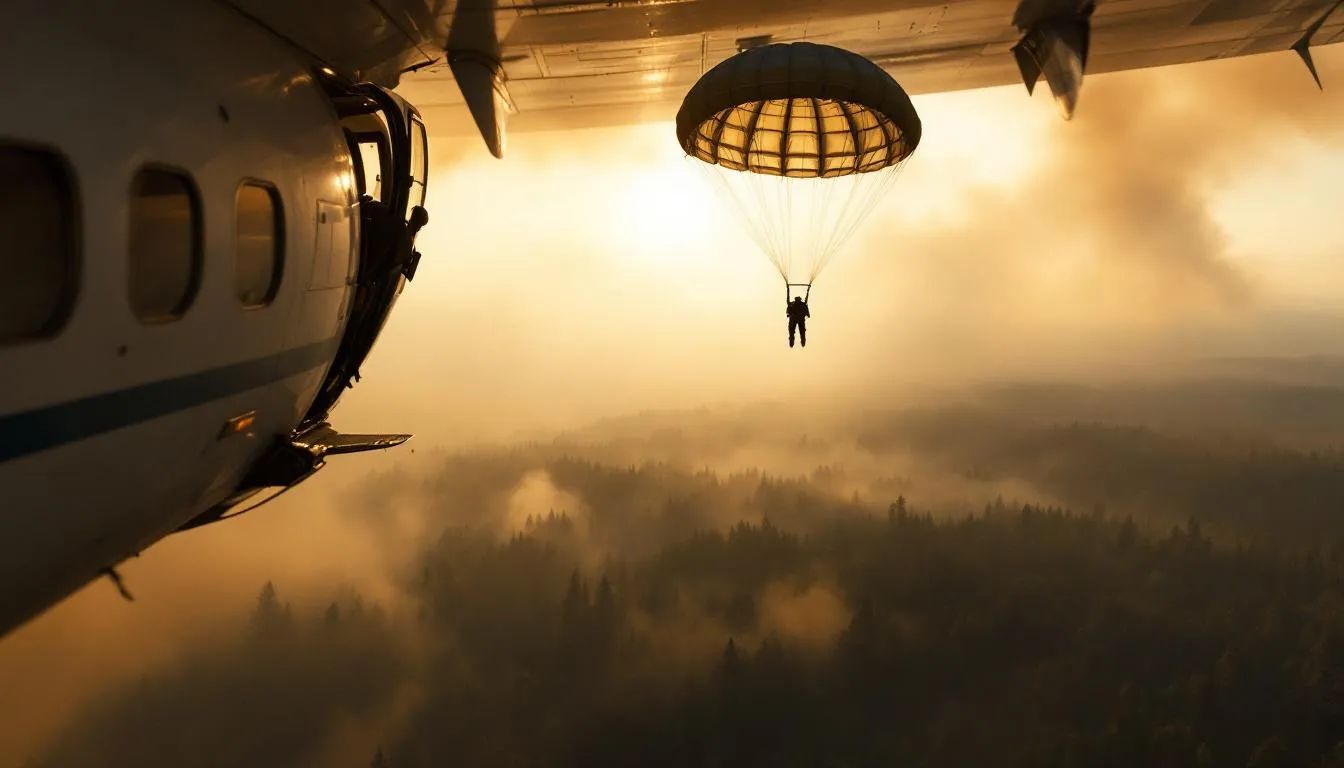
Smoke Jumper
You parachute into burning wilderness that's completely cut off from the road. You land in smoke so thick you can't see your hand in front of your face, then spend days cutting firebreaks, digging trenches, and sleeping on dirt while the fire rages around you. It's the closest thing to combat that exists in civilian work.
Smoke jumping is not a job you show up for at 9 AM. You live in a bunkhouse during fire season (roughly May through September) waiting for the call. When it comes, you gear up, load onto a plane, and jump into terrain so remote that the only way out is on foot or by being picked up later. The actual firefighting is brutal: you are cutting through burned timber, digging firebreaks by hand, moving heavy equipment through ash and smoke, and dealing with heat, exhaustion, and constant uncertainty about how the fire will move. You work in crews of 8 to 20 people, many of them returning vets or serious athletes who treat this like a calling. The pace is relentless when you are on a fire, then suddenly you are back in the bunkhouse waiting, maintaining gear, training, and staying in peak physical condition for the next jump. The environment is unforgiving. You are working at elevation, in extreme heat, surrounded by smoke that can choke you out. Visibility disappears. Landmarks become hard to read. Your gear weighs 100+ pounds with the parachute, and you have to carry tools, water, and supplies on your back through terrain that might be steep, rocky, or overgrown. There is no cell service, no backup nearby, and no quick exit if things go wrong.
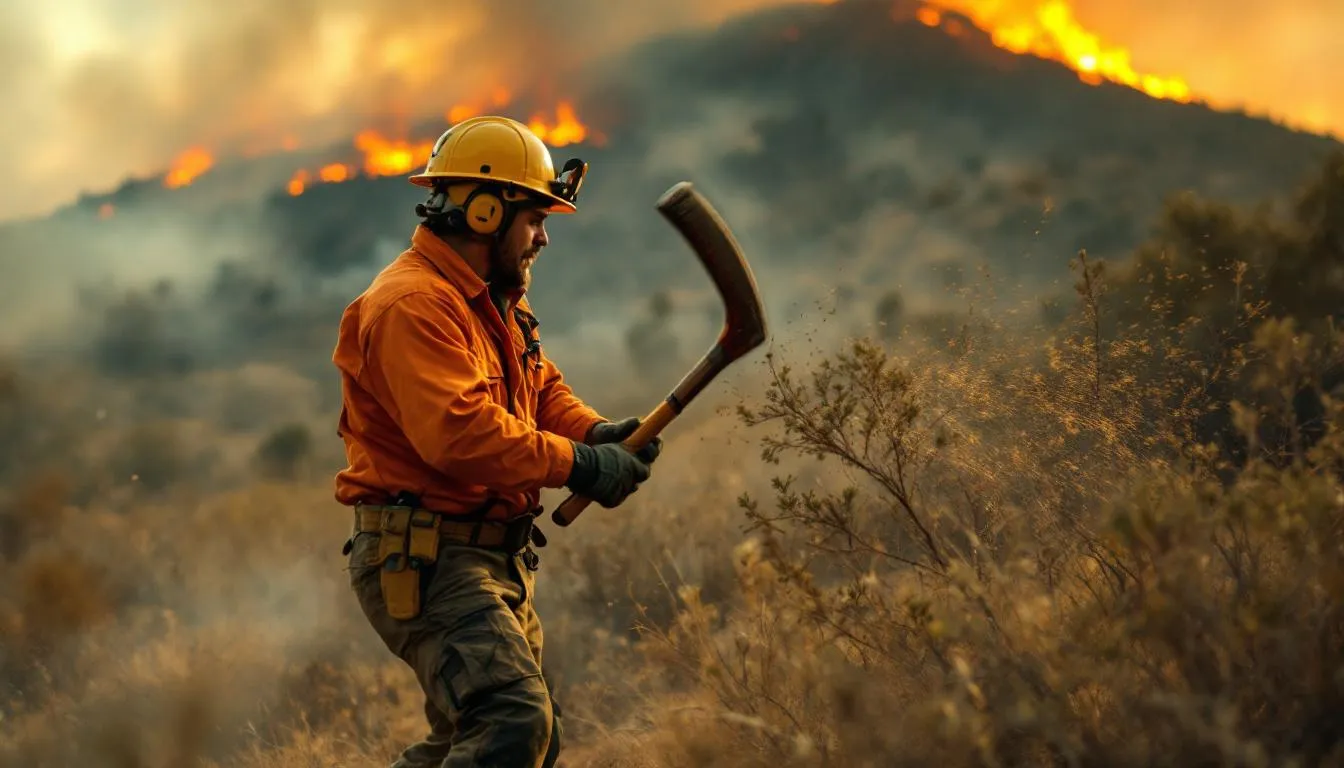
Before fire season even starts, you are at the training base doing drills. You jump from practice towers, practice deploying gear, run through emergency scenarios, and do PT (physical training) almost daily to stay at the fitness level the job demands. Your legs, core, and cardiovascular system have to be exceptional. Once fires start, you are on standby. That means you could get the jump order at any time. You suit up: helmet, fire-resistant gear, boots, harness, parachute, and a pack loaded with hand tools, water, MREs, and survival gear. You are literally getting on a plane and jumping into an active wildfire zone. The jump itself takes training and guts, but that is just the entry. Once you land (and you might land rough, or off-target, or in difficult terrain), you gather your crew, assess the fire's position and behavior, and start the work: cutting and clearing vegetation to create firebreaks, digging fire lines to slow the spread, using chainsaws and Pulaskis (a combo axe/hoe tool), moving dirt and debris, and constantly monitoring how the fire is moving. You work in shifts during active fires, though "shifts" is loose terminology when you are eating and sleeping on the job. You might be awake for 16-18 hours a day for weeks. You are making decisions about where to dig lines, how to allocate crew, and how to react if the fire moves faster than expected. Communication with the incident commander and other crews happens via radio. Once the fire is contained or weather changes the situation, you either hike out or wait for a helicopter extraction. You then debrief, clean and maintain your gear, and wait for the next call.
Smoke jumpers are usually people who are already comfortable with physical extremes and isolation. You need genuine athletic ability, not gym membership fitness. You have to be mentally tough enough to sit in a bunkhouse for weeks waiting, then jump into a chaotic situation without hesitation. People who thrive here tend to be straightforward, ego-free in a crew, and good at following orders while also thinking for themselves when the radio goes quiet. Many are prior military, college athletes, or just naturally disciplined people who respect the job's stakes. You cannot be someone who needs constant external motivation or feedback.
You must be at least 18 and have a high school diploma or GED. The USDA Forest Service and Department of Interior hire smoke jumpers through the federal hiring process. Start by applying on USAJobs.gov for a "Smoke Jumper" or "Wildland Firefighter" position. Most people start as a seasonal wildland firefighter (ground crew on fires) to build experience, prove you can handle the physical and mental demands, and get your foot in the door. Expect 2-3 seasons minimum before you can apply to jump. Once hired as a smoke jumper, you go through a mandatory 3-week initial training program at one of nine regional jump bases across the country (Missoula, Redding, Redmond, etc.). This is intensive: you learn parachute deployment, landing techniques, emergency procedures, and how to survive and work in remote terrain. You also have to pass a physical fitness test (600-yard run under 2 minutes, multiple pull-ups, long jump, etc.) and a medical clearance. The training is pass-or-fail with no second chances that season. After that, you are current for the season. Every year you have to recertify, maintain your fitness, and refresh your skills. Pay starts once fire season begins and you are on official standby. Off-season, you are not being paid unless you are doing training or maintenance work. Plan on 4-6 months of actual work per year in your first few seasons.
This job will hurt your body. Smoke inhalation, heat exhaustion, dehydration, twisted ankles on bad landings, cuts and burns, and the cumulative wear and tear of carrying heavy loads uphill in extreme conditions all add up. Many jumpers deal with chronic joint pain, respiratory issues from smoke exposure, and sleep disruption from hypervigilance on fires. The season is only 4-6 months, which means you either take unemployment, find off-season work, or live very lean. Relationships and personal plans are secondary to fire season. You might miss family events, holidays, and your own life for weeks at a time. The danger is real, too. People have died smoke jumping. Equipment failures, bad landing zones, unexpected fire behavior, and getting trapped by rapidly moving fire are not hypothetical. You are signing up for a job where the risk is genuine and you are trained to accept it. The camaraderie and the respect from your crew are real, but they do not pay your rent in November. And if you get injured seriously enough that you cannot jump again, the career ends abruptly with no guaranteed backup plan.