Antenna Installer (Specialty Broadcast)
You're working on the actual hardware that broadcasts TV, radio, and cellular signals across regions. Most people never see these antennas. You build and tune them. The work is high-altitude, technically precise, and the pay reflects the risk and skill ceiling.
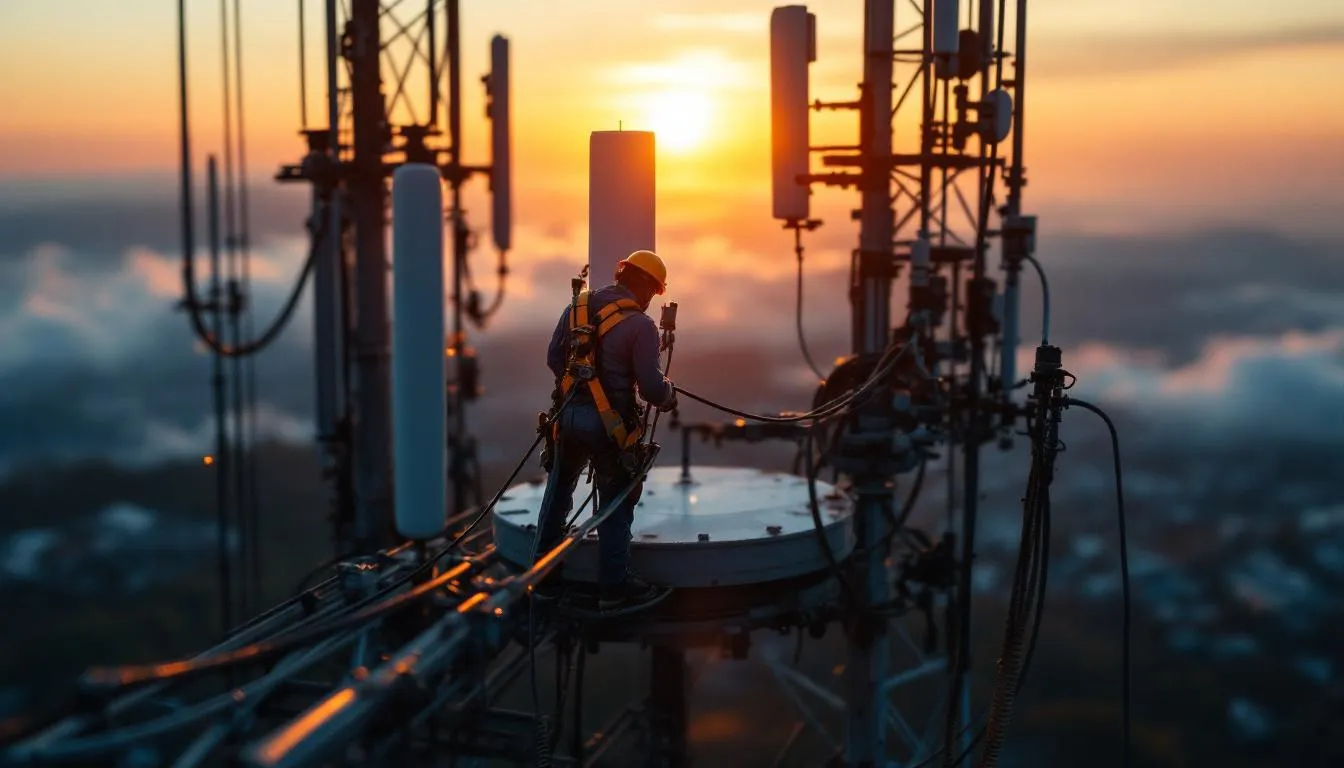
You spend a lot of time at height on cellular, broadcast, and microwave towers, sometimes 1,000+ feet up. The work is methodical and detail-oriented: positioning massive antenna arrays, aligning feed lines, measuring RF patterns, and troubleshooting signal issues. Weather matters. Wind days mean no work. You work with RF engineers, structural crews, and site managers. The pace varies between rushed pre-deadline pushes and careful alignment work that cannot be rushed.
Most days start with site assessment and planning the antenna placement. You climb the tower with equipment, sometimes using a bucket lift or rope access depending on the job. You position antennas using precise measurements and mounting hardware, then connect coaxial cables and feed systems. Once mechanically secured, you work with RF equipment to measure radiation patterns, tune elements, and verify signal strength across coverage areas. You use spectrum analyzers and field strength meters to confirm the antenna is broadcasting or receiving as designed. Problem-solving happens constantly: a cable run needs rerouting, wind shear requires bracing reinforcement, or RF performance falls short of spec. You document everything for compliance and handoff. Some jobs require height work in rain, heat, or cold. Others are ground-level prep and testing. Tower climbing is the headline, but precision measurement and RF knowledge are what make you valuable.
You need genuine comfort at height, not just willingness. You think in precise measurements and systems, not rough approximations. You're calm when something is not working and methodical about troubleshooting. Good communication matters because you coordinate with engineers and other crews. Attention to detail is nonnegotiable. People who make this work are usually mechanical-minded, comfortable learning RF concepts, and not spooked by wind, exposure, or weather delays.
No degree required. Start with entry-level broadcast or RF technician roles, or tower crew positions where you learn climbing and basic antenna handling. Many antenna installers come up through broadcast stations, RF service companies, or tower contractors. Get comfortable at height first on simpler work, then move to antenna-specific tasks. OSHA 30 certification and a working knowledge of RF fundamentals are expected quickly. Some employers prefer a trade background in telecom or electrical work. Formal antenna certification is less common than practical experience, but RF training programs (community college or vendor-specific courses) accelerate hiring and pay progression. Union shops (IBEW, communications unions) exist but not universally. Most work comes through RF service companies, tower contractors, or broadcast facilities. Expect 6-12 months as a climber learning the basics before you're trusted with antenna alignment work. Pay starts during training.
The height never becomes casual. After 10 years, you're still clipped to the tower. Some people hit a ceiling where they stop climbing due to age, fear, or joint wear, and transition to ground-level RF work or supervision. Weather cancellations mean lost days and irregular paychecks if you freelance. Winter climbing in cold regions is brutal on fingers and focus. The RF measurement side requires precision that is mentally taxing. Project work is common, meaning you travel frequently or drive 2+ hours to remote tower sites. Injuries at height, while rare with proper discipline, are serious. The industry is consolidating around major contractors, so job security depends on contract flow. If you're good, you're valuable. If work dries up in your region, relocation is expected.