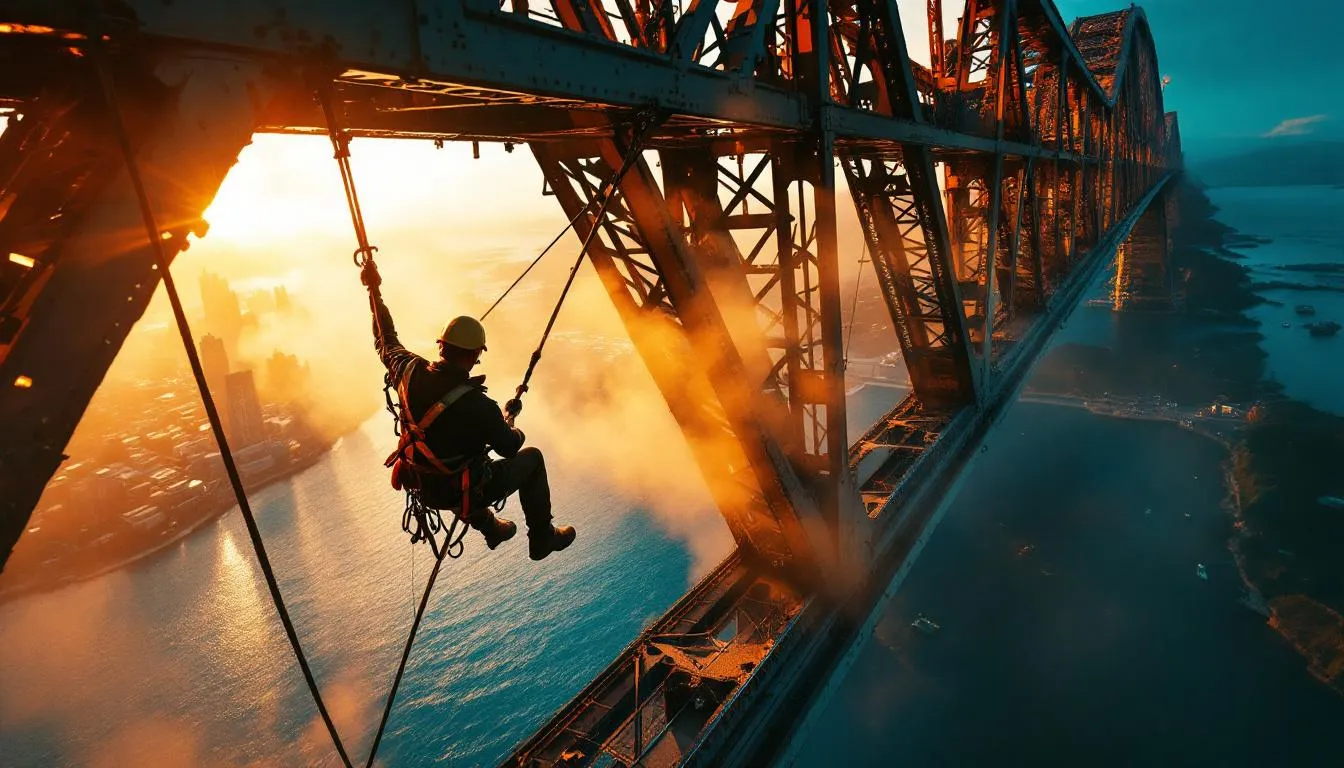
Bridge Painter
You're harnessed to a bridge span, spray gun in hand, painting steel that holds thousands of cars every day. The view is incredible. The pay is real. And you're doing work that actually matters and lasts decades.
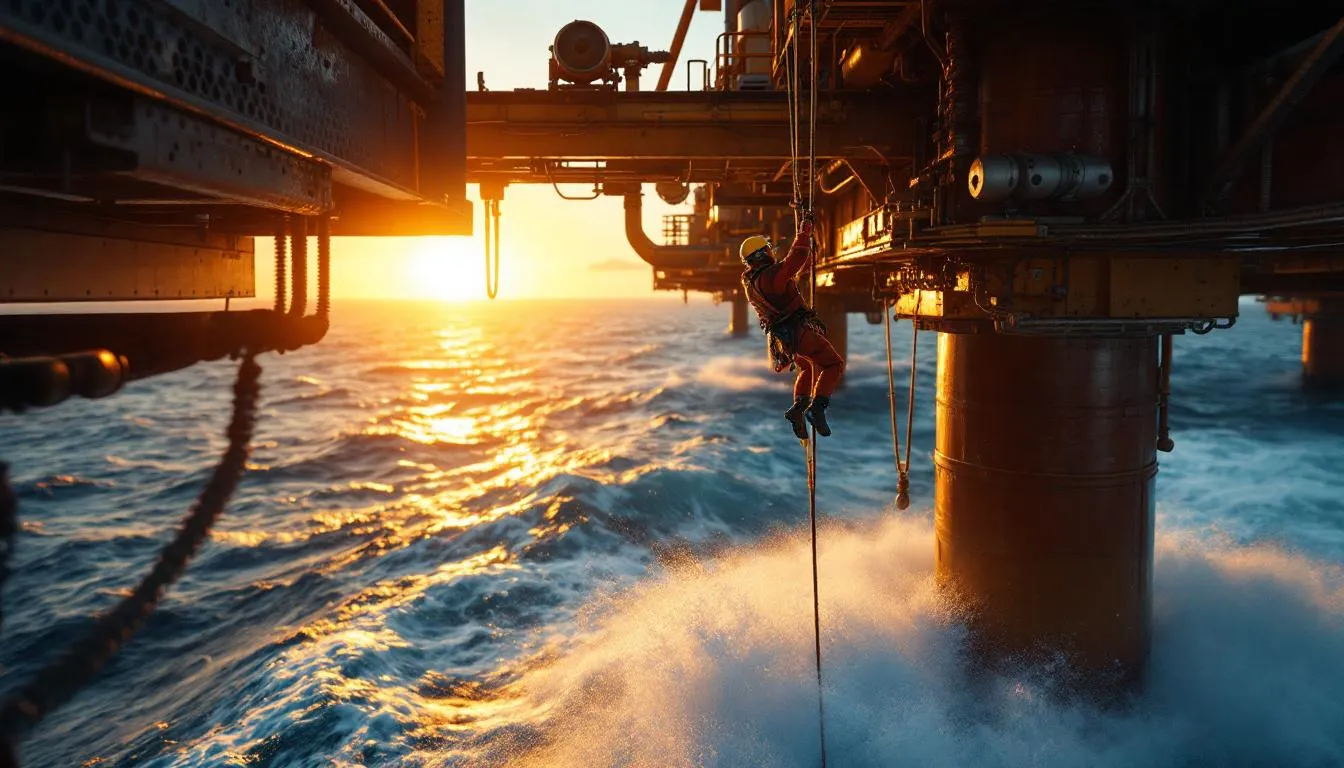
Bridge painting is high-altitude construction work. You're either suspended from cables or working from temporary scaffolding bolted to the structure, often hundreds of feet above water, roadways, or ground. The job site is loud, windy, and exposed. You'll work in crews of 3 to 8 people, taking orders from a foreman and a safety supervisor. The pace varies: setup and prep work is methodical and detail-focused; actual painting runs fast when the weather is right. Bad weather shuts you down completely. This is seasonal in many regions, which means steady work spring through fall and layoffs or reduced hours in winter.
Your day starts with a safety briefing and equipment check. You inspect your harness, ropes, and rigging, and you test the spray equipment. Once you're positioned on the bridge, you prepare the steel: grinding or wire-brushing old paint and rust, sanding smooth, and wiping away dust and debris. Surface prep is often 60 percent of the work. Then comes the coating itself, usually multiple layers. You spray primer, intermediate coats, and topcoat in sequence, following a strict spec. Between coats you clean the equipment, move to the next section, and do it again. You're working in spray patterns, maintaining consistent distance and angle. You're also constantly aware of wind, temperature, and humidity, because they affect how the paint cures. If conditions shift, you stop and wait. Communication over radios is constant because you're coordinating with ground crews, traffic control, and the foreman. On slower days you might chip old coating, repair damaged steel, or set up new rigging points. It's methodical, detail-oriented work done in an environment that keeps your adrenaline running.
You need to be comfortable with heights and genuinely unafraid of exposure. Fear won't kill you if you follow procedure, but it will exhaust you and slow the crew. You need mechanical aptitude and attention to detail: spray patterns, coverage, cure times, and equipment maintenance all matter. You also need physical durability; this is full-body exertion in all weather, and your shoulders and back take abuse. People who move into leadership or specialize in complex coatings tend to be curious about the chemistry and engineering of the work, not just the mechanics. Reliability is everything. Show up when it's windy, cold, or boring, and you'll advance fast.
Start by getting into commercial or structural steel painting through a combination of apprenticeship and on-the-job training. Many regions have union ironworkers locals that run apprenticeships covering painting, rigging, and rope access. Non-union shops will also hire entry-level painters and train them in-house, though pay starts lower. You need OSHA 30 certification or higher. Many employers require or strongly prefer rope access certifications like IRATA Level 1 or SPRAT, which take 2 to 4 weeks and cost $1,000 to $2,500 out of pocket, though some larger outfits will pay or reimburse. You also need a high school diploma or GED and a clean background. Physical ability to handle heights without panic is non-negotiable. Start by applying directly to commercial painting contractors who work on bridges, water towers, and structures, or contact a local ironworkers union to inquire about apprenticeships. Expect 6 to 12 months of entry-level work at lower pay and less desirable assignments before you move to bridge work proper. From there, experience compounds: specialized certifications, mastery of different coating systems, and knowledge of structural repair push you into higher-paying roles.
The physical toll is real. Your shoulders, neck, and lower back take constant strain from holding a spray gun overhead or in awkward angles for 8 hours. Tendonitis and chronic pain are common after 10 years. The spray equipment exposes you to solvent fumes and overspray; even with a respirator, you're breathing chemicals. Long-term lung issues aren't rare, especially in older painters. Weather owns your schedule. A single day of rain or wind above threshold shuts the job down with no pay. In seasonal regions you might work 6 months steadily and have 2 to 3 months with no work. That irregular income forces you to budget tightly or pick up winter work. The heights themselves are manageable with training, but the psychological pressure of being suspended 400 feet above traffic or water never fully goes away. Most people adapt, but some don't, and there's no shame in finding out after 3 months that it's not for you. Equipment failures happen: a rigging point can fail, a harness can malfunction, or a helicopter used for insertion (on some jobs) can have issues. The industry culture is safety-first, but risk is always present. And the work is repetitive: once you've painted your thousandth square foot of bridge, the novelty wears off fast.