Cell Tower Climber
You are literally the only person on a tower site who knows what they are doing. Cell carriers need climbers constantly, the work is nowhere near as regulated as broadcast, and the pay jumps fast once you prove you won't die. This is one of the few jobs where being young, fearless, and reliable gets you to $80k+ before you are 30.
You are on towers in cities, suburbs, and rural areas depending on where carriers are deploying gear. Weather is your main obstacle: wind, ice, and heat all make the work harder and slower. A crew is usually two climbers, sometimes three on big jobs. The pace depends on what you are doing — some days are installation sprints, other days you are troubleshooting one antenna for hours. Most of your time is either gearing up, climbing, working at height, or climbing back down. The work is repetitive but the environment changes constantly.
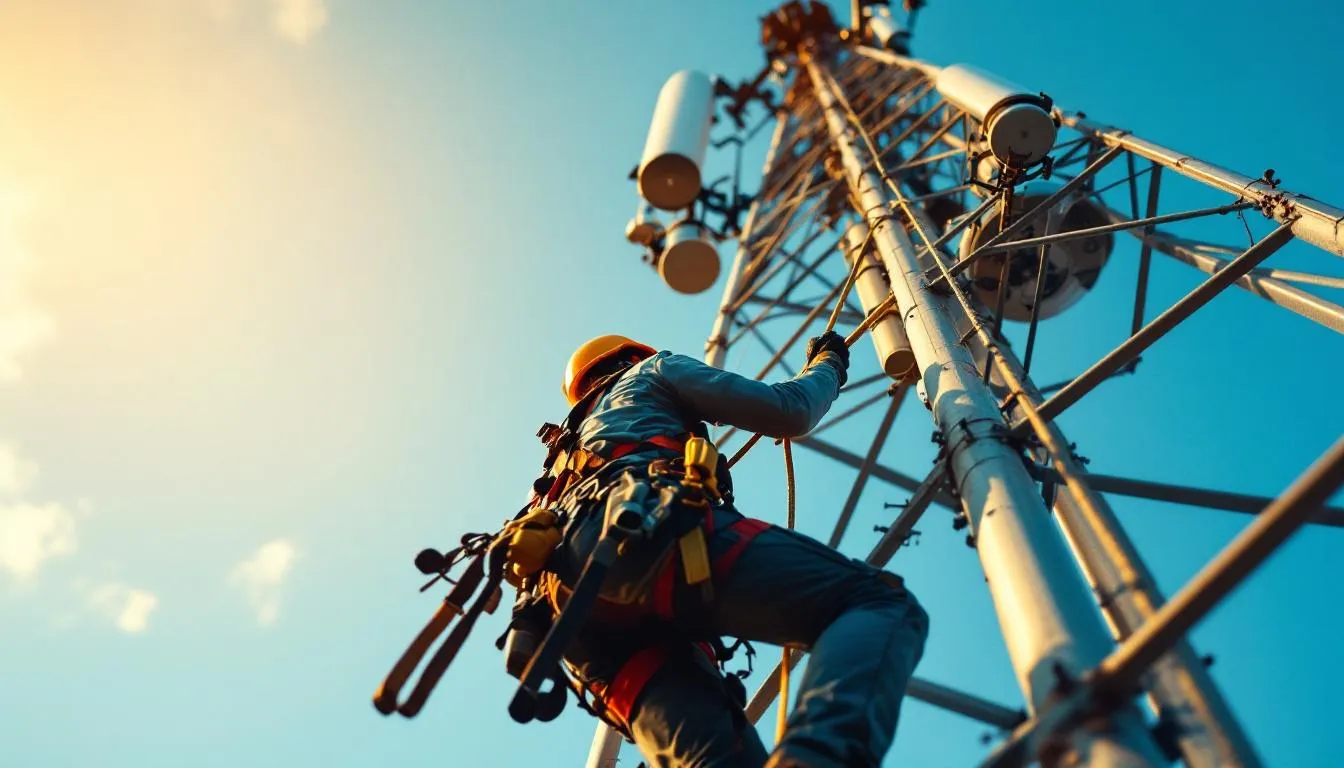
On most days you arrive at a tower site with your crew, inspect the tower and your gear, then clip in and head up. Once you are at the work height, you are installing antenna brackets, running cable, tightening bolts, or swapping out equipment based on carrier specs. You work from a harness, which becomes normal after the first few climbs. You follow a checklist religiously because one mistake means a safety violation, a fine, or worse. Some climbs are 100 feet, some are 200. The job itself is mechanical and straightforward once you understand the parts, but the exposure never stops being real. On slower days you might spend time at the base managing cable, documenting work, or helping junior climbers prep. Climbing in cold, wind, or rain is common. You do not sit much.
You are someone who actually enjoys height and does not get shaky or second-guess yourself once you commit. You follow procedures without needing to understand the philosophy behind them, because in this job cutting corners is how people die. You are reliable enough that crews request you by name. Guys who do well here are often former military, ex-warehouse workers who proved themselves detail-oriented, or people who climbed for fun (rock climbing, tree work) and wanted to turn it into a paycheck.
Start by getting your OSHA 30 certification, which takes a few days and costs under $200. Many climbers get it before they even apply. Then apply directly to tower companies like Turnkey, Surewest, or regional operators. You will likely start as a ground crew member or apprentice climber for two to four weeks while you prove you can follow safety protocol and handle the physical and mental demands of height. During this time you are learning knots, fall arrest procedures, and tower anatomy. Once cleared to climb, your earnings jump significantly. The entire path from zero to earning $25+/hr takes about a month, but you need to be serious about safety from day one. Some companies offer their own pre-climb training. Unions are minimal in this space, so shop around for hourly rates and benefits. Expect travel for work, especially early on.
The toll on your joints is real. Climbing hundreds of feet repeatedly wears on your knees, hips, and shoulders over time. Your hands get torn up from gear and rope friction. Many climbers develop tendinitis or lower back pain in their thirties. Heat exhaustion is a genuine risk in summer, and cold exposure can be brutal in winter. You are also at the mercy of weather delays, which means some months are feast and others are dry. The work is seasonal in many regions, so winter income can disappear. Lastly, the industry culture rewards speed over comfort, which means pressure to climb faster, longer, or in sketchy conditions. Peer pressure to skip breaks or take shortcuts exists. Your safety depends entirely on your own discipline and the discipline of your crew. Complacency kills people in this job, and you have to stay sharp every single climb.