Falconer (Commercial Pest Control)
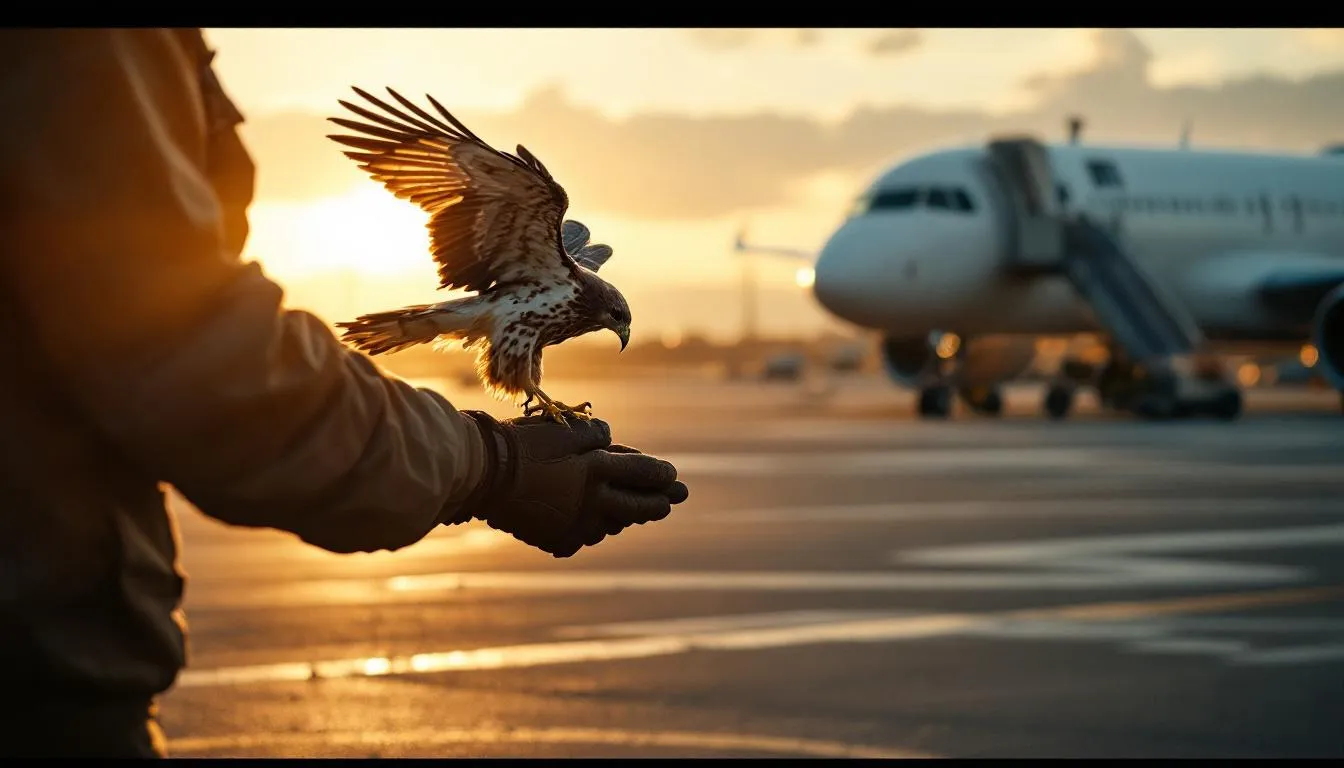
Falconry is one of the oldest hunting methods on earth, and airports, wineries, and landfills now pay people to do it full time. Your job is to show up with a trained hawk or falcon, fly it over the area, and watch thousands of pest birds scatter. No pesticides, no nets, just a bird that terrifies everything else in the sky.
Most of your days are early starts. Pest birds are most active at dawn, so you are often at a vineyard or airport tarmac before the sun is fully up, glove on, bird on your fist, walking the perimeter. You work outside in every kind of weather. Rain, heat, wind, none of it stops the work. The birds still need to fly and the pest problem does not take days off. Your clients are airport operations managers, landfill supervisors, vineyard owners, and commercial property managers. They hired you because birds of prey create a biological fear response in pest species that electronic deterrents and decoys cannot replicate. You are the solution that actually works. That gives you credibility on-site, but it also means the pressure is on you when a client has a serious infestation problem. You are usually working alone or with one other falconer. There is no team meeting, no break room, no manager watching over your shoulder. You drive to a site, do the work, log your activity, and move on. If you work for a commercial wildlife control company, you may cover several contracts in a single day across different locations.
The core of the job is flying birds. You arrive at a site, assess where pest birds are roosting or congregating, and fly your hawk or falcon in patterns that push them out. Starlings, pigeons, gulls, Canada geese, and European starlings are the most common targets depending on your contract. The bird does not need to make a kill every time. The presence and pursuit pattern alone is enough to condition pest birds to avoid the area over time. Outside of flying, you spend a significant amount of time on bird care. Falconry birds require daily feeding, weighing, and health checks. A bird that is too heavy will not fly aggressively. A bird that is too light is at risk. You track their weight in a log, adjust feed accordingly, and watch for signs of illness or injury. If a bird gets hurt, you are responsible for getting it to a raptor vet, and that relationship matters. You also handle equipment maintenance constantly. Jesses, anklets, hoods, perches, lures, telemetry transmitters, and GPS units all need to be checked, repaired, and replaced on a regular schedule. A broken transmitter on a bird that decides to fly off is a serious problem. On the client side, you write activity reports documenting which species were present, how many birds were flown, how long the session lasted, and whether the pressure appears to be working. Some clients want weekly reports, some want daily logs. You keep that documentation clean.
This work suits people who are comfortable being alone and do not need constant feedback to stay on task. You have to be the kind of person who genuinely enjoys animals and is willing to build a relationship with a bird over months before it pays off professionally. Patience is not a soft skill here, it is a technical requirement. People who want structured environments with predictable days tend to wash out.
You cannot just buy a hawk and show up to work. Every state has falconry licensing requirements governed by both state wildlife agencies and the U.S. Fish and Wildlife Service. You start as an Apprentice falconer, which requires passing a written exam, having your housing and equipment inspected, and being sponsored by a General or Master class falconer for a minimum of two years. That apprenticeship is the real entry point. Find a sponsor through the North American Falconers Association (NAFA) or your state falconry club. During your apprenticeship, you are limited to one bird, either an American Kestrel or a Red-tailed Hawk. You learn to trap, train, and fly that bird through your sponsor and through your own daily practice. Most people working in commercial pest control came up through this path and then got hired by a wildlife management company while still building their General class hours. Companies like Airstrike Bird Control, Bird Busters, and various airport wildlife management contractors hire falconers who already have their license and a proven bird. Some will hire apprentices in a support role while they finish their hours. Check with your state department of agriculture and local airports, they sometimes contract directly. From starting your apprenticeship to landing paid work, expect two to four years minimum. The licensing process is not a shortcut situation.
The birds are a financial commitment that does not stop. Food, vet bills, equipment, housing, and telemetry gear add up to several thousand dollars a year per bird, and that comes out of your pocket if you are running your own operation. A serious injury to your primary bird does not just cost you a vet bill, it can knock you off a contract while the bird recovers. You need backup birds trained and ready, which means more time, more cost, and more animals to care for every single day, whether you feel like it or not. The work is also seasonal in some markets. Vineyards are heaviest during harvest. Certain airport contracts have peak periods. If you live somewhere with harsh winters, some outdoor contracts slow down or pause. Building enough contracts to keep consistent income year-round takes time, and in the early years you may be supplementing with other work. Nobody in this field got rich fast. The ones who make it work treat it as a business from day one.