Film Armorer
Film armorers are the reason action movies look real without anyone getting killed. You handle live firearms, blank-firing weapons, and hero props on professional sets, working directly with actors and directors to make sure every trigger pull looks right and every weapon is legal, safe, and camera-ready. The job sits at the intersection of serious firearms knowledge and filmmaking, and there are maybe a few hundred people in the country who actually do it at a professional level.
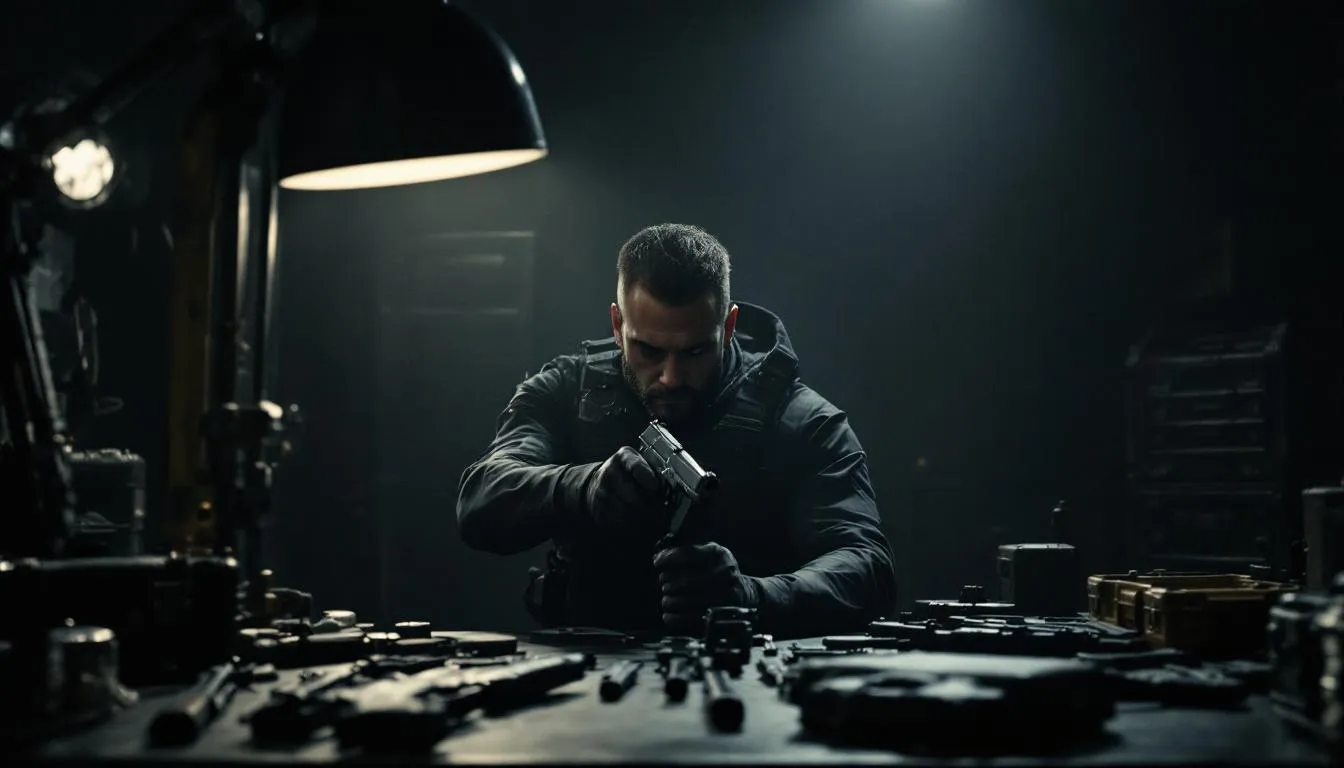
Most of your time is not on set watching explosions. It is in your vehicle or a staging area, cleaning weapons, running function checks, prepping blanks, logging serial numbers, and making sure your paperwork is airtight. When you are on set, you brief actors on safe handling before every scene, hand weapons off at the moment of filming, and take them back the second the director calls cut. Nothing stays in an actor's hands longer than it has to. You work long days. Film sets run 12 to 14 hours routinely, and you are one of the last people who can call a stop to production if something is wrong with a weapon. That authority matters, and so does the pressure that comes with it. One mistake and someone gets hurt. The industry is small enough that your reputation is your career. Most armorers are independent contractors who build relationships with productions over years. You might work a studio feature in Los Angeles for three months, then a regional commercial in Atlanta, then a streaming series. The work is not steady year-round for most people, especially when you are starting out.
Before filming starts, you inventory every weapon on the production, sourcing them from your own collection or licensed rental houses. You check each firearm for safe function, load blank-adapted weapons, and store everything in a locked, secure case that stays under your direct control at all times. Your paperwork covers every serial number, every transfer, every location the weapons travel to. On shooting days, you arrive before the crew to prep the weapons needed for that day's scenes. You brief actors individually on how to hold, carry, and operate each firearm correctly for the camera angle the director wants. You stand just off-camera during every take, watching. If something looks wrong or a weapon malfunctions, you stop the shot. You hand off and take back every weapon personally. No one else handles them unsupervised. Beyond the set, you coordinate with the production's legal team on permits, especially when filming in states or countries with strict weapons laws. If a script calls for a weapon that cannot legally fire blanks on set, you figure out whether a rubber prop, a non-firing replica, or a visual effects solution is the right call, and you communicate that to the director and production designer. You also train actors for roles that require them to look credible with firearms, which sometimes means range time before production begins.
People who are already serious about firearms and treat them with zero casual attitude do well here. This job does not work for someone who thinks guns are cool in a vague way. You need to be the most careful person on set at all times while also being calm enough to work with actors who have no firearms background and a director who is focused on the shot, not the safety briefing. Good armorers are methodical, not easily rushed, and comfortable being the person who says no when something is not right.
There is no film armorer school. The path in is through serious firearms experience first, then a connection to the industry. Most working armorers came from law enforcement, the military, competitive shooting, or gunsmithing. You need to know firearms mechanically, legally, and operationally before anyone trusts you on a set. The first concrete step is getting your Federal Firearms License, specifically a Type 01 (Dealer) or Type 07 (Manufacturer) FFL through the ATF, along with a Special Occupational Taxpayer license if you plan to handle NFA items like short-barreled rifles or suppressors, which come up constantly in film work. That paperwork takes months and requires a clean record and a legitimate business address. From there, the entry point is almost always as a set armorer's assistant on low-budget productions, student films, or regional shoots. You are handling logistics, cleaning weapons, running inventory, and learning set protocol while someone experienced runs the show. The International Alliance of Theatrical Stage Employees, IATSE, covers armorers under Local 44 in Los Angeles, and getting into that union opens doors to larger productions. Most people spend two to five years working their way up before they are trusted to run weapons on a major set independently.
The industry lost a cinematographer and nearly lost a director in 2021 when a live round was discharged on the set of Rust. That incident reshaped how productions think about on-set firearms, but it also put every armorer in the country under a level of scrutiny that did not exist before. You will spend part of every job managing people who do not fully understand what you do, do not want to slow down for safety protocols, and who may pressure you to cut corners on time. You cannot let that happen. The legal and personal liability if something goes wrong is yours. The other reality is that the work is genuinely inconsistent, especially in your first several years. Film production schedules are unpredictable. Projects get delayed, cancelled, or move to a different state for tax incentives. You may have a strong year followed by a year where you are cobbling together income from firearms instruction, private security consulting, or whatever else uses your skill set. Building a collection of rentable weapons requires serious upfront capital, sometimes tens of thousands of dollars, and that investment sits idle between productions.