Fire Lookout
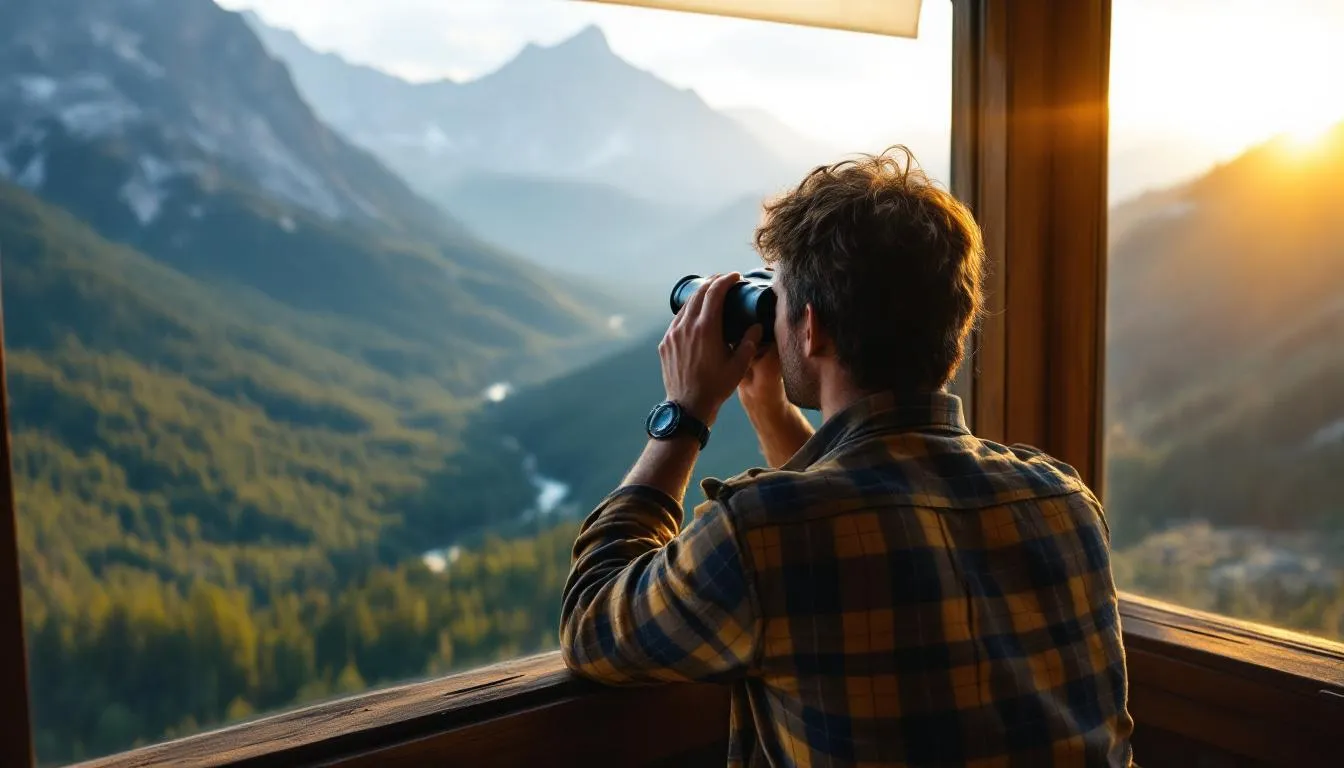
You get a tower all to yourself at 8,000+ feet, a radio, binoculars, and months of silence. The work is simple: watch for smoke, call it in, repeat. Some people find that solitude unbearable. Others find it's the only job that makes sense.
Fire lookout season typically runs May through October, depending on where you work. You live in a small tower or cabin on a mountaintop or ridge, often with no road access. Your job is to scan the landscape constantly during daylight hours, identify any smoke, use a tool called an Osborne Fire Finder to pinpoint location and bearing, and radio it to the nearest fire station or dispatch center. The work is repetitive and requires sustained attention, but it is not physically demanding once you are up there. Weather is unfiltered at elevation: wind can be brutal, storms arrive fast, and the view can be completely obscured by clouds for days. You are genuinely alone. Some towers have radio contact only. Most have no cell service. Resupply happens monthly or on a fixed schedule. You manage your own food, water, and basic camp maintenance.
Your morning starts before dawn. You check weather, radio in a status report, and begin scanning the horizon with binoculars or your naked eye. Smoke is what you are hunting for. A distant haze, a thin column, color that does not match the sky. When you spot something, you use the Osborne Fire Finder or alidade, a mechanical sighting instrument that has been used for decades, to record the bearing and distance. You radio the location to dispatch with description and confidence level. Then you wait and watch to see if more resources arrive or if it grows. Between smoke watches, you maintain the tower itself: painting, repairs, replacing worn equipment. You keep detailed logs. You cook for yourself, haul water if the tower does not have a cistern, and manage your own time completely. Some days you will scan for twelve hours straight in good visibility and see nothing. Other days, especially late in the season during fire danger peaks, you might report multiple spots. Thunderstorms are part of the job. You ride them out in the tower, which can be uncomfortable but is usually safe.
You need to be genuinely comfortable alone for extended periods. Not people-avoiding or antisocial, but actually okay with your own company for weeks at a time with minimal interaction. You thrive on routine and do not need constant stimulation or entertainment. You are observant and detail-oriented, the type who notices small changes in the environment. You are physically and mentally tough enough to handle isolation, weather extremes, and the strange headspace that comes with months of solitude. Most importantly, you actually want this. People who take the job as a last resort tend to burn out fast.
Most fire lookout positions are managed by the U.S. Forest Service or other federal agencies (Bureau of Land Management, National Park Service). Start by checking USAJobs.gov for "Fire Lookout" or "Lookout Aide" postings in the region where you want to work. These are seasonal federal positions, so you will need to apply several months ahead of the season. No certification is required to start, though some agencies prefer emergency management or forestry experience. Many people begin as lookout aides (entry-level, supporting the main lookout) or take their first lookout position after a background check and basic safety orientation from the agency. Pay is modest, but the job is open to people without degrees or prior experience in the field. Apply in January or February for May start dates. Once hired, you will get a week or two of training on the specific tower, equipment, and radio protocols. The real barrier is psychological, not technical. You need to be comfortable alone for months.
Solitude can go from appealing to crushing fast. Some people last one season and never go back. Others feel more like themselves on a mountain alone than anywhere else. There is no way to predict which one you are until you do it. The isolation is total. You cannot leave during your shift. Weather emergencies, medical issues, and loneliness still happen; you have to manage them alone or wait for help to arrive. If a wildfire happens near your tower, evacuation can be chaotic and dangerous, and you may be asked to stay in a smoke-filled environment longer than feels safe. The work is repetitive and can feel pointless on quiet days. The pay is low for a demanding lifestyle, and you are giving up five months of earning potential at better-paying jobs elsewhere. Some towers have histories of suicides or mental health crises among lookouts. The job attracts people escaping something, and sometimes isolation amplifies that instead of healing it.