Geoduck Harvester
You're diving 40 feet down in cold Pacific water to hand-harvest clams the size of a football that go for $20+ per pound on the Asian market. The work is brutal and seasonal, but a good harvest can net you $3,000-5,000 in a single day. Most people have no idea this job exists.
Geoduck harvesting happens in the shallow subtidal zone off the coasts of Washington, Oregon, and British Columbia, mostly in winter when water temps drop to the 40s. You're working from small boats in choppy conditions, gearing up in wetsuits multiple times a day. The actual harvesting is straightforward but exhausting: dive down, use a pneumatic tube to suck out the sand around the clam, grab it, surface. You repeat this 50-100 times a tide, depending on density and conditions. Your crew is small, tight, and highly dependent on each other. The pace is relentless during the season, and then it stops. There is no work in summer.
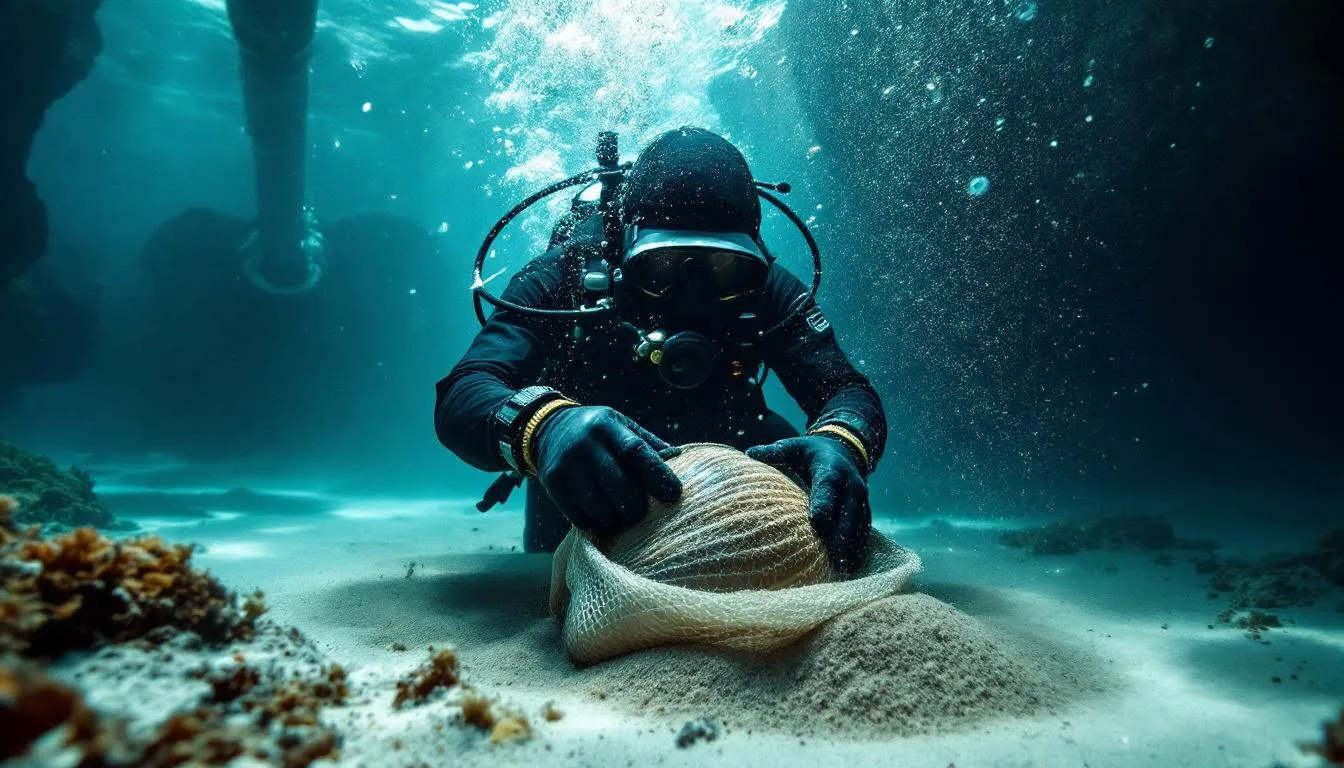
Before dawn, you load gear onto a commercial dive boat and motor to the beds. You check your air supply, wetsuit, and dive flag. Once on site, you gear up and drop down 30-50 feet to the seafloor. Underwater, you use a dredge tube (a rigid pipe connected to an air compressor) to blast away the sand and substrate around each clam, exposing it for harvest. The tube creates a hole, sometimes 2-3 feet deep. You pull the clam free, secure it in a mesh bag tied to your weight belt, and surface. Back on the boat, you rinse the clam, measure it (must meet legal size), and bag it for sale. You repeat this cycle dozens of times per tide, managing your air consumption, staying aware of your bottom time, and watching for changing conditions. Some days you also help process catch, measure weight, and prep shipments for the buyer. Between dives you eat, hydrate, and stay warm. The work is physical and repetitive, but the payout is immediate and tangible.
You need to be physically tough and okay with cold water, but more importantly, you need to be mechanically smart and fast. Harvesters who stand out are the ones who optimize their dive, minimize waste motion, and troubleshoot gear problems on the fly. You also need to handle risk calmly. Panic underwater is dangerous. Finally, you need to accept that this job is boom and bust. You earn a year's living in 5-6 months, and you manage money accordingly. People who hate planning or who need steady paychecks every week struggle here.
There is no formal trade school for geoduck harvesting. You start by finding a harvesting crew that is hiring. Most crews operate out of small ports in Washington (Puget Sound area especially) and Oregon. You need to be a strong swimmer and comfortable underwater, but many crews will train people with no diving experience on the job. A commercial diving certification (ADCI or equivalent) is not required but is a major advantage and will get you hired faster and into better positions. If you want to certify first, look for a commercial diving school (2-6 week programs, $2,000-8,000). Without certification, expect to start as a tender or deckhand, helping process catch and manage gear, then move to diving once you prove you can handle the water and the pressure. Talk to independent harvesters or small operations around fishing ports. The season runs October through March, so plan to enter in late summer. Your first season, expect to earn while you learn. By your second or third season, if you are fast and skilled, you can pull serious money.
Geoduck harvesting has real physical risks. You are diving in cold water, often in low visibility, working at depth while managing nitrogen absorption and air consumption. Decompression sickness (the bends) is a genuine hazard if you make mistakes or push too hard. Equipment failure underwater is also a risk. Most crews are professional, but not all operations follow strict safety protocols. Beyond the water, the industry is increasingly regulated and contested. Indigenous tribes have co-harvesting rights in many areas, and there are ongoing disputes over access and sustainability. Some harvesting grounds are being restricted or closed. The work is also brutal on your body. Repeated cold water immersion, hauling weight, and the physical strain of a 60-80 foot dive day takes a toll. By your 40s, many harvesters have joint problems, hearing damage, and chronic pain. The season is short and intense, which means you are earning well but then sitting idle for months, which can be psychologically difficult. Finally, the market fluctuates. Bad weather can kill a whole season's income. Oversupply from Canadian harvesters can tank prices. You are at the mercy of conditions and market forces beyond your control.