High-Rise Window Washer
You work on the outside of buildings most people only see from the ground. The pay is solid, the risk is real, and the skill set is rare enough that you'll never compete with thousands of other applicants for a job. Not many people can say they've hung from a rope on the side of a Manhattan skyscraper.
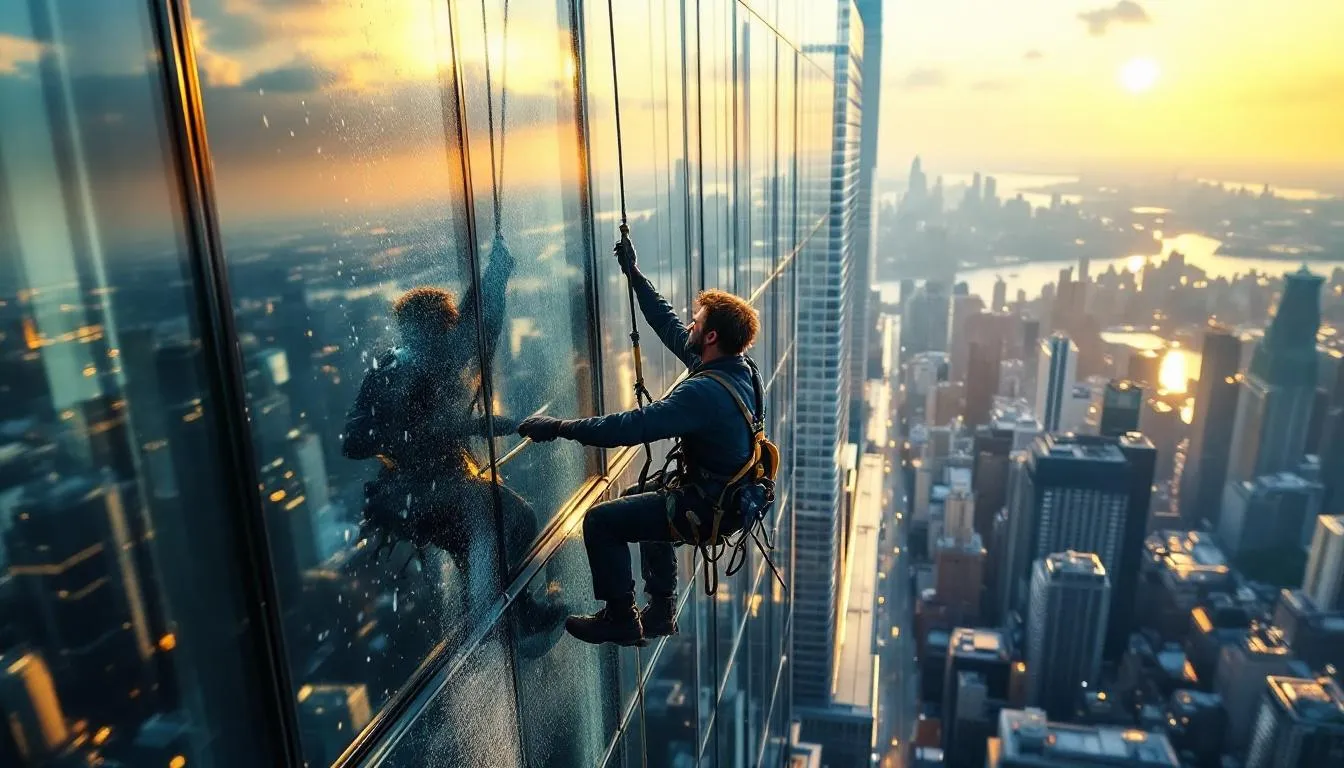
High-rise window washing happens on the face of office towers, luxury condos, and commercial buildings. You're suspended by rigging systems, working in pairs or small teams. The job is seasonal in most markets, concentrated in spring through fall when weather cooperates. You start shifts before dawn to beat wind and heat, work methodically across glass panels, and come down when conditions get unsafe. Some days are calm and repetitive. Other days the wind picks up, visibility drops, and you're focused entirely on staying safe and productive.
Your day starts with equipment checks. You inspect harnesses, ropes, pulleys, and safety systems before anything else. If something is wrong, you don't work. You rig yourself in using a full-body harness connected to redundant anchor points on the roof. Once secured, you descend the face of the building using a combination of motorized and manual descent systems, controlling your rate carefully. As you move down, you squeegee, soap, and rinse glass panels in methodical patterns. You're watching for obstacles like HVAC units, ledges, and architectural details that require precise maneuvering. You communicate constantly with your ground crew and partner via radio. In bad weather or high winds, you secure yourself and wait or come down entirely. The work is repetitive but demands constant attention because one mistake in rigging or positioning could be fatal.
You need genuine comfort at height, not just the ability to tolerate it. You stay calm under pressure and don't panic when wind picks up or something unexpected happens. You're detail-oriented enough to catch rigging problems before they matter. You work well solo but can communicate clearly with a team. You're physically fit and don't mind repetitive work as long as the environment is interesting.
Most companies hire people with rope access training or climbing experience, but some will hire athletic, comfortable-at-height candidates and train them on the job. The fastest path is getting a IWCC (International Window Cleaning Council) certification or comparable rope access training through programs like IRATA. These courses run 3-5 days and cost $800-1,500. You'll learn rigging, descent systems, safety protocols, and rescue procedures. After certification, entry-level window washers typically start as ground crew or junior riggers, learning the specific systems and building codes of their company. Full outside work on tall buildings usually happens after 6-12 months of training and observation. Some companies prefer hiring through trades unions or apprenticeship programs that include classroom instruction. The barrier to entry is lower than most skilled trades, but the training is mandatory and non-negotiable.
The work is seasonal in most climates, which means income is not consistent year-round. Winter months may offer little to no work. You'll face weather cancellations regularly, and you don't get paid for days when the wind is too strong or conditions are unsafe. The physical toll is real. Your shoulders, forearms, and grip strength take a beating. Repetitive stress injuries are common after years in the job. The job is also mentally isolating. You're exposed to extreme heights for hours at a time with limited social interaction. Some people find that exhilarating. Others find it grinding. Equipment failure or mistakes in rigging kill people. The safety systems exist for good reasons, and you have to respect them completely every single time. No shortcuts, no complacency.