Ice Pilot
You're the eyes and brain of a ship moving through water that's solid one moment and open the next. Ice pilots read conditions no radar can see. Arctic and Antarctic voyages, extreme isolation, and decisions that move millions of dollars of cargo and crew safety on your call.
Ice pilots work aboard research vessels, icebreakers, and cargo ships moving through polar waters where traditional navigation breaks down. You're on the bridge for extended periods during transit, often in 24-hour daylight or darkness depending on season. The work is intense and episodic: hours of relative calm interrupted by conditions that require constant attention and quick decisions. You work with a small, experienced crew and ship captains who respect your expertise because your read of the ice directly affects whether the ship moves forward, stops, or risks serious damage.
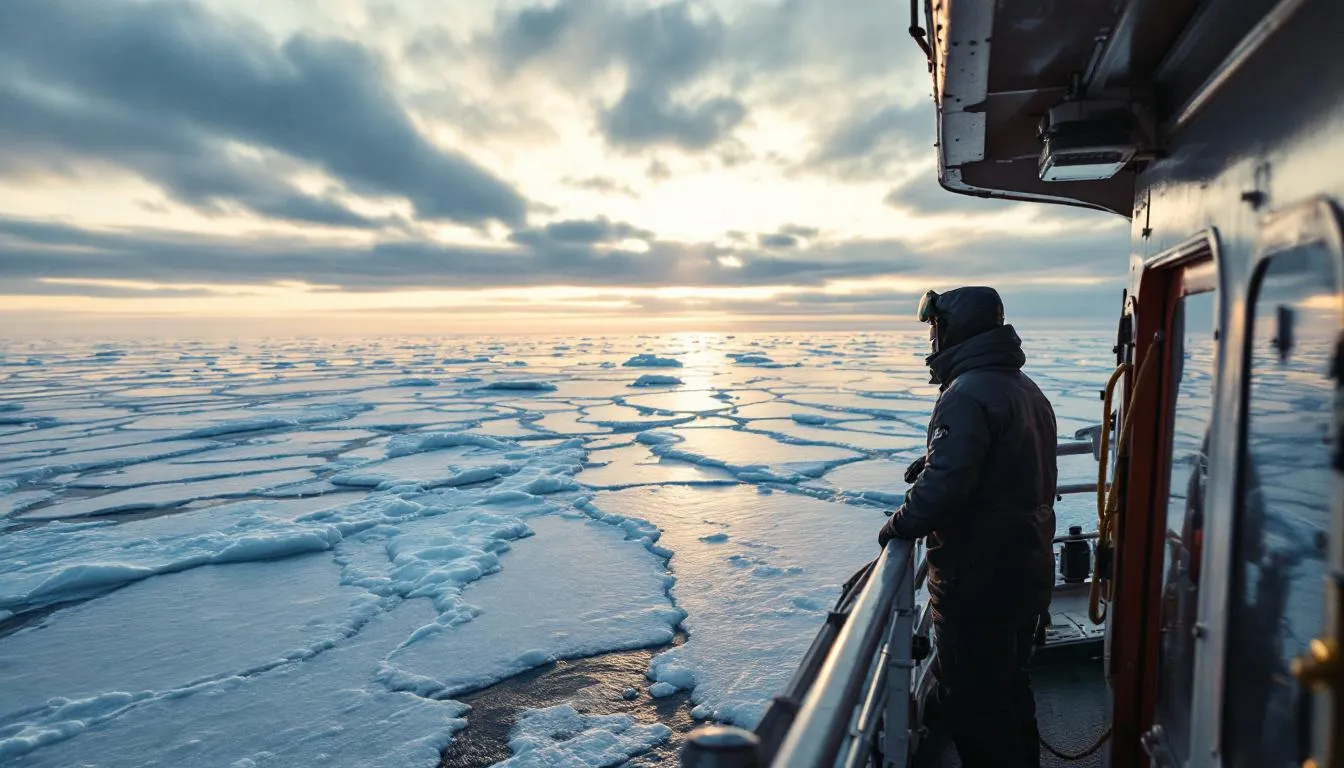
Your primary job is reading ice conditions in real time and advising the captain on the safest, most efficient route. You spend time on the bridge studying the ice ahead: color, texture, pressure ridges, leads (open water channels), and movement patterns. You use binoculars, the naked eye, and experience to assess ice thickness and stability that radar and sonar cannot reliably detect. You plot routes through ice fields, sometimes directing the icebreaker to punch through barriers of multi-year ice, sometimes threading through gaps that open for only hours at a time. You communicate constantly with the captain, providing updates on conditions, recommending speed changes, and calling out hazards. You also study ice reports from other vessels, review satellite imagery when available, and brief the ship's crew on expected conditions. In calmer stretches, you're studying charts, updating logs, and preparing for the next challenging section. The work demands focus: a single misjudgment can ground a ship or trap it in ice for weeks.
Ice pilots need exceptional spatial reasoning and the ability to read patterns in dynamic, complex environments. You thrive on having complete ownership of a critical decision: the captain respects your judgment because the consequences of poor ice reading fall on you. You're comfortable with long stretches of isolation punctuated by intense periods of focus. Physical comfort in extreme cold and calm temperament under pressure matter; panic does not exist in this job. You're driven more by mastery and respect than by shore-based comfort.
There is no formal entry path to ice pilot. You start as a deck officer aboard polar vessels. Typically this means completing a maritime academy program and earning your officer's license (Third or Second Officer certificate), which takes 1-2 years after high school or a basic maritime training course. Some programs are available through maritime unions and organizations. Once licensed, you sign on as a deck officer with shipping companies operating in Arctic or Antarctic waters. You work beneath experienced ice pilots, learning ice reading through observation and mentorship. You accumulate experience on polar routes, gradually building the intuition and eye for ice that cannot be taught in a classroom. Most ice pilots have 5-10 years of deck officer experience before they're trusted with the full responsibility. There are no shortcuts: the industry will not assign someone as an ice pilot without proven experience in polar waters. Organizations like the International Maritime Organization and regional maritime authorities publish ice navigation standards, but there is no single certification path. You earn the role by showing competence over years in the actual environment.
Ice pilot work is extremely isolating. You spend months at a time in Arctic or Antarctic waters with a small crew, limited communication, and nowhere to go once you're aboard. The work is episodic but exhausting: hours of high focus followed by waiting, then hours of high focus again. You miss extended time with family and friends because contracts demand you're gone for weeks or months at a stretch. The Arctic is opening due to climate change, which means more routes and more demand for ice pilots, but it also means the ice conditions you trained on are shifting unpredictably. Weather can be severe: storms in polar waters are violent, and being trapped in ice because of poor conditions is a real possibility. The pay is good, but it comes at the cost of a normal life with consistent proximity to people you care about. This job demands accepting that your calendar will not align with most of the world's.