Lifeboat Coxswain
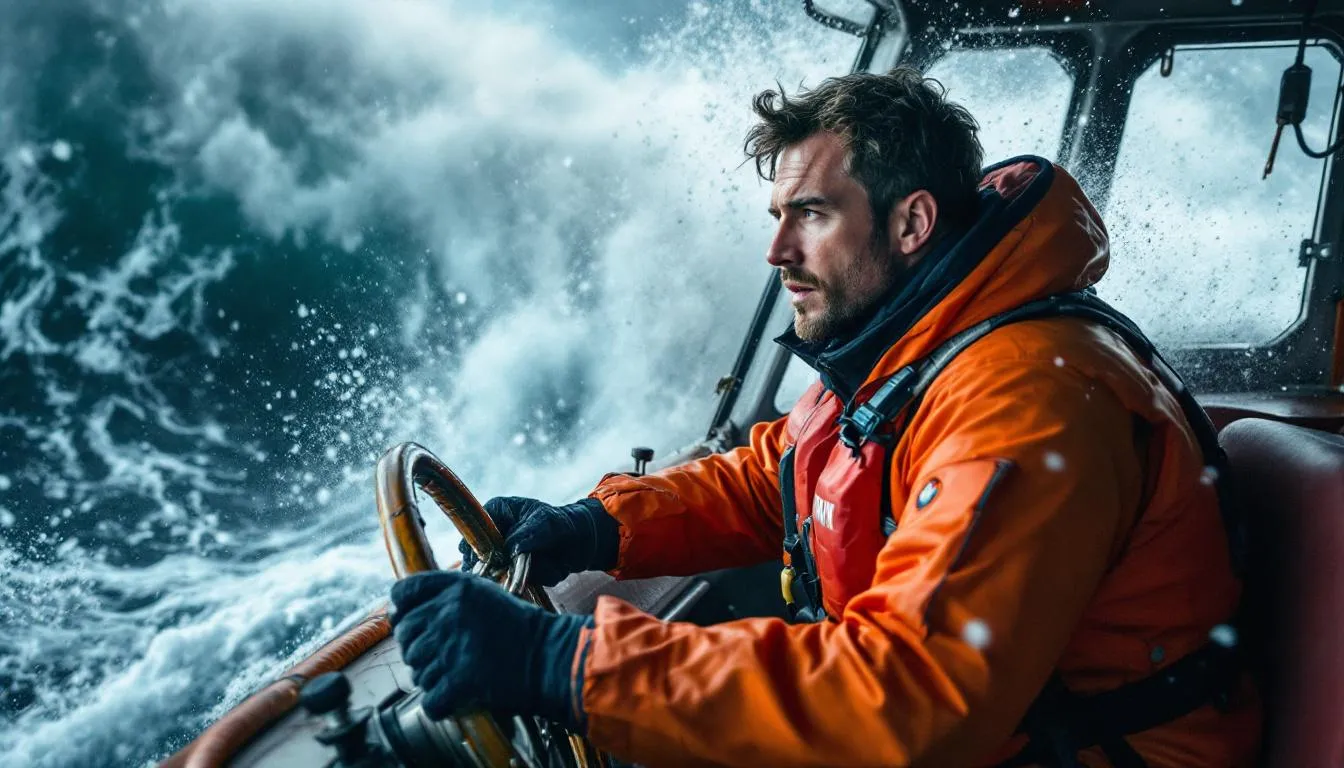
You're the captain of a rescue boat in conditions that ground everyone else. Waves crashing, visibility shot, someone's life depends on your call. Lifeboat coxswains operate in the exact moment when normal rules don't apply. This is one of the few jobs where your performance directly saves lives, and the respect that comes with it is real.
A lifeboat coxswain is the commander of a rescue vessel, responsible for crew and casualty during emergency response. Your station is a coastal town or harbor with an RNLI lifeboat station or Coast Guard unit. You respond to calls from fishing boats in trouble, swimmers in distress, medical emergencies at sea, and people overboard from larger vessels. Work is on-call or part-time rotating shifts. The job itself is sporadic: some weeks you launch multiple times, other weeks you maintain equipment and train. When you do launch, you're working in conditions no commercial vessel would attempt: high seas, poor visibility, darkness, and hypothermic water. Crews are tight and trained to function as a single unit under stress.
Your primary responsibility is the safe operation of the lifeboat in all conditions. This means handling the vessel in heavy seas, reading weather and current, plotting courses, and managing engine systems and navigation equipment. You direct crew positioning during launches and rescues. During an actual call, you're managing radio communications with Coast Guard or emergency services, making split-second decisions about approach angle and technique, and coordinating crew roles: mechanic on engine status, crew handling rescue lines and casualty extraction, lookout watching conditions. Between launches you're maintaining systems, checking engines and fuel, testing communication gear, inspecting rescue equipment, and training crew on procedure and seamanship. You also stand watch during training drills, which mirror real calls as closely as possible. Much of the job is preparation: keeping yourself and your crew sharp so that when a real emergency hits at 2 a.m. in a force 6 sea, the launch and extraction happens automatically.
This job demands people who stay calm when adrenaline is spiking and think clearly under pressure. You need maritime confidence: comfort in boats and rough water, and intuitive understanding of weather and sea state. Command presence matters because crew follows your lead in life-or-death conditions. Successful coxswains also have patience for the waiting: long stretches of maintenance and training between rescues. People who need constant action burn out. You should respect procedure and training discipline, not resent it.
Start by volunteering with your local RNLI station or Coast Guard unit. No college required. Most stations prioritize crew experience: you'll begin as a general crew member on rescues, learning boat handling and rescue techniques on the job over 12-18 months. Coxswain qualification is the next step. The RNLI Coxswain's Certificate requires passing navigation theory (chart reading, weather, tides, seamanship), practical boat handling assessment (launching in rough conditions, precision maneuvering, decision-making under pressure), and casualty care basics. The full training course is 8-12 weeks classroom and water time. Some coxswains come from commercial fishing or merchant navy backgrounds, which accelerates advancement. Coast Guard equivalents follow similar apprenticeship paths. Once qualified, you move into formal coxswain rotation at your station. Pay structure differs between RNLI (volunteer with allowance) and Coast Guard (salaried). Most people do RNLI work part-time or as second career because stations need people available for launch at any hour.
Rescue work carries real physical and emotional load. You will recover bodies. You will launch into conditions that are genuinely dangerous, and crew members occasionally get injured or killed. The RNLI and Coast Guard have strong safety records, but you're operating in an environment designed to kill people. Hypothermia, drowning, vessel capsize, and equipment failure are real risks you manage daily. The psychological toll of repeated casualty exposure is significant: many coxswains eventually step back from active duty because the weight accumulates. Operational reality is also unforgiving. You launch on-call at 3 a.m. in January into a force 7 sea because someone made a bad decision in a boat. Not every rescue ends in recovery. Some nights you motor out knowing the person is likely already dead. Volunteer coxswains juggle this work with civilian jobs, so you're sleeping when you can, working shifts, and always on mental alert during storm season. The respect is real and the purpose is genuine, but this work has a cost that doesn't show up in job descriptions.