Saddler
You're making something that has to work perfectly or people fall off horses. Every stitch, every edge, every reinforcement point matters. It's leatherwork that combines the precision of engineering with the feel of a craft that's barely changed in centuries, except now you're the one deciding how it's done.
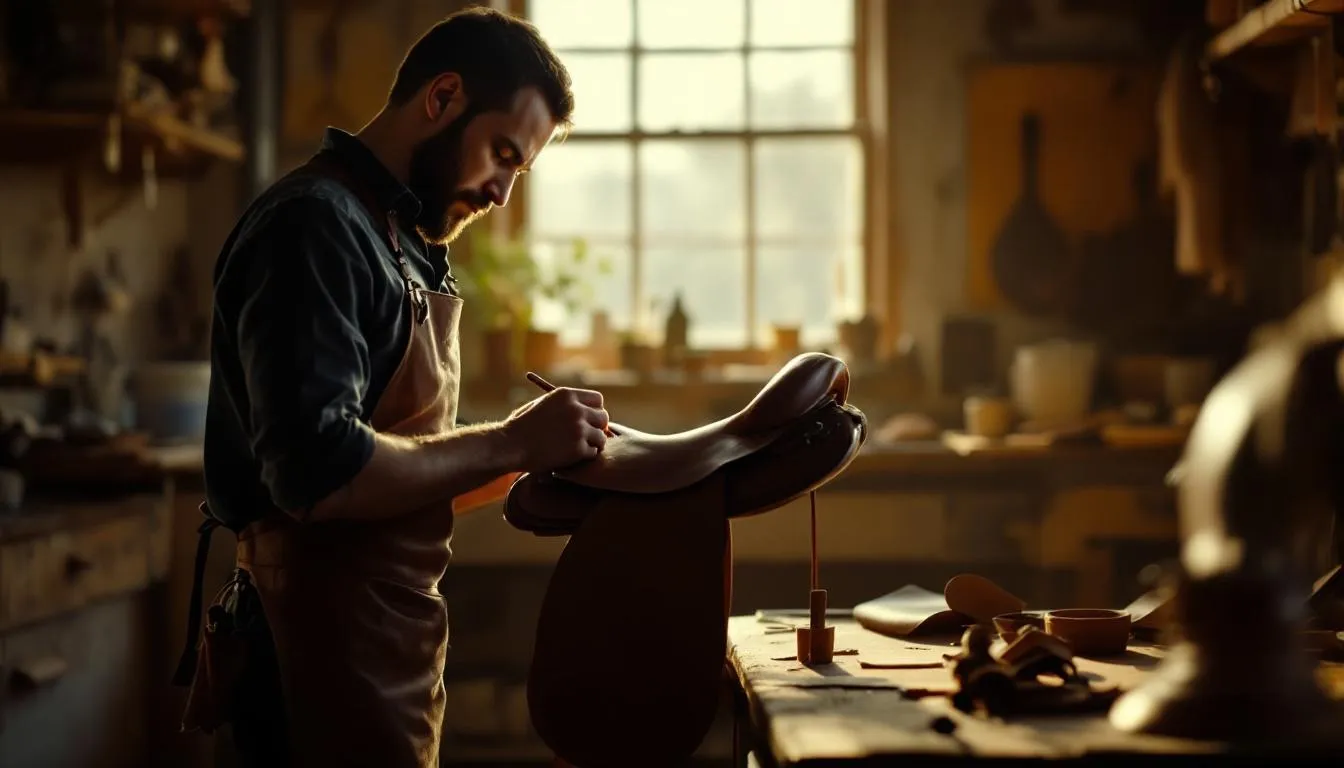
You work in a saddlery—usually a small shop, sometimes attached to a tack store or trainer's facility. Your bench is where the work happens: leather, hardware, tools, and the knowledge of how weight distributes across a horse's back. The pace is deliberate. You're not rushing through a piece because speed kills the product and potentially injures someone. You work with a few other craftspeople, maybe a boss who also saddles. You talk to customers about their horses, their riding style, their problems with fit. Some days are heads-down work. Other days involve fitting a saddle to a specific horse, which means measuring, adjusting, understanding what works and what doesn't. The physical reality is real: leather is heavy, tools require hand strength, and repetitive motions add up. You stand most of the day. The shop can be cold in winter and hot in summer depending on where you are. The work is detailed and demands focus—mistakes are expensive and visible.
You start with a customer's order or specifications. This means understanding what they need: a Western saddle for ranch work, an English saddle for competition, something specialized for a specific discipline or horse type. You measure. You assess the leather—selecting quality hides, understanding grain and weight. Then the actual building begins. You cut leather to pattern, score and edge it, shape it over forms and trees (the wooden frame that gives the saddle its structure). You hand-stitch using waxed thread and needles, creating seams that hold under 1000+ pounds of force. You install hardware—brass fittings, rings, dee rings—positioning each one for function and durability. You dye and finish the leather, oil it, buff it, sometimes add tooling or embossing. You test the structure as you go, understanding how stress lines work. Once a saddle is built, you fit it to the actual horse and rider. This means adjustments: shimming, stretching, narrowing the gullet, redistributing stuffing. You listen to feedback. A saddle that looks perfect can pinch in all the wrong places. You troubleshoot and refine until it works. Repairs come in too—rips, broken fittings, restitching—and you prioritize them because someone's riding season is on hold.
You need patience with repetitive detail work and genuine interest in how things hold together under stress. You should be comfortable receiving direct feedback about fit and function—this isn't subjective art, it's engineering wrapped in leather. You thrive if you like talking to customers about their needs and problem-solving the fit between saddle, horse, and rider. Stubbornness helps: this craft demands precision and the willingness to redo work until it's right, not good enough.
There is no standard path and no degree required. You need to find a saddler willing to take you on as an apprentice. This usually means walking into a saddlery with portfolio work or examples (even if they're rough), showing you can work with your hands, and convincing them you're serious about learning. Some saddlers are more open to training than others. Start by looking for established saddleries in your region, especially near horse communities, racing stables, or Western ranches. Call them directly and ask if they hire apprentices. You can also learn basics through short courses at equestrian trade schools or community colleges that offer leatherwork programs, then use that foundation to approach a saddler. The American Saddlemakers Association exists and some members actively train apprentices—they're a resource for finding established craftspeople. An apprenticeship typically runs 3-5 years of hands-on learning before you're truly independent, though you can be earning within your first year. Early on you're doing prep work, edge finishing, basic stitching, and taking direction. Your pay reflects that. As you prove competence, you handle full builds and more complex work.
Saddling is a small world with shrinking demand. Fewer people ride seriously. Factory saddles are cheaper. The market for custom saddles is real but not growing. You may spend years building serious skill only to find limited work in your area. Geographic mobility matters. You might need to relocate or build a remote client base if you want to stay in the craft long-term. Physically, this work accumulates. Tendonitis in your hands and wrists is common. Back and shoulder pain from bending and repetitive motion is real. Some saddlers develop long-term issues that force them out of hands-on work. The work is detail-intensive and mentally demanding in ways that don't always feel obvious—eye strain, concentration fatigue, the pressure of getting it right because someone's safety depends on it. And you're only earning when the saddle is done. Custom work can mean weeks on a single piece with no income until it's delivered.