Wind Turbine Technician
Most people drive past wind farms without thinking twice. You are the one who climbs inside those towers, hauls tools up a ladder that never seems to end, and works on machinery the size of a house with nothing but sky around you. This job puts you somewhere most people will never go and pays you well to be there.
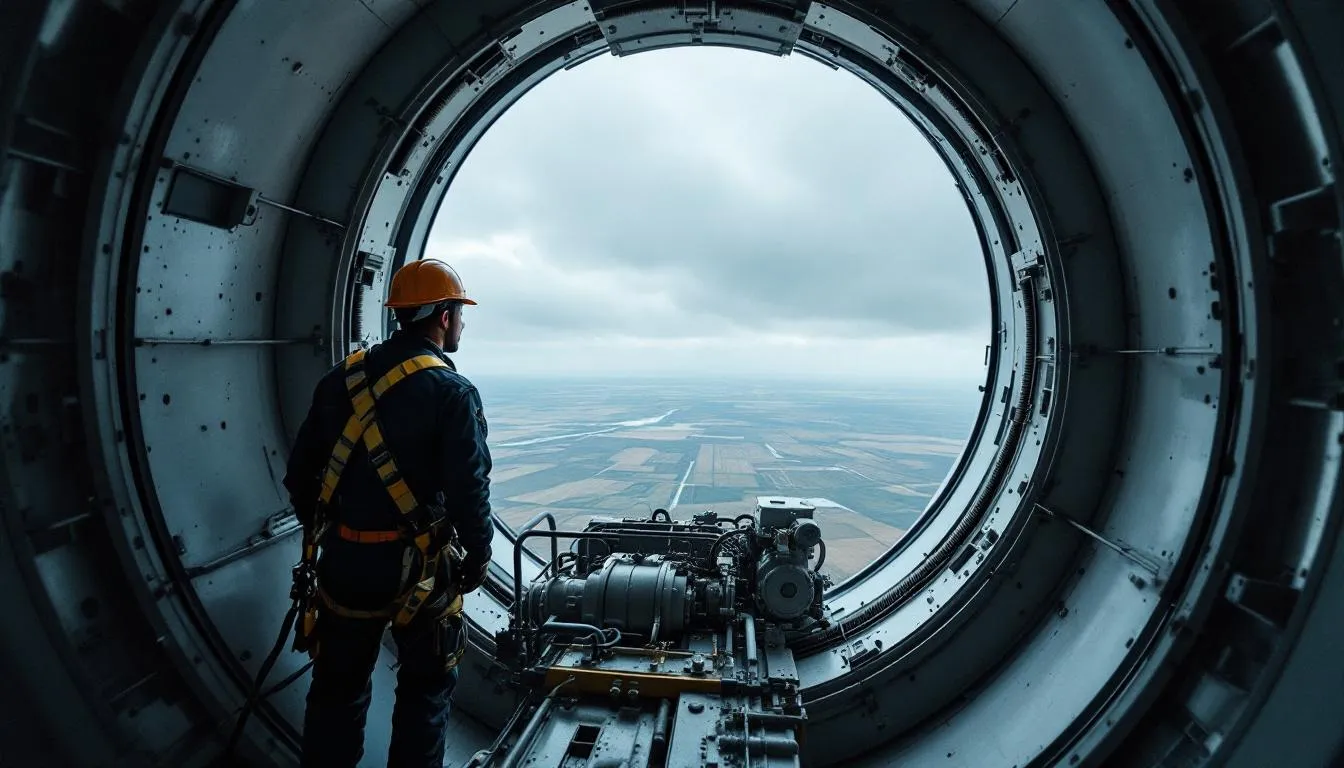
You work on wind turbines. That means climbing steel ladders inside a tower that can top 300 feet, then stepping out onto a nacelle the size of a small apartment while the wind does whatever it wants. Some days the view is incredible. Other days you are soaked, freezing, and trying to diagnose an electrical fault while gusts shake the structure beneath you. Both are part of the job. The work is split between scheduled maintenance and emergency repairs. Scheduled work is methodical: lubrication, bolt torque checks, filter replacements, system diagnostics. Emergency callouts are different. A turbine goes down and the clock is running because every hour it is offline costs money. You move fast, troubleshoot under pressure, and get it back spinning. Most technicians work in small crews, usually two people per turbine for safety. You will spend a lot of time with the same partner. You will also spend a lot of time driving to remote sites, sometimes in the middle of nowhere, sometimes in the predawn dark. It is not glamorous. But the skill set is real, the pay reflects it, and the work is genuinely hard to automate.
A standard maintenance visit starts before you leave the ground. You review the turbine's service history, pull diagnostics from the SCADA monitoring system, and load out your tools and parts for the climb. Once you are inside the tower, you climb. A typical utility-scale turbine means 200 to 300 feet of ladder, and you are doing it with a tool bag. You learn to pace yourself early or you burn out before you reach the top. Once in the nacelle, you work through a maintenance checklist that covers the gearbox, generator, pitch and yaw systems, hydraulic lines, cooling systems, and all associated electrical components. You check torque on critical bolts, replace filters, sample oil, inspect brake pads, and test safety systems. You log everything. The data you collect feeds into predictive maintenance systems that flag the next problem before it becomes a breakdown. Repair work is less routine. A gearbox failure, a blade pitch fault, or a generator issue can mean sourcing parts, coordinating with a crane crew for heavy lifts, or working extended hours to get a turbine back online before a weather window closes. Some repairs require you to go external on the nacelle or work in confined spaces inside the hub. You also handle some ground-level work: inspecting tower bases, checking cable runs, maintaining site electrical infrastructure. As you build experience, you take on more complex diagnostics, mentor newer techs, and sometimes function as lead on larger repair jobs. Senior techs with blade inspection or high-voltage certifications get pulled in for specialized work that pays accordingly.
People who do well here are comfortable with heights and closed spaces in the same job, because you deal with both. You need mechanical and electrical aptitude, not one or the other. The technicians who advance fastest are the ones who genuinely want to understand why something failed, not just swap the part and move on.
No degree required. Most wind tech jobs want either a two-year associate's degree from a wind energy or electromechanical technology program, or a relevant background in electrical work, HVAC, or industrial maintenance combined with willingness to train. The degree path takes about two years and costs significantly less than a four-year program. Schools like Mesalands Community College in New Mexico and Laramie County Community College in Wyoming run well-regarded programs with actual turbine training towers on site. If you have a military background in avionics, electrical systems, or mechanical maintenance, employers will take a hard look at you. If you do not have either, look for entry-level field technician roles with companies like Vestas, GE Vernova, Siemens Gamesa, or independent O&M contractors. Some hire entry-level and train on the job. Certifications that matter: GWO Basic Safety Training (BST) is the industry standard for site access and covers first aid, fire awareness, manual handling, working at heights, and sea survival. Most employers require it before your first day on a turbine. OSHA 10 or 30 is expected. As you advance, high-voltage electrical certification and blade inspection training (look at BZEE or DNV-accredited courses) open higher-paying work. Expect to be earning within six months of finishing a formal program, and at full entry-level pay once you have your first year of field hours behind you.
The location reality hits harder than most job listings let on. Wind farms are built where the wind is, which is usually not where people are. Remote sites, long drives, and extended stays away from home are normal. Some positions are travel-heavy enough that you are essentially living out of hotels for weeks at a time. If you have a family or prefer to stay close to home, this matters and you should think about it before you commit to the field. The physical toll is also real and cumulative. Climbing 300 feet multiple times a day, working in confined spaces in awkward positions, and doing it in heat, cold, and wind takes something out of your body over time. Knee problems, shoulder wear, and back strain are common among experienced technicians. The industry has improved ergonomics and climb-assist systems are more common than they used to be, but this is still a physically demanding career over the long haul. Go in knowing that.