Shark Feeder (Dive Tourism)
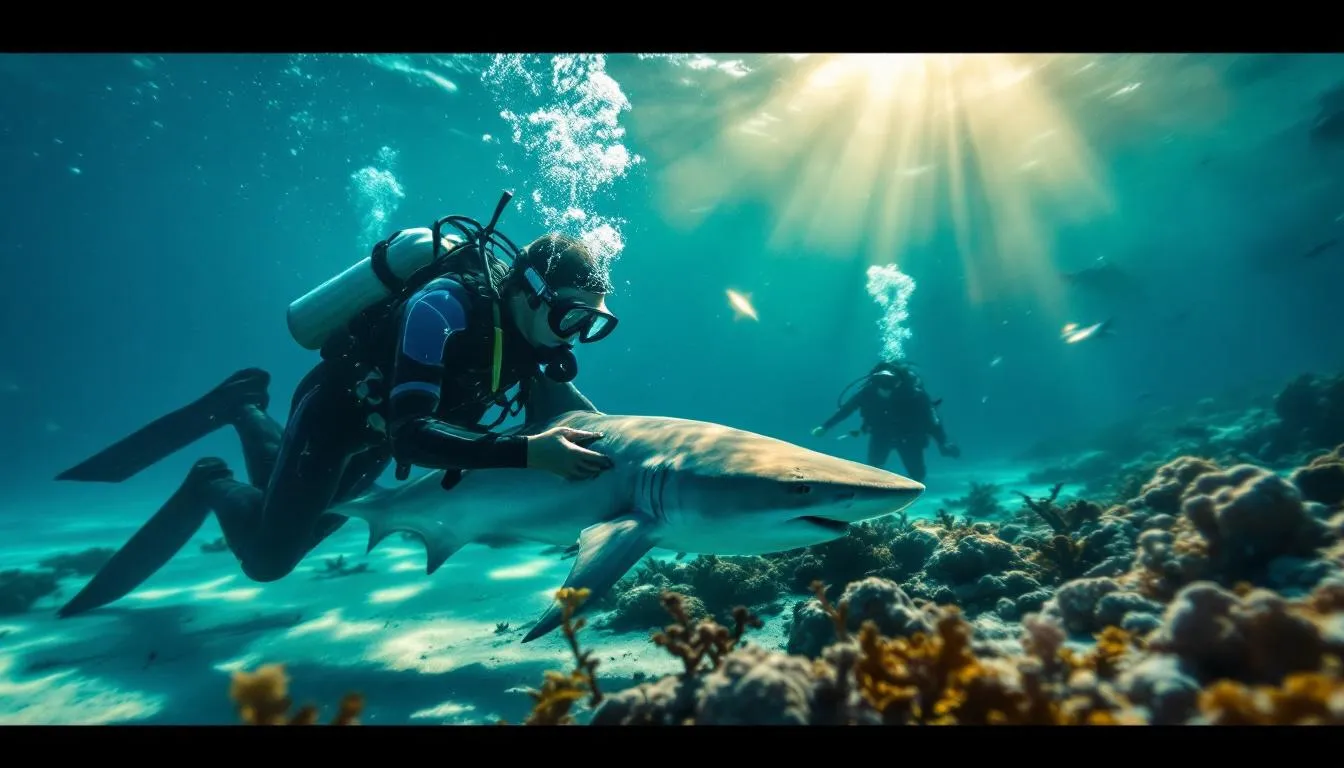
You're underwater with a reef shark inches from your face, hand-feeding it fish. This is your job. Shark feeding dives are one of the highest-demand experiences in dive tourism, and operators need people who can stay calm, read animal behavior, and execute the feed safely every single time.
Your day starts early. You're at a dive boat before sunrise, prepping tanks, checking equipment, and reviewing the dive profile with your team. Most shark feeding operations run in tropical or subtropical locations: the Caribbean, Hawaii, South Africa, Australia, Fiji. You're working with 4 to 8 paying customers per dive, plus a dive master, safety diver, and boat crew. Underwater, you're the focal point. You descend to the bottom (usually 40 to 80 feet), position your group in a controlled area, and begin the feed. Sharks are attracted by bait and chum in the water. You hand-feed them using a stick or pole, keeping them calm and predictable while guests photograph and film. The dive lasts 30 to 45 minutes. You surface, debrief passengers, then prep for the next dive. Most operations run two to three dives per day. The environment is warm, clear water with strong currents some days. You're working alongside the same small team daily. The pace is controlled underwater but physically demanding topside. You're constantly managing guests, equipment, and animal behavior at the same time.
Before dawn, you arrive at the dive operation and begin equipment checks: tanks are filled to spec, regulators tested, BCDs inspected for leaks. You coordinate with the boat captain and other divemasters on the day's conditions, customer certifications, and dive plan. You brief the group on shark behavior, hand signals, and what to expect. Some guests are certified divers; some are borderline nervous. Underwater, you descend as the guide while a safety diver watches the group. You position everyone in a circle or line on the seafloor, then begin the feed using pre-prepared bait and sometimes a feeding pole. Sharks arrive quickly, often Caribbean reef sharks or blacktip reef sharks depending on location. You watch their body language constantly: tail position, gill flare, mouth shape. You control the intensity of the feed to keep sharks feeding rather than defensive. You move the bait, position sharks away from guests, and signal your team if anything escalates. If a shark shows stress signals, you dial back the feed. If a guest panics, you reposition them or signal the safety diver. You're managing multiple variables at once: guest comfort, shark behavior, nitrogen narcosis (at depth), bottom time, and air consumption. After the dive, you surface, help guests out of gear, and give a post-dive talk about what they saw and how sharks actually behave. You then rinse gear, refill tanks, and prep for dive two. On shore, you maintain logs, write incident reports if anything notable happened, and clean equipment.
You need genuine comfort in the water, not just certification. This job attracts people who actively want to be diving multiple times daily. You also need real animal intuition: the ability to read subtle behavior shifts and stay calm when a 6-foot shark changes mood. Successful shark feeders are methodical and detail-oriented on the surface (equipment checks matter) but adaptable and quick-thinking underwater. You're managing group dynamics constantly, so you need patience with nervous customers without losing focus on the animals. The job also rewards people who want to live in a specific place: most shark feeding work is geographically tied. If you love a location and can commit to years there, you'll build reputation and steady work.
You need to start as an advanced recreational diver before you can even apply. Get your basic open water certification (about 3 days, $300-500), then your advanced open water card (2 days, $250-400). Most shark feeding operations want at least 50-100 logged dives before they'll hire you as a deckhand or assistant. Once you have that baseline, look for work at dive shops or tourism operations in shark feeding hotspots: Key Largo or the Keys in Florida, Fiji, the Caribbean, Hawaii, or South Africa. Many shops hire deck crew first: you manage equipment, assist divers gearing up, help with tank fills. You're learning the operation and proving you're reliable around customers and animals. After 6 to 12 months of deck work, you can work toward your dive master certification through PADI or SSI (about 1-2 weeks, $1,000-1,500). Divemaster is the credential operators want for customer-facing diving. Once certified divemaster, you can guide dives. But shark feeding specifically requires behavioral training. Most operations run their own in-house shark handling courses (3 to 5 days, $500-1,000). They teach you how to read shark mood, position your group, use feeding poles, and respond to escalation. Some operations want you to apprentice under an experienced shark feeder for 20 to 30 dives before you lead your own. Total time from zero to leading shark feeds: roughly 18 to 24 months. Entry pay starts around $150-250 per dive led as a contract guide, or $25,000-32,000/yr if you're hired full-time by an operation.
You are taking real risk. Shark feeding operations exist in a gray zone: many Caribbean governments and conservation organizations argue they change shark behavior and create dependency on human food. You may face criticism from other divers and conservationists. The work can also cause burnout from repetition: you're leading the same dive profile 5 to 6 days a week, managing tourists, and staying hyperaware of animal behavior. That intensity wears on you. Physically, your body takes a hit. You're diving in warm water, which sounds ideal, but you're underwater for 30-45 minutes at depth two or three times daily. Nitrogen loading adds up. Decompression sickness is rare with proper dive protocols, but ear issues, sinus problems, and joint pain are common among career dive guides. You're also exposed to sun constantly: deck crew and guides get hammered. Many guides develop skin damage. Finally, the work is seasonal and location-dependent. If your operation closes for hurricane season or loses its operating permit, you lose income. Some years, tourist demand drops. You need savings and flexibility.