Underwater Photographer
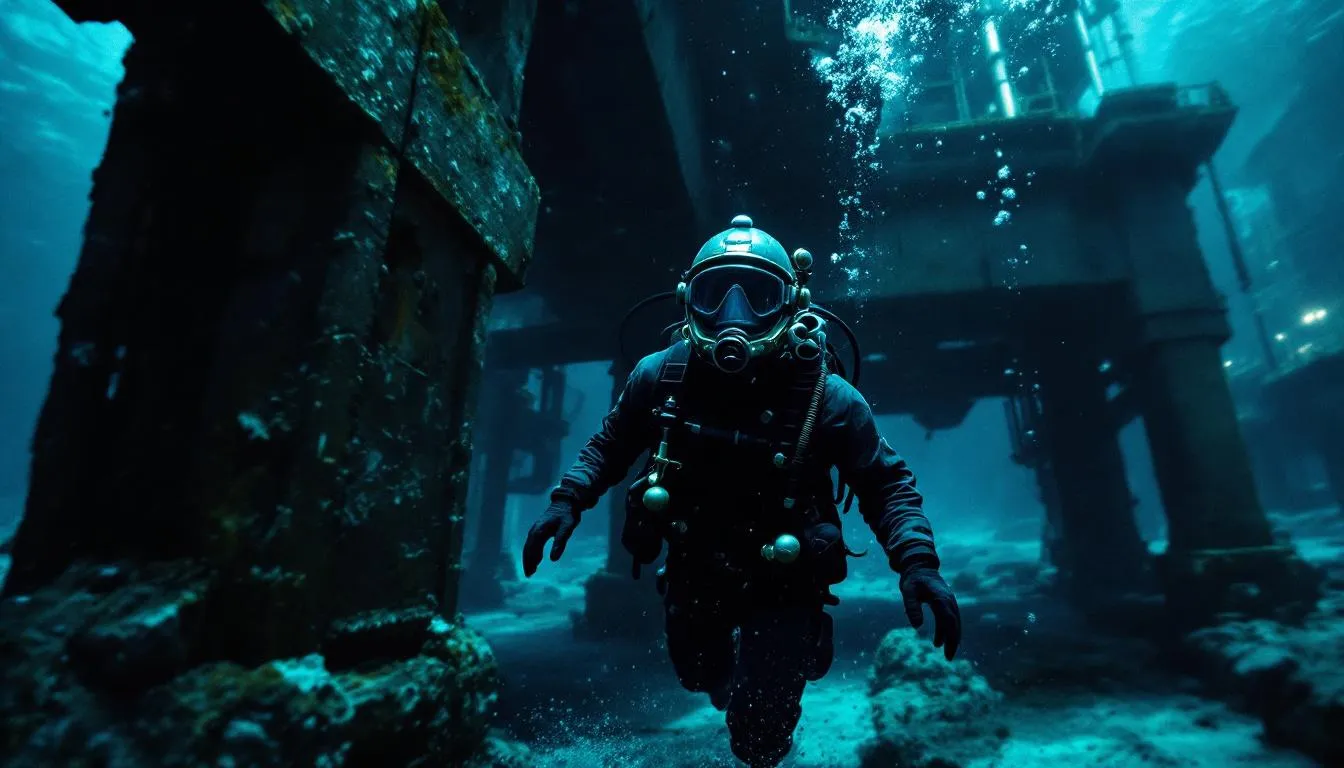
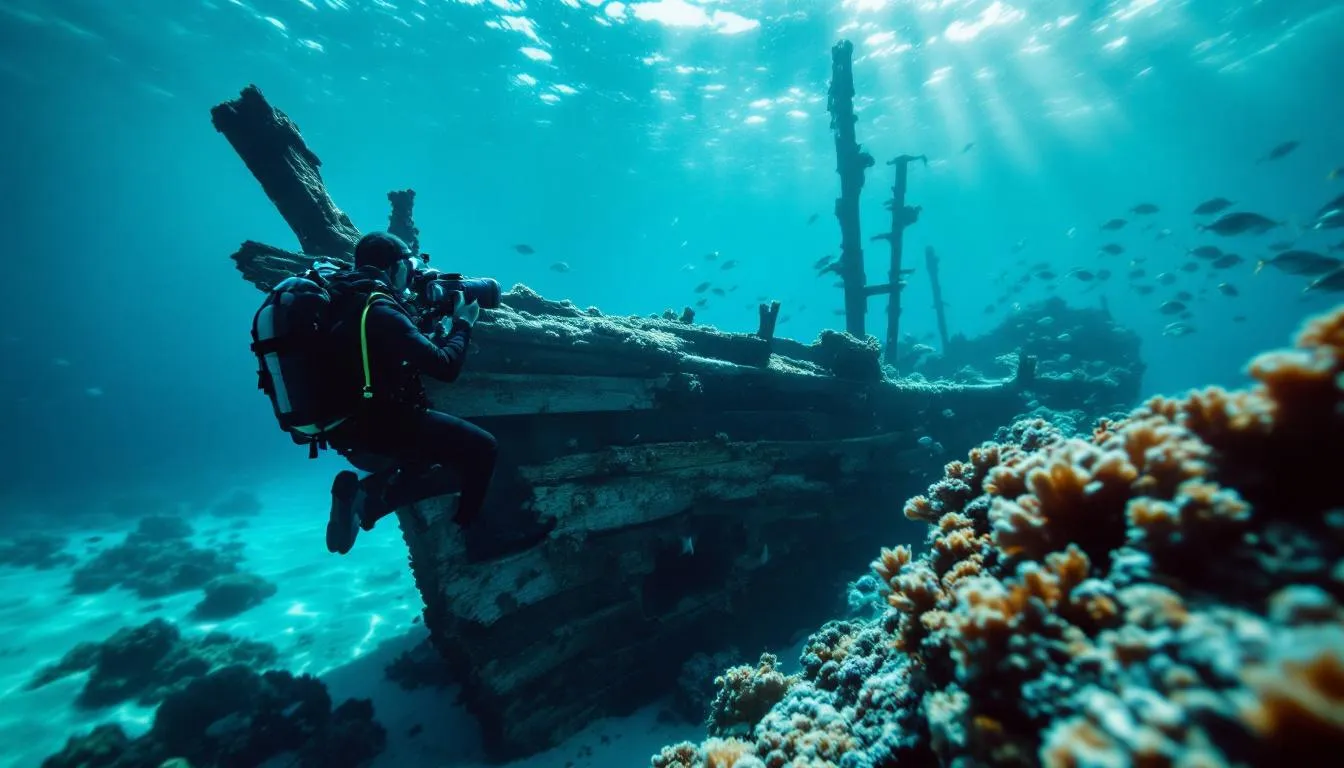
You're 200 feet down documenting a sunken warship, or filming a great white shark for a nature documentary. Underwater photography is one of the few jobs where your commute is literally into another world. Most people will never see what you see.
Your workday depends entirely on the project. You might spend weeks planning a deep wreck dive off the coast, or you're in a tropical location shooting coral reefs and sea turtles for a client. Weather controls everything. If the water is rough or visibility is poor, you don't work, which means you don't earn. Most of your time underwater is focused, methodical work, not the dramatic moments people see in the final footage. You work with dive masters, safety personnel, clients who are often on boats above you, and sometimes research teams. The underwater environment is unforgiving. Mistakes don't get a second take. Equipment failure 100 feet down is not an inconvenience. This is seasonal in many regions. Winter diving in colder water is possible but tougher and pays less. Summer and shoulder seasons are where the work is.
A typical underwater photography job starts days before you hit the water. You scout locations, plan camera angles, understand tidal patterns, check weather, and review safety protocols with your dive team. You're also maintaining and testing your camera housing, lenses, strobes, and backup gear. Salt water corrodes everything. Prevention is part of your routine. Underwater, you're managing multiple technical challenges simultaneously. You're controlling buoyancy so you stay steady while framing shots, managing your air consumption because you can't just surface when you want, monitoring your dive computer, watching for currents, and operating cameras in an environment where changing batteries or adjusting settings is exponentially harder than topside. You're shooting for clients who aren't in the water with you, so you have to interpret their brief and deliver what they actually need, not what you think looks cool. The actual shooting might be 30 minutes of your 60-minute dive bottom time. The rest is getting to the location, checking on team members, managing safety margins, and ascending at the right pace. After the dive, you're transferring footage, checking for technical issues, and often doing preliminary review and logging. Multi-day shoots mean repeating this cycle while managing fatigue, dehydration, and the physical toll of repeated deep dives.
You need an obsessive attention to detail and comfort with technical complexity under stress. Successful underwater photographers are problem-solvers who stay calm when equipment fails 150 feet down. You also need genuine curiosity about the ocean and marine life, not just an Instagram aesthetic. The isolation and repetition appeal to some people and bore others. Physical fitness matters, but mental resilience matters more. The work requires patience: long waits between good shots, days of mediocre visibility, and the discipline to execute the same dive profile safely every single time.
You need to be a certified advanced diver first. Start with basic open water certification (PADI or equivalent), which takes 3-4 days and costs around $500. Build your dive log with at least 100 dives across 6 months to a year. Pursue deep diver certification (PADI Advanced Open Water) and specializations like wreck diving, nitrox, and deep diving. These cost $300-800 each and take weeks to months. Total investment: $2,000-4,000 and significant time in the water. Simultaneously, develop serious photography skills. You need to understand composition, lighting, exposure, and post-processing at a professional level. Many underwater photographers start on land or in pools, then transition to underwater work. Some take specialized underwater photography courses offered by dive shops or photography schools, which run $1,500-3,000 for intensive training. Your first gigs likely come through dive shops, small tour operators, or tourism boards looking for content. You'll often work for low pay or trade (free diving for portfolio work). Build a strong portfolio of 50-100 images that show range: wildlife, wrecks, coral, different depths, different lighting conditions. Network heavily in the diving and maritime photography community. After 2-3 years of consistent work and 500+ logged dives, you can pitch to larger production companies, documentaries, and scientific organizations for higher-paying contracts.
Decompression sickness (the bends) is a real risk. Even with perfect technique, a bad ascent, equipment failure, or unexpected current can cause nitrogen to come out of solution in your bloodstream and cause excruciating pain or permanent nerve damage. You carry this risk on every deep dive. Most photographers either develop a high tolerance for risk or burn out and leave the field. Your earning potential is completely weather dependent. A three-week expedition that gets cancelled due to storms costs you $15,000 in lost income. You have no salary, no steady paycheck. Many months are thin. You're also carrying significant equipment costs. A professional underwater camera housing runs $3,000-6,000. Strobes, lenses, backup cameras, and maintenance easily push you past $15,000 invested in gear. If you lose a camera to equipment failure in the field, you eat that cost and might miss the rest of your shoot. The work is seasonal in most regions. November through March, you're either working in cold water with limited visibility, or you're not working at all. Experienced underwater photographers often supplement with other photography work or dive instruction to stay afloat during the lean months.