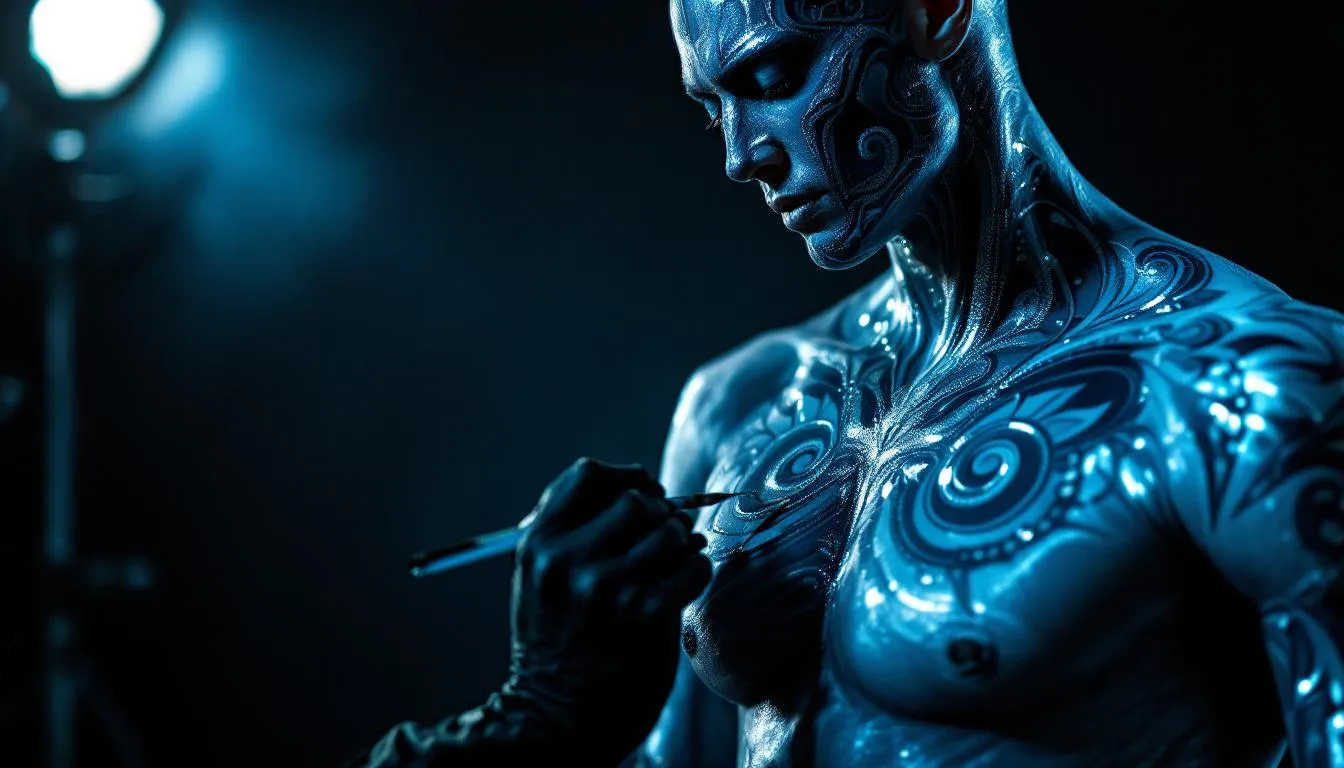
Body Painter
You're painting on a living, moving surface that responds to your work in real time. Body painting sits at the intersection of makeup art, sculpture, and performance. The work ranges from high-fashion photoshoots to competition stages to music festivals where your art is literally worn by the performer.
Body painting is freelance work most of the time. You'll work in studios, on location for photoshoots, at competition venues, backstage at events, or in client homes. Hours are irregular. A shoot might run 2 hours or 8 hours depending on complexity. You're often working under time pressure, with the client or performer right there watching, sometimes in uncomfortable environments (cold studios, outdoor locations, packed backstage areas). The physical part is real: you're standing for hours with arms raised, applying detail work, and your hands and shoulders will feel it by the end of a long day.
Your core work is mixing paint, understanding color theory, and applying it to skin with brushes, sponges, and sometimes airbrush equipment. You assess the client or performer's body shape, skin tone, and the vision they want, then plan how your design will move with them. For competition work, you might be recreating a specific theme or illusion across someone's entire body. For photoshoots, you're collaborating with photographers and stylists to create a look that works on camera. You're managing paint consistency (thinner for detail, thicker for coverage), fixing mistakes on skin instead of paper, and sometimes working with prosthetics, contact lenses, or other special effects to complete the look. You're also protecting the client's skin, using quality makeup and paints that won't cause reactions, and knowing how to remove everything safely. Between jobs, you're building a portfolio, networking with photographers and event organizers, setting pricing, managing bookings, and ordering supplies.
You need patience with detail work and the ability to problem-solve on the fly when something isn't working on skin the way it did in your head. You should be comfortable working closely with people's bodies and be able to read what they actually want versus what they're asking for. People who succeed here are self-starters who can build their own client base, handle rejection and low-paying early gigs without quitting, and stay curious about new techniques and materials.
There's no required degree or certification, but training matters. Most body painters start with makeup artistry training, either through cosmetology school (which covers makeup fundamentals and sanitation) or specialized makeup artistry programs that run 6 months to 2 years. Some skip formal training and build skill through online courses, YouTube, and practice, but you'll be behind. Your real entry is building a portfolio and getting work. Start by offering discounted or free sessions to friends, local performers, or student photographers to build portfolio images. Join body painting communities online and on social media. Look for assistant positions with established body painters. Apply to work with local theater productions, dance companies, or special effects studios to gain experience. Many body painters also work as makeup artists in film, theater, or bridal services to generate steady income while building their body painting client base. The transition from hobby to paying work takes 1-2 years of active portfolio building and networking.
This is freelance work. There's no steady paycheck, no benefits, no paid time off. Your income is entirely dependent on how many sessions you book, and that varies wildly by season. You're also managing all your own business costs: quality paints and makeup are expensive (good body paint runs $10-30 per container and you go through it fast), brushes, sponges, airbrush equipment if you want it, portfolio printing, website hosting, insurance if you're smart about it. Your body takes a hit: standing for 8 hours painting, breathing paint fumes, dealing with clients who are uncomfortable or difficult, missing normal life events because your availability is what sells gigs. There's also the reality that your market is limited. Most body painting work comes from a small number of reliable sources (competition circuits, specific photographers, festival producers), and breaking into new circles is slow. The work is also legitimately physical in ways that aren't obvious until you've done it. Your neck, shoulders, and hands will hurt regularly.