Chainmail Maker
You're making medieval chainmail by hand, the same way it was done 500 years ago. It's painstaking work that ends up on film sets, in museums, and worn by re-enactors who know craftsmanship when they see it. This is one of the few jobs where what you make is something people actively want to own.
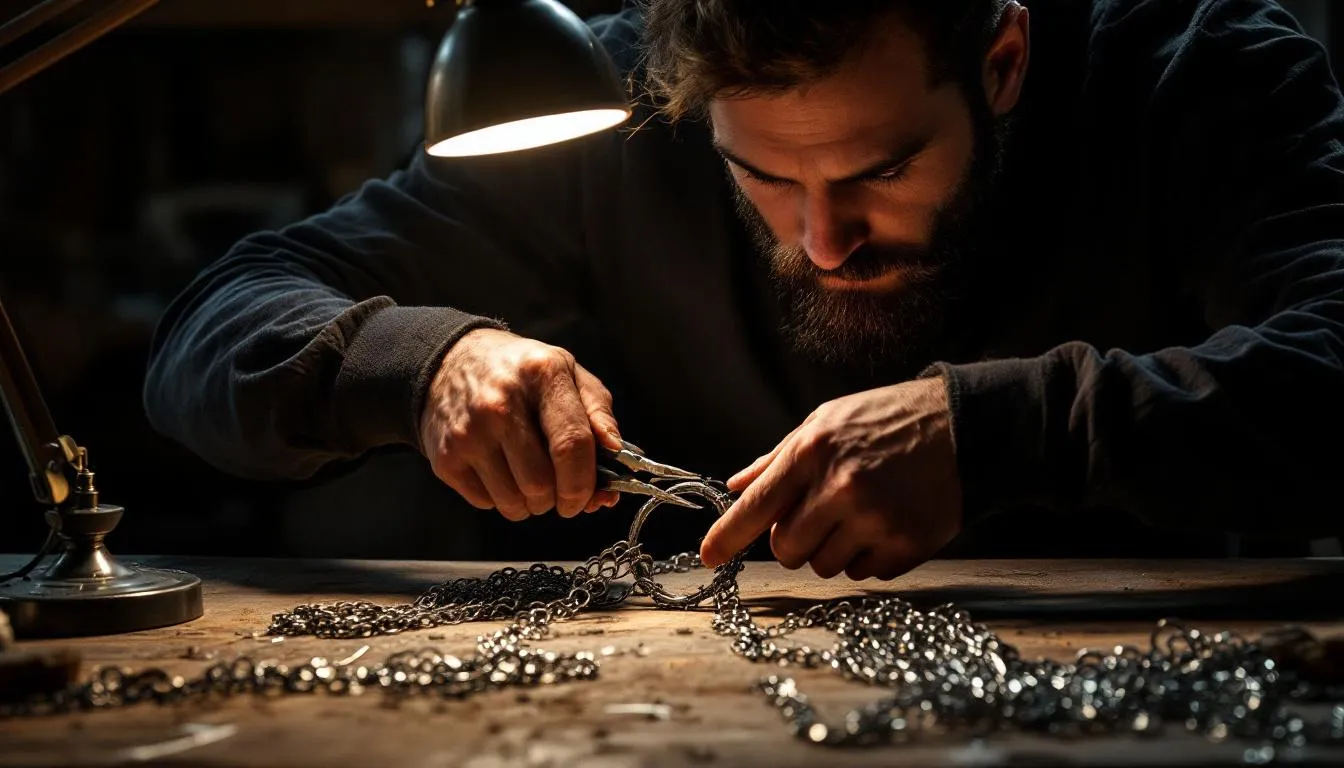
Chainmail making is solitary work that happens at your own pace, usually in a workshop or home setup. You'll spend hours bent over a workbench with wire, pliers, and a design. The work is repetitive in the meditative sense, not the soul-crushing sense. Most of your time is pure production, making rings, closing them, and linking them into patterns. Occasionally you'll take custom orders, communicate with collectors or production companies, or troubleshoot a design that isn't working the way you expected. The pace is entirely up to you, which is both the appeal and the trap. Demand is steady but not constant. Re-enactment communities are loyal customers. Film and TV productions occasionally need armor for historical or fantasy projects. Museums commission pieces for exhibits. Online shops and Etsy sellers buy wholesale. Some chainmail makers work solo, others sell through established retailers or take commissions through their own websites. The work scales with your reputation and output.
Your day starts with wire. You cut it to length, form it into rings using a mandrel or coiling jig, and harden or anneal it depending on the metal. Then comes the closing, ring by ring, using two pairs of pliers to twist each one shut without weakening the metal. Once you have enough closed rings, you link them according to a pattern, whether that's 4-in-1 European, Byzantine, half-Persian, or a custom design a customer requested. The actual linking is where the hours disappear. You're working with your hands, feeling the tension in the wire, watching the pattern emerge. Some days you're making armor for a full suit, which means thousands of rings. Other days you're doing decorative work, smaller pieces, or experimenting with new patterns and wire gauges. You'll need to understand metallurgy basics, like which metals work for functional armor versus decorative pieces, how hardness affects wearability, and how to test your work for flaws. Most of your communication is asynchronous, through email or messages with customers about specifications, timelines, and payment. You might take custom orders with detailed requests, like a specific ring size, wire gauge, or historical accuracy level. You'll handle your own bookkeeping, material sourcing, and shipping. If you're building a reputation, you'll spend some time photographing your work, managing a website or social media presence, and responding to inquiries.
You need patience and obsessive attention to detail. This isn't work for someone who needs instant gratification. You also need to be comfortable with solitude for long stretches. The people who succeed here are often the same ones who can sit with a hobby for hours and get lost in it. Physically, you need decent hand strength and wrist stability, but it's not brutal work. The other ingredient is business sense. You need to be comfortable self-promoting, pricing your work fairly, and managing customer relationships, even if you're an introvert.
You don't need formal training or certification. Start by teaching yourself. There are thousands of tutorials online, and the barrier to entry is low. A basic setup costs $50-200: some wire, two pairs of pliers, a mandrel or dowel rod, and patience. Buy quality tools, not garbage, because bad pliers will destroy your hands and your work. Most people start by making jewelry and small pieces for friends. Learn the basic patterns first, then branch into larger projects and armor. Join online communities, re-enactment groups, or metalworking forums where you can get feedback, sell, and find customers. Some makers start by selling at re-enactment events or craft fairs. Others build an online presence first and take orders through Etsy or their own website. There's no timeline here. Some people are making serious money within a year of starting. Others take three years to build a reputation. It depends entirely on your output, the quality of your work, and how aggressively you market. If you want to accelerate, consider taking a metalworking class to understand annealing and hardening, or connect with established chainmail makers who might mentor you. The re-enactment community is tight and values craftsmanship, so reputation matters. Start making, get good, sell your work, and scale from there.
Your hands and wrists will hurt. Repetitive use injuries are real in this work. Tendonitis, carpal tunnel, and general hand fatigue happen, especially when you're scaling up production. Most experienced makers have learned to take breaks, stretch, and not push through pain. Some invest in better tools or adjust their technique to reduce strain, but there's no way around the fact that your body is taking micro-impact thousands of times a day. Income is inconsistent. You might have a huge order one month that pays $2,000, then nothing for three weeks. Building a sustainable business takes discipline to save during good months and keep pushing during slow ones. There's also the mental weight of being entirely responsible for everything: customer service, shipping, sourcing materials, handling refunds or disputes. If you hate dealing with people or managing small business logistics, this won't work. Finally, be aware that your reputation is everything. One bad review or a customer who claims their armor fell apart can damage your credibility. You're responsible for quality control and customer satisfaction entirely on your own.