Circus Rigger
You're the reason a human can fly across a tent without falling. Circus riggers design, build, and maintain the rope and pulley systems that hold acrobats, aerialists, and trapeze artists mid-performance. One bad knot or missed inspection, and someone dies. It's high stakes, technical work that matters immediately.
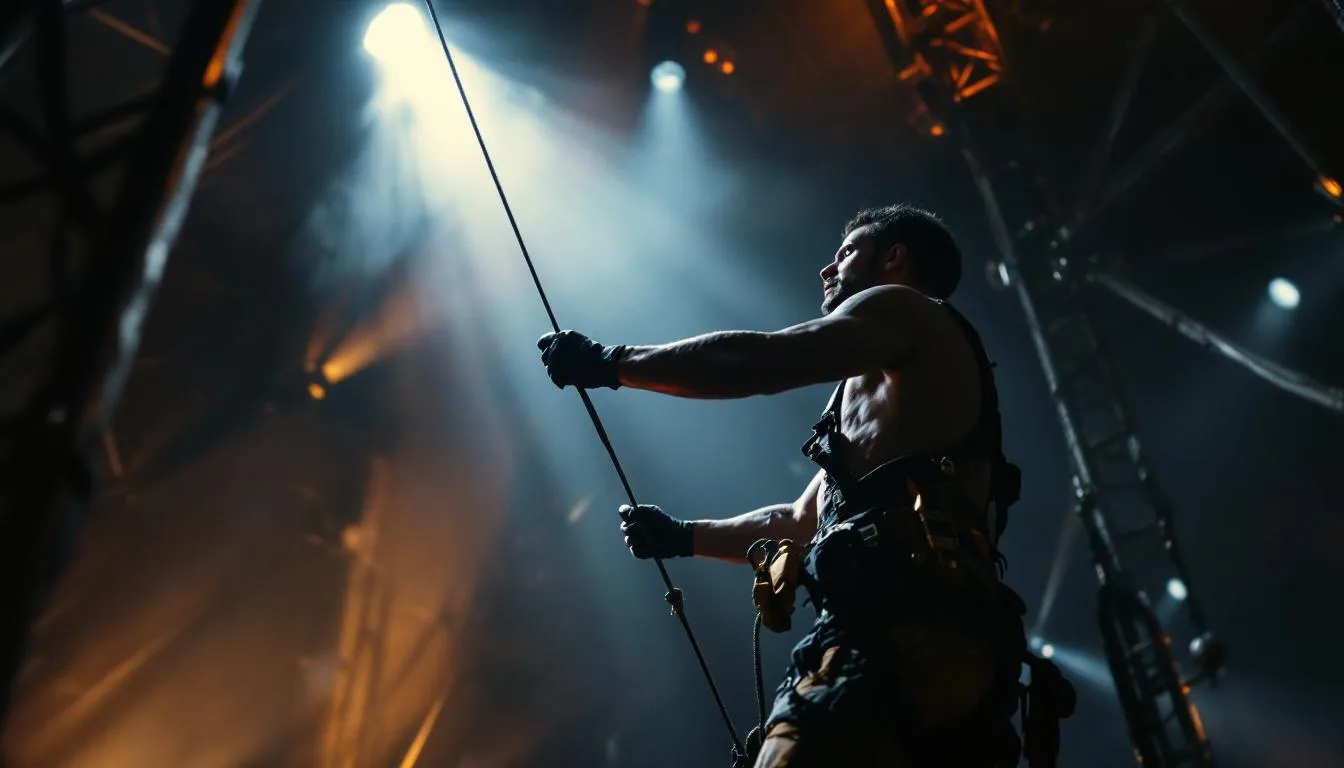
You work behind the scenes and sometimes visible during performances, depending on the show's design. Your day starts hours before the tent opens: inspecting every cable, pulley, harness, and anchor point. You're checking wear patterns, testing load capacity, and running through safety protocols that exist because people have died when they weren't followed. During shows, you're watching. After shows, you're breaking down, repairing, and prepping for the next performance. You work with performers, stage managers, other riggers, and sometimes visiting equipment vendors. The pace is steady during setup and breakdown, intense during load-in and load-out, and laser-focused during performances.
Your mornings involve systematic inspection of all rigging equipment. You check cable for fraying, kinks, or corrosion. You test pulley function, examine anchor points for stress fractures, and verify that all hardware is rated for the loads it will hold. You read load charts, do math on weight distribution, and understand the physics of how forces move through a system. When performers arrive for rehearsal, you watch them train in the rigging to catch any issues before they become dangerous. You adjust harnesses, test safety backups, and sometimes talk through the performer's concerns about a rig or a new trick. When equipment fails or wears out, you repair or replace it. This might mean rewinding cable, rebuilding a pulley assembly, or fabricating custom attachment points. During performances, you're present and alert, watching for any sign of problem. Your job is to catch the thing that went wrong before it becomes catastrophic. You also manage inventory, order replacement parts, document all inspections and repairs in detailed logs, and sometimes mentor newer riggers or technical crew members.
You need a mind that thinks in systems and catches details others miss. You're someone who respects rules because you understand why they exist. You're calm under pressure, methodical, and honest about your own limitations. You're good with your hands, comfortable with math and physics, and you actually enjoy maintenance and inspection work. You're also someone who wants to be part of something bigger than yourself. The performer's trust in you is real and earned.
There is no standard degree path for this work. Most riggers come through one of these routes: apprentice under an experienced circus rigger (which means starting with a touring or residential circus in entry-level positions and learning rigging as part of your role), attend a circus arts school that includes rigging and safety training (schools like Circus Smirkus, Cirque du Soleil's school, or the National Circus Project offer rigging curriculum), or come from a related field like theater rigging, stage construction, or maritime rope work and transition into circus. You need to understand knot theory, load calculations, and safety-critical thinking. Many circuses require you to start as general crew (setup, breakdown, basic maintenance) and prove yourself competent before moving into primary rigging responsibility. Some circuses offer on-the-job training if you show mechanical aptitude and take safety seriously. Certifications in rope rescue or advanced rigging can help. The entry timeline is typically 6 months to 2 years before you're trusted with primary rigging responsibility, depending on your starting experience and how quickly you demonstrate mastery.
Circus work is seasonal. You might have a solid 8 months of income and then 4 months scrambling for off-season work or living on savings. The off-season can be brutal financially if you haven't planned for it. You also carry weight that most people never think about. If a performer gets hurt because of a rigging failure you missed, that's on you forever. The pressure is real. The work is also physically demanding. You're climbing, carrying heavy equipment, working in heat and sometimes cold, and operating under tight deadlines. You're also dealing with the reality of circus culture, which is often chaotic, underfunded, and held together by people who love it more than they're paid to love it. Some circuses treat their crew well and invest in safety. Others cut corners. You need to know which one you're joining and be willing to walk if they do.