Creature Suit Performer
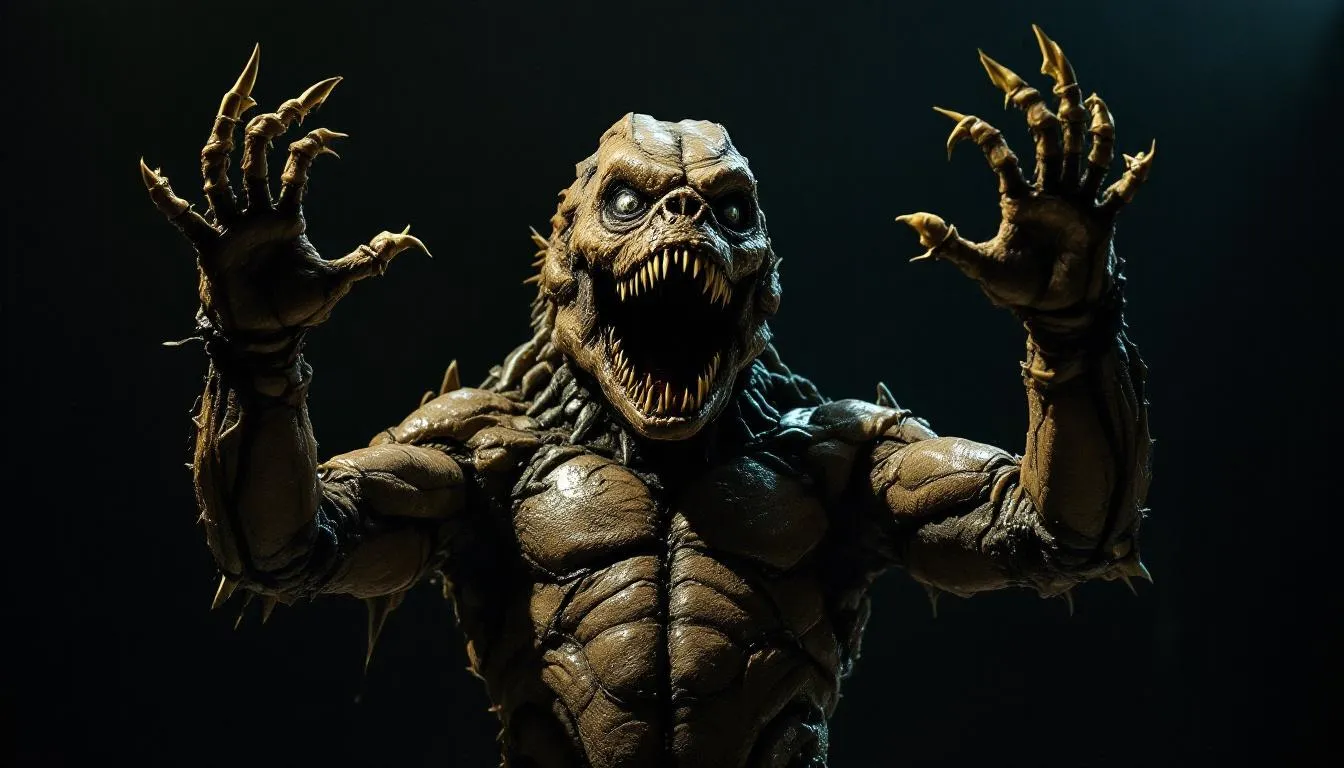
You're the person inside the suit that audiences believe is real. Not CGI. Not a puppet. You, moving and performing inside a complex animatronic creature that weighs 40-80 pounds, in a soundstage or on location, sometimes for 12-hour shoots. The suit is hot, restrictive, and you can barely see out of it. And somehow you still have to deliver a performance that reads on camera.
You're hired because you can move inside a suit in a way that makes the creature believable. The suit is built around you, often custom-fitted. You arrive on set early so technicians can help you into it, check all the mechanics (eyes, mouth, articulated limbs), and rig you with safety equipment if you're working at height or near water. Once you're in, your world is severely limited: restricted vision, limited hearing, no ability to communicate except through radio headset. You perform takes over and over, sometimes in the same 30 seconds of action repeated 20+ times for different angles and lighting. Between takes you stay in the suit unless there's a long delay. The work happens on soundstages, in studios, or on location. You work alongside directors, cinematographers, animatronics technicians, and other performers. The pace is controlled but intense: hurry up and wait, then perform on command with precision.
Your main job is moving and performing inside the suit in ways that feel alive and character-appropriate. This means studying how the creature should move based on the script and director's vision, then executing that movement consistently across multiple takes. You're doing mime-level physical work: conveying emotion, intention, and personality through body language alone because your face isn't visible. You interact with actors, props, and sets while managing extremely limited visibility and mobility. You take direction through headset communication and adjust your performance based on what the camera is capturing. Before and after shooting, you work with the suit team to understand the mechanical systems: which joints move, which are restricted, where the pressure points are, what happens if you fall or twist wrong. On some jobs you're performing for motion-capture data, meaning every movement you make gets recorded and translated into digital animation, so precision matters. You also participate in fittings, where the suit gets adjusted to your body, and safety briefings before any stunt or risky movement.
You need serious physical endurance and comfort in uncomfortable situations. This job draws people who genuinely enjoy physical challenge and constraint, not people who tolerate it. You have to have a performer's discipline: you can nail the same 20-second sequence take 30 times and stay sharp on take 31. You're curious about how things work mechanically and willing to collaborate with technicians on suit design and safety. You have strong spatial awareness and body control, which usually comes from dance, martial arts, gymnastics, or circus training. You don't need your face to be the star; you're comfortable being invisible while the creature gets all the attention.
There's no standard credential for this work. You start by building a performance foundation: take acting classes (focus on movement and character work, not dialogue-heavy training), study mime and movement-based theater, and practice physical theater. Many performers come from theater, dance, or circus backgrounds. Take acting classes that emphasize physicality and character development. Look for opportunities performing in local theater, especially roles that rely on movement rather than dialogue. Once you have some performance experience, the path shifts to networking and portfolio building. Join online communities for special effects performers and creature suit performers. Build a reel showing your physical performance work, even if it's theater footage. Follow production companies that make films and TV shows requiring creature work. Apply to creature effects studios and suit fabrication houses in production hubs like Los Angeles, Atlanta, or Vancouver. Many hire performers as consultants during suit design and build, which gets you in the network. You can also reach out directly to creature effects companies with a reel and willingness to work on testing and fitting. Entry gigs often come as stand-ins or testing performers, working maybe 10-20 days on a project for $200-300/day before landing principal creature roles. Your first few months of actual suit work are low-paid trial gigs; once you have credits, you move into full-time contracts at $400-800/day depending on production budget and suit complexity.
The physical toll is real. You're wearing a suit that weighs 40-80+ pounds in a soundstage that can be 90+ degrees because of lighting. You're sweating inside it for 12-hour days with only brief breaks. Your core, legs, and lower back take a beating from the weight and restricted movement. Heat exhaustion and dehydration are genuine occupational hazards. Some performers develop shoulder and neck problems from the suit's weight distribution. There's also the sensory deprivation aspect: you can't see clearly, hear normally, or communicate except through headset. For some people this triggers claustrophobia or anxiety. The work is project-based and unpredictable, so there's no steady paycheck or benefits unless you land a contract series. Most of the year you're looking for work. There's also limited upward mobility: you don't become a director or DP from creature suit work; it's a specialized craft that doesn't transfer cleanly to other film roles. If you get injured wearing the suit, workers' comp and liability get complicated because you're often classified as an independent contractor rather than a crew member.