Funeral Home Restorative Artist
When someone dies in a car accident, a fire, or after a long surgery, a funeral home restorative artist is the person who makes them look like themselves again before the family says goodbye. It is sculpting, painting, and reconstruction work on the hardest cases imaginable. Almost nobody outside the industry knows this job exists.
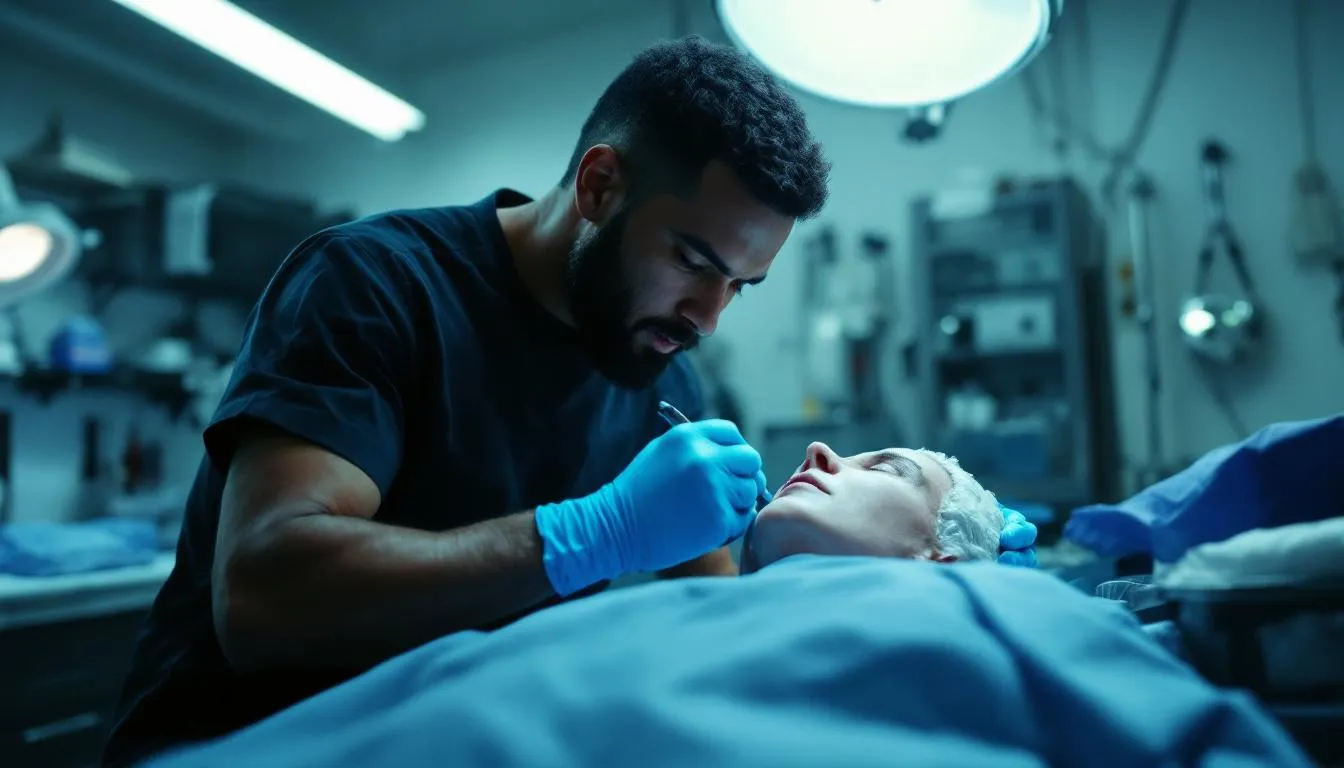
You work in a preparation room at the back of a funeral home. It is quiet, climate-controlled, and methodical. Your coworkers are typically a small team, sometimes just you and the embalmer, and the pace is set by how many cases come in and how complex they are. Routine days involve cosmetic work. The hard days involve trauma cases that require actual reconstruction. The families never see you. They see the result of your work, which is either good enough that they feel some peace, or not, and they remember that forever. That pressure is real, and it sits with you. The job demands focus and a steady hand, not urgency. You are not rushing. You are doing detailed work correctly the first time because there is no second chance. This is a small industry with low turnover. Most shops are independent funeral homes, though corporate chains like Service Corporation International and Dignity Memorial operate regionally and hire more consistently. You will likely know everyone in your market. Reputation travels fast in both directions.
On routine cases, you are applying cosmetics to match a person's natural skin tone from reference photos provided by the family. That means mixing foundation shades by hand, working around the changes that embalming and death itself create in tissue color and texture. You apply the final look and then review it under lighting conditions that approximate the viewing room. On trauma and post-surgical cases, the work gets significantly more technical. A restorative artist rebuilds damaged facial features using wax, wire, plaster, and other materials, then blends the restoration into surrounding tissue so the seam disappears. A person who died in a serious accident may need a reconstructed nose, orbital socket, or jaw line before any cosmetic work begins. You are working from photographs, from family descriptions, and from your own knowledge of anatomy to get it right. You also work on hair, whether the person's own or a wig, and sometimes coordinate with the embalmer on positioning and tissue setting before the body has fully set. In some funeral homes the restorative artist and the embalmer are the same person. In others they are separate roles. If you are specialized strictly as a restorative artist, you may consult on difficult cases from other funeral homes in your area, which adds to your income.
People who do precise, detail-oriented work without needing external feedback or recognition. You will never hear from the families you helped. The work has to be enough on its own. People who are drawn to anatomy, sculpture, or cosmetology and can separate the emotional weight of death from the technical task in front of them tend to last. If you need a loud, social job with constant variety in your surroundings, this is not it.
The fastest way in does not require mortuary science school. In most states, a standard cosmetology license, about 1,000 to 1,500 hours at a cosmetology school, roughly a year, is enough to legally perform cosmetic restorative work on the deceased. This is the no-degree path: cosmetology school, then apply directly to funeral homes for a restorative artist or funeral cosmetologist position. Some funeral homes will also train a cosmetology-licensed hire in-house on wax reconstruction and trauma cases. If you want to also handle embalming and structural work as a licensed embalmer or funeral director, that requires mortuary science school, one to two years at programs like Commonwealth Institute of Funeral Service in Houston, Worsham College in Illinois, or Cincinnati College of Mortuary Science, followed by a one to three year apprenticeship and a state board exam. That path costs $15,000 to $30,000 and takes longer, but it opens up the full range of restorative and embalming work, not just cosmetic cases. Check your state's funeral regulatory board either way, since licensing requirements vary significantly by state. Some people enter as a funeral home assistant or prep room assistant first with no license at all, get a feel for the work, and then decide whether to pursue cosmetology licensing or full mortuary science training.
The emotional load is cumulative and it is not discussed enough in training. You can develop solid professional detachment for adult cases and still get hit hard by a child, or a peer your own age, or someone who looks like a family member. That does not make you bad at the job. It means you are human. But there is no debrief, no HR session, no team check-in after a hard case. You finish the work, clean up, and move on to the next one. Some people handle this their whole career. Some people leave after two or three years because they did not expect the accumulation. The work environment is also genuinely isolating. You spend most of your time in a prep room, often alone, doing work that most people in your personal life would rather not hear about in detail. Social situations where people ask what you do for work can get awkward fast. This is not a deal-breaker for the right person, but it is part of the life and you should go in knowing it.