Train Driver (Heritage/Steam)
Steam locomotives are among the most mechanically complex machines ever built, and there are only a few hundred people in the country qualified to drive one. You are not pressing buttons and watching screens. You are managing fire, water, and pressure at speed, reading a machine through sound and feel the way mechanics stopped doing decades ago.
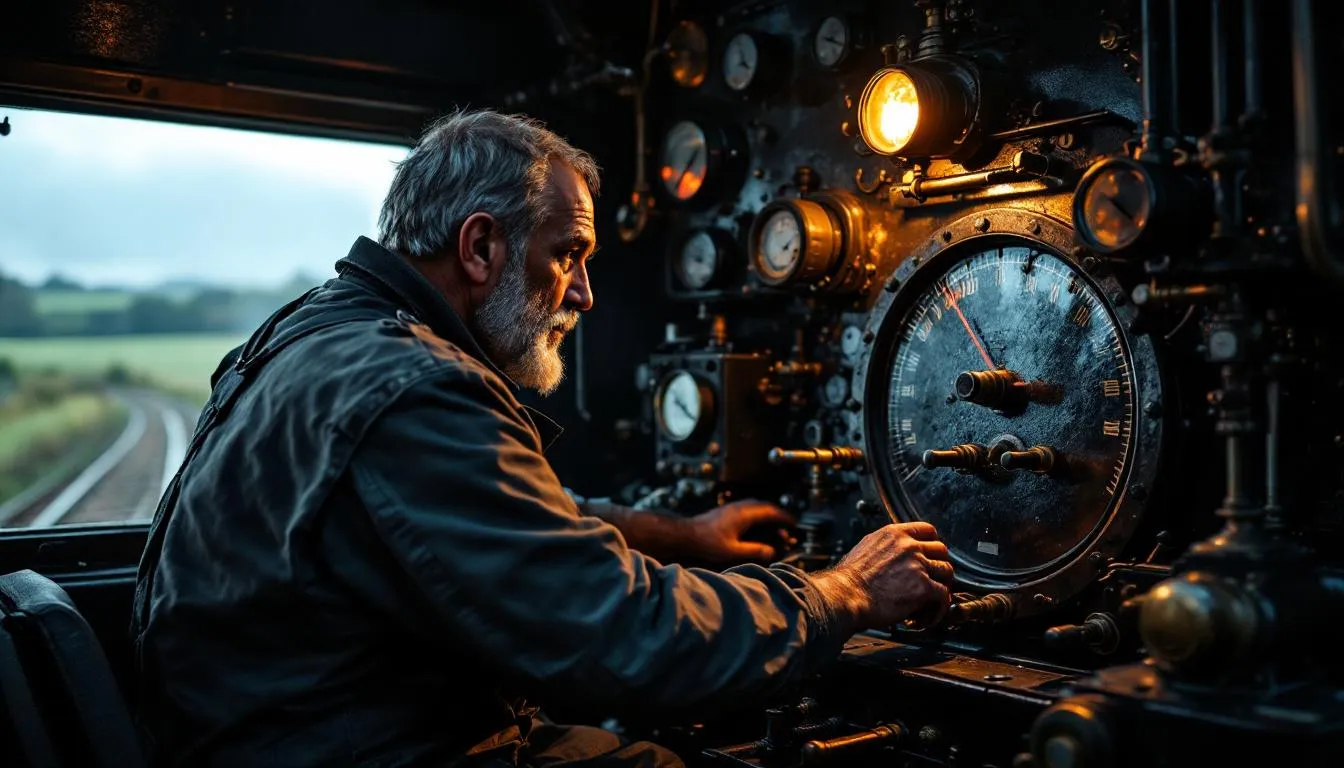
You work on preserved railway lines, usually through countryside or historic routes that draw tourists, rail enthusiasts, and families. The lines are typically short, anywhere from a few miles to around thirty, and you run scheduled services, special event trains, and sometimes private charters. The pace varies hard by season. Summer and school holidays are relentless. Off-season is maintenance, training, and preparation. Your crew is small. On most heritage lines you work with a fireman who manages the fire and steam pressure while you control the locomotive. That relationship matters. A good fireman makes your job manageable. A green one means you are watching both ends of the footplate. Most heritage railways are staffed by a mix of paid professionals and serious volunteers, which creates its own culture. The volunteers are often deeply knowledgeable and have been there for decades. The footplate is loud, hot, and dirty. Coal dust and smoke are part of every shift. In summer the cab temperature can hit uncomfortable levels fast. In winter you are exposed to the elements on older designs. This is not a climate-controlled cab job.
Your shift starts before the passengers ever see the locomotive. You and your fireman prepare the engine, which means inspecting the boiler, checking water levels, building the fire to operating pressure, and running through every system before the locomotive moves an inch. On a cold start this can take two hours or more. You do not rush it. A boiler running at operating pressure contains enough energy to cause a catastrophic failure if something is wrong. Once in service, you are controlling throttle, brakes, and reverser while reading the road ahead, watching your gauges, and communicating with your fireman constantly. Steam locomotives do not behave like diesel or electric traction. They respond slowly, require anticipation, and each one has its own personality based on its age, condition, and design. You learn a specific engine over time, and experienced drivers know their locomotives the way a mechanic knows an old truck. Beyond driving, you are expected to have a working understanding of the mechanical systems. If something sounds wrong, you need to know whether to stop immediately or manage it to the next station. Heritage locomotives break down. Parts are scarce or have to be fabricated. You will spend time in the workshop between driving turns, learning maintenance whether you planned to or not. On smaller lines, everyone does a bit of everything.
People who do well here are mechanically patient. You are not the type to force something or skip a step because it will probably be fine. You read problems early and you take the preparation seriously even when nothing goes wrong. You also need to be comfortable with a physical, dirty job where the feedback is immediate and the consequences of inattention are real.
There is no direct application path from the street. Heritage railway driving is a progression, and it starts with volunteering. Most heritage lines have structured volunteer programs where you begin as a cleaner, working on the locomotives during preparation and disposal. From there you can move to firing, which means learning to manage a steam fire and maintain pressure while a driver operates the locomotive. Firing is where you actually learn steam traction. Most people spend one to three years firing before they are considered for driver training. Driver training on heritage railways is conducted in-house and assessed by the individual railway under the heritage sector's own competency framework. In the UK, the Heritage Railway Association sets standards and most lines train to those benchmarks. You will need a medical clearance and you will be assessed on rules knowledge, route knowledge, and locomotive handling before you are passed out as a driver. The whole path from first volunteer shift to qualified driver is typically three to six years. A smaller number of heritage railways do hire paid firemen and drivers directly, especially for busy tourist seasons, but these roles almost always go to people who already have the background. The fastest way in is to show up at a heritage railway, ask about their volunteer program, and commit to it seriously. Lines remember the people who put in the work.
The pay ceiling in heritage steam is low compared to what the skill level deserves. You can spend five years becoming one of a small number of people qualified to operate a live steam locomotive and still be earning less than a warehouse supervisor. The heritage railway sector runs on passion, volunteer labor, and tight margins. That keeps wages compressed even at the top end, unless you make it to mainline steam excursion work, which is competitive and limited. The other reality is the physical toll over time. Years on the footplate means years of coal dust, heat, noise, and vibration. Hearing protection is better than it used to be, but older drivers carry the damage from decades before standards improved. Your back takes punishment on rough track. The work is seasonal at many lines, which means income can be inconsistent if you are relying entirely on this for your living. A lot of heritage railway drivers hold second jobs or have a trade background they fall back on in the off months.