Umbrella Restorer
There are maybe a handful of people in the world who restore antique and high-end umbrellas at a professional level. Clients ship pieces from Tokyo, New York, and Dubai to get them fixed. You are working on objects that are 100 years old and worth more than most people's cars.
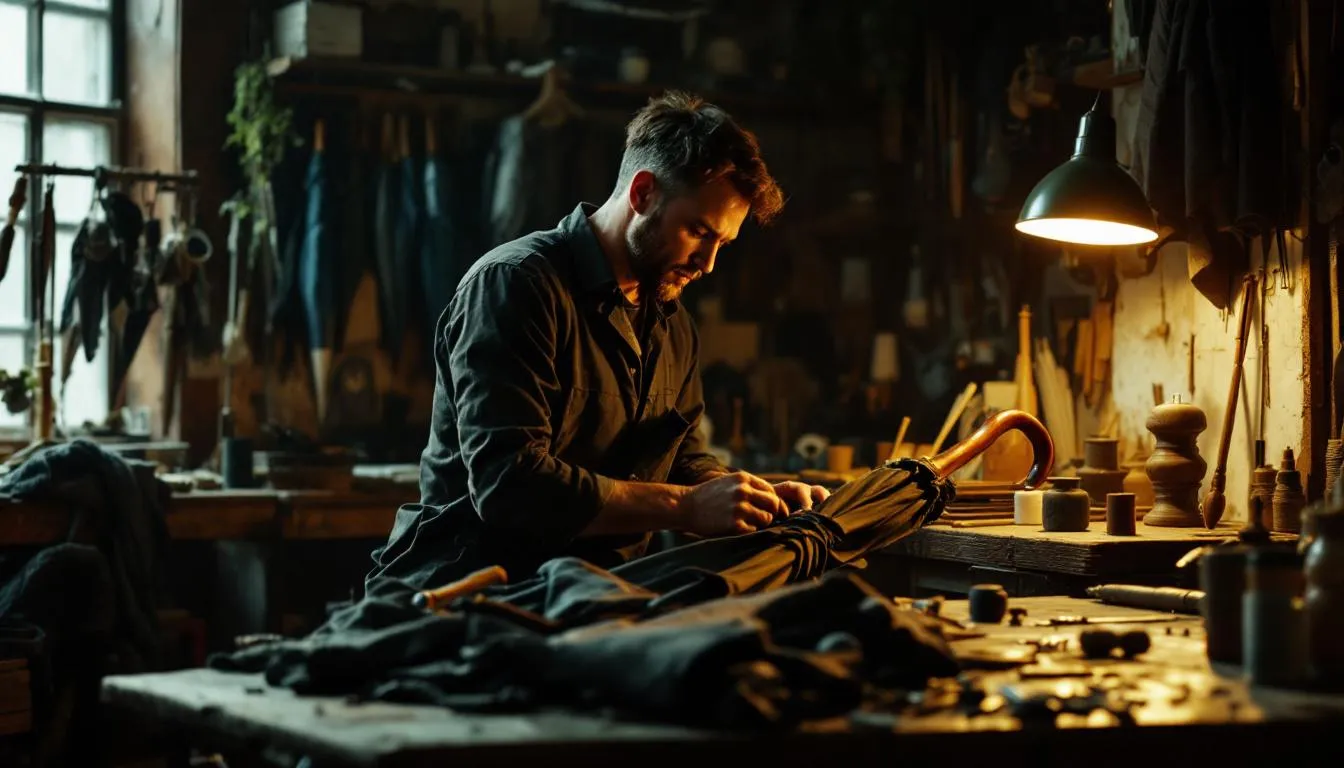
You are working in a small shop, almost certainly in London, the only city where this trade still has a real infrastructure. The pace is slow and deliberate. You might spend an entire afternoon on a single canopy re-covering, fitting silk or nylon to a frame that was made in the 1890s. There is no production quota. The work demands patience above almost everything else. Your clients are collectors, estates, families with heirlooms, and people who spent serious money on a bespoke umbrella and want it kept in service for decades. You will also get walk-ins with a snapped rib on a decent everyday umbrella. The mix ranges from a five-minute repair to a full restoration that takes days. Most of the interesting work comes through referral or reputation, not advertising.
On a given day you might be replacing a runner on a Brigg frame, re-tipping the ribs of a Fox umbrella, or sourcing a correct-period fabric to re-cover a canopy without it looking like a repair was ever done. You diagnose what is broken, figure out whether parts can be salvaged or need to be fabricated, and then do the work by hand. Rib repair is a big part of the job. Umbrella frames, especially older ones, use thin steel or whalebone ribs that snap or bend. You straighten, splice, or replace them depending on condition. Handles are another specialty area. A carved horn, silver-collared, or malacca cane handle can be worth more than the umbrella itself, so you learn to clean, re-attach, and preserve them without causing damage. On the routine end, you are replacing ferrules, fixing stuck runners, re-stitching canopy panels, and swapping out snapped stretchers. On the unusual end, you might be asked to restore a ceremonial or presentation umbrella, or authenticate and document a piece for an estate sale. You learn to source period-appropriate materials because using the wrong fabric or hardware on an antique ruins it.
You have to be genuinely comfortable working alone and in silence for long stretches. People who need variety and fast feedback do not last. The people who do well here are the ones who find something satisfying in making a damaged object whole again, not for any philosophical reason, but because the problem-solving is interesting and the hand work feels worth getting right.
There is no formal school for this. The entry path is an apprenticeship or a direct approach to one of the working shops in London. James Smith and Sons on New Oxford Street is the most well-known. Swaine Adeney Brigg has historically done restoration work. You write to them directly, offer to start at the bottom, and hope someone is ready to take on an apprentice. Expect to spend the first year doing basic repairs and watching. The learning is entirely hands-on. Some entrants come through general leatherwork or tailoring backgrounds, which gives them a head start on working with fine materials. A background in watchmaking or instrument repair, anything that requires precise small-scale hand work, is also transferable in a practical sense. You will not find a job listing for this. You find the shops, contact them personally, and make a case for yourself. The Guild of Master Craftsmen and the Heritage Crafts Association in the UK both track endangered trades and occasionally have contacts or resources. Be prepared for a long apprenticeship period with modest pay before you are trusted with the serious work.
The market is tiny. There is no growth path in the conventional sense. You are not going to open a second location or scale this into something bigger. The number of people who need a serious umbrella restoration in any given city, in any given year, is small. This is a craft you pursue because the work itself holds your interest, not because it leads somewhere else. You will also spend real time sourcing materials that no longer exist in production. Finding the right weight of canopy silk, the correct diameter of brass furniture, or a matching handle material for a 1920s piece means digging through old stock, contacting specialist suppliers, and sometimes fabricating something yourself. That is satisfying if you like the puzzle. If you want to just do the repair and move on, it will grind you down.