Hollywood Safety Diver
You're on a major film set watching an actor get pulled underwater for a stunt. That's your cue. You dive in, grab them, and get them to air in under 10 seconds. This is what safety diving on film sets actually is: high-stakes rescue work disguised as a job nobody sees on screen.
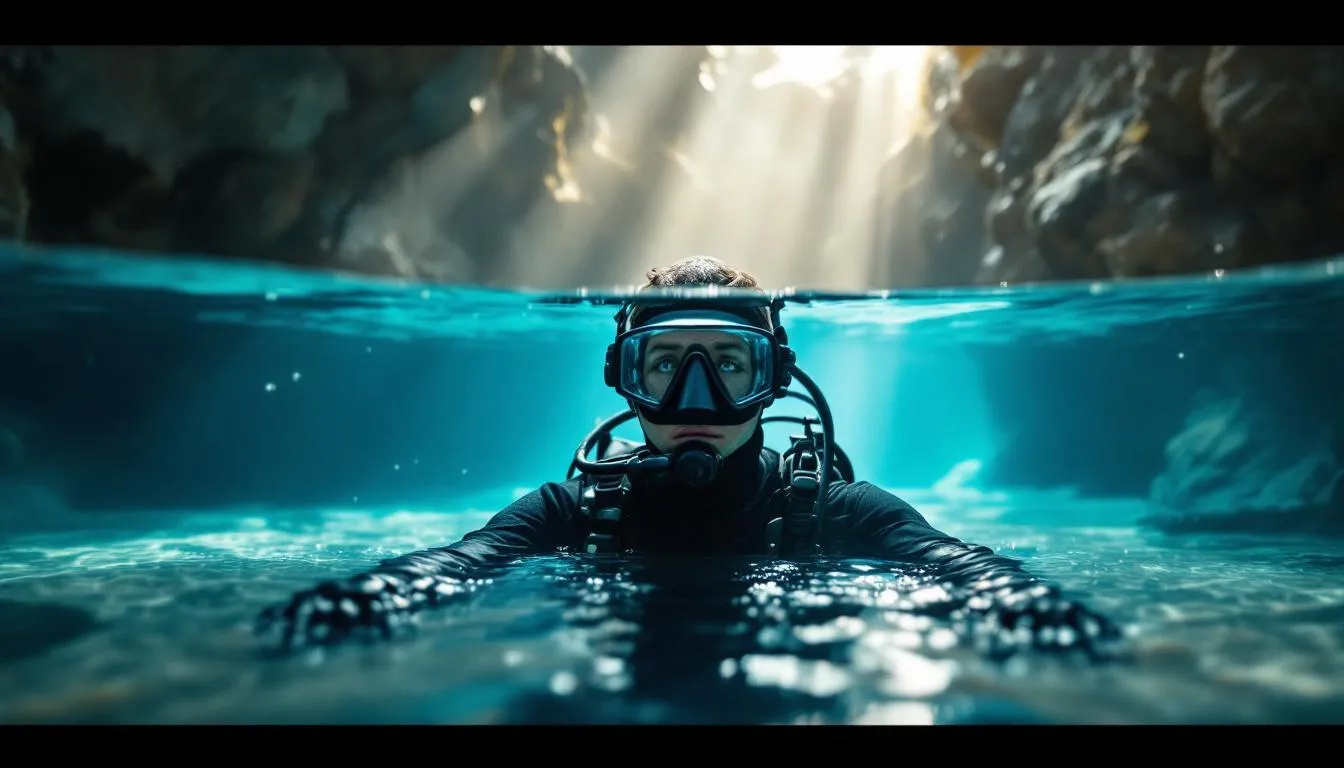
A safety diver on a Hollywood set lives at the intersection of film production and emergency response. You're stationed near the water during every aquatic scene, poolside or in open water, fully geared and ready to move. The work is mostly waiting and watching, punctuated by moments of pure focus. Between takes you're talking with stunt coordinators, understanding the scene, learning exactly where the actor will be and what could go wrong. When action rolls, you're scanning the water, tracking the actor's position, and prepared to deploy in seconds if needed. Set life is a mix of boredom and adrenaline. Days are long. You'll sit in a wetsuit for 8-12 hours because you never know when the shot will go live. You work with stunt coordinators, camera operators, directors, and the same crew day after day on a single film, which means real relationships form. The environment varies wildly: warm California pools one week, cold ocean in Northern California the next, or a constructed tank on a soundstage. Unlike commercial diving where the job is the work itself, here the job is insurance. You exist to prevent disaster. That means 95% of your time you do nothing. The other 5% you might save someone's life.
Before each scene, you meet with the stunt coordinator and director of photography to understand what's happening in the water. Where will the actor be? How long will they be underwater? What's the worst-case scenario? You ask questions and push back if something looks unsafe. You suit up in your wetsuit, mask, and fins, then position yourself in the water or at its edge depending on the shot setup. During filming, your entire focus is the actor in the water. You watch their position, their rhythm, their reaction. You know what normal looks like so you recognize abnormal instantly. If an actor panics, struggles, swallows water, or stays down too long, you move. You reach them, establish buoyancy, and get them to air. You stay in constant communication with the set via radio. Between takes, you're out of the water, debriefing with crew, checking equipment, staying warm, and staying alert. You're also the person who knows water safety on set, so you might advise on shot composition, actor positioning, or hazards others didn't see. You're not running the shoot, but your input matters because it keeps people breathing.
You need obsessive attention to detail and comfort with long periods of nothing interrupted by seconds of crisis. People who panic or second-guess themselves in emergencies don't make it. You also need to be genuinely comfortable in water under any condition, and you can't be claustrophobic or nervous about your equipment. Emotionally, you need to handle the weight of responsibility without letting it destroy you. You're literally the only thing between an actor and drowning, and that's a real thing sitting on your chest every day. The best safety divers have done commercial diving before, so they know how their body responds under pressure and they trust their training completely.
Start with a commercial diving certification. You need either a PADI Divemaster, a professional diver certification through the ADCI (Association of Diving Contractors International), or equivalent credentials from another recognized body. This typically takes 2-6 months of training and costs $3,000-8,000. Many divers get commercial certifications through community colleges or dedicated dive schools. Once certified, the film path starts with networking and location. You need to be in Los Angeles or near major film production hubs. Start by reaching out to stunt coordinators directly, connecting with film set safety coordinators, or working through diving companies that supply safety divers to productions. Some safety divers transition from commercial diving and take a few film gigs before specializing. Others start by assisting on smaller productions to build credits and relationships. There's no formal film safety diver certification, but you need to understand set protocol, radio communication, stunt terminology, and how film production actually works. Spend time on sets, shadow experienced safety divers, and learn the culture. Once you land your first couple of gigs, word of mouth takes over. Stunt coordinators remember who was professional, reliable, and good under pressure. That reputation is everything. Most safety divers work as independent contractors hired per project, so your first year is about building a client list of stunt houses and production companies that call you back.
This job is psychologically harder than it sounds. Every single day you're running through disaster scenarios in your head. What if the actor panics? What if my equipment fails? What if I'm not fast enough? Most days nothing happens, which should be comforting but instead creates a strange tension. You're paid to prepare for something that rarely occurs, which means you're constantly second-guessing whether you're actually ready or if you're paranoid. The work is also highly irregular. You might book a 6-week shoot then have nothing for three months. You need savings and flexibility. You're an independent contractor, so no benefits, no paid time off, and you're responsible for your own equipment maintenance and certification updates. The stunt community is tight and reputation-based, which means one bad call or one unsafe decision gets remembered forever. And here's the reality: if something does go wrong, you'll be blamed regardless of circumstance. The liability lands on you, not the production company. You need liability insurance, which costs money and doesn't fully protect you.