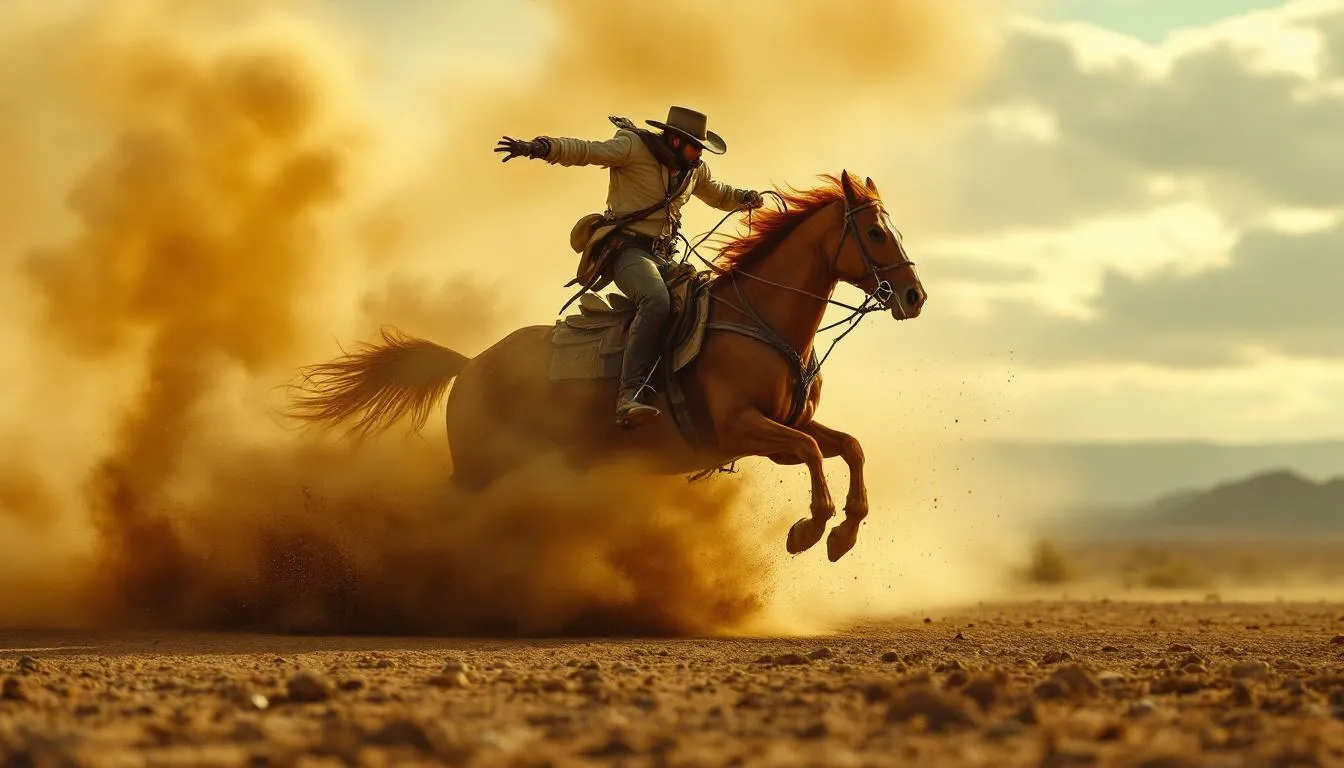
Horse Stunt Double
You ride horses at full gallop toward a cliff, take a 20-foot fall into a pile of boxes, and do it again for take two. It's one of the few jobs where "I almost died at work today" is literally part of the job description. Horse stunt doubles are the people who make action movies look real because they actually are doing the dangerous thing.
Horse stunt work happens on film and TV sets, usually during principal photography or second-unit shoots. You're on location with a small crew, a stunt coordinator, and usually a few other stunt performers. The work is sporadic, not a 9-to-5. You might shoot three days straight on one sequence, then have weeks between gigs. You work alongside professional horsemen, grips, camera operators, and stunt coordinators who know exactly what they're asking you to do and why. The pace is controlled chaos. Every stunt is planned, rehearsed, and has safety protocols, but that doesn't change the fact that you're doing genuinely dangerous things from horseback. Most of your time on set is actually standing around waiting for setup, lighting, and camera rehearsal. The actual riding and falling is a small fraction of the day.
On a typical shoot day, you arrive early for a safety briefing where the stunt coordinator walks through the sequence frame by frame. You'll rehearse the stunt multiple times at slow speeds, then gradually increase the pace as the director, camera operator, and crew confirm framing and timing. You might perform a gallop-and-fall sequence, where you ride a trained stunt horse at full speed and take a controlled fall at a precise mark. Between takes, you're checking the horse for soundness, reviewing camera angles, and refining timing with the coordinator. You communicate constantly about what worked and what needs adjustment. You also ride in sequences that look dangerous but aren't, like rearing horses or sharp turns, which require elite horsemanship but minimal risk. Some days involve fight choreography on horseback, where you're coordinating with another rider or stunt performer. You're responsible for knowing your horse inside and out, understanding its temperament and limitations, and working with the horse wrangler to ensure the animal is fit and not overworked. You'll also spend time between gigs training new riding skills, conditioning both yourself and your horses, and maintaining relationships with coordinators and production companies.
You need genuine courage and excellent risk assessment. This isn't about being fearless, it's about understanding exactly how dangerous something is and being willing to do it anyway because the safety protocols work. You also need obsessive attention to detail. A tiny mistake in timing or positioning can mean injury. You must be a natural with horses, reading their moods instantly and communicating with them silently. Physical conditioning is non-negotiable, but mental toughness matters more. You'll take hard falls and need to shake them off. You also need to be resourceful and entrepreneurial. You're managing your own training, your own horses, your own marketing within the stunt community, and hustling between gigs.
Start by becoming an advanced rider. This means years of competitive riding, ranch work, or both. Many stunt doubles grew up riding Western or English disciplines competitively or worked ranch jobs that built real horsemanship. You need to be genuinely skilled, not just comfortable on a horse. Once you have that foundation, take formal stunt training. Organizations like the Stuntmen's Association and the Stuntwomen's Association offer training and apprenticeship pathways. Enroll in a stunt school that covers falling, rolling, rigging, and basic stunt work. Simultaneously, take horse-specific stunt training that covers rearing, falling from moving horses, and choreographed sequences. This combination of elite riding plus stunt certification takes 2-4 years of dedicated training and practice. After that, you build connections in the film industry through stunt coordinators, horse wranglers, and other stunt performers. Start with smaller roles or background stunt work, then move to featured stunts. Many stunt doubles maintain a second income stream because horse stunt work is inconsistent. You need a network and a reputation for safety and reliability to keep getting hired.
This job will hurt you. You will take falls that result in bruises, sprains, and worse. Most stunt doubles have broken bones, dislocated shoulders, or concussions in their career. The production will have insurance and safety protocols, but your body pays the price. Recovery time between gigs cuts into your already inconsistent income. You're also completely dependent on gigs, with no steady paycheck, no benefits, and no job security. One injury can sideline you for months. Insurance and health care are your own responsibility, and you need to budget for that out of your irregular income. Additionally, horses add another layer of complexity. You need capital to buy and maintain trained stunt horses, or you need to develop relationships with horse wranglers who have them. If you're providing your own horses, that's vet bills, feed, training, transportation, and liability on top of your own safety concerns. The work is also geographically scattered. You might need to travel to locations across the country for a single gig, with no guarantee of the next booking. Between the physical toll, the inconsistent income, the startup costs, and the lifestyle demands, many stunt performers burn out within 5-10 years.