Live Event Rigger
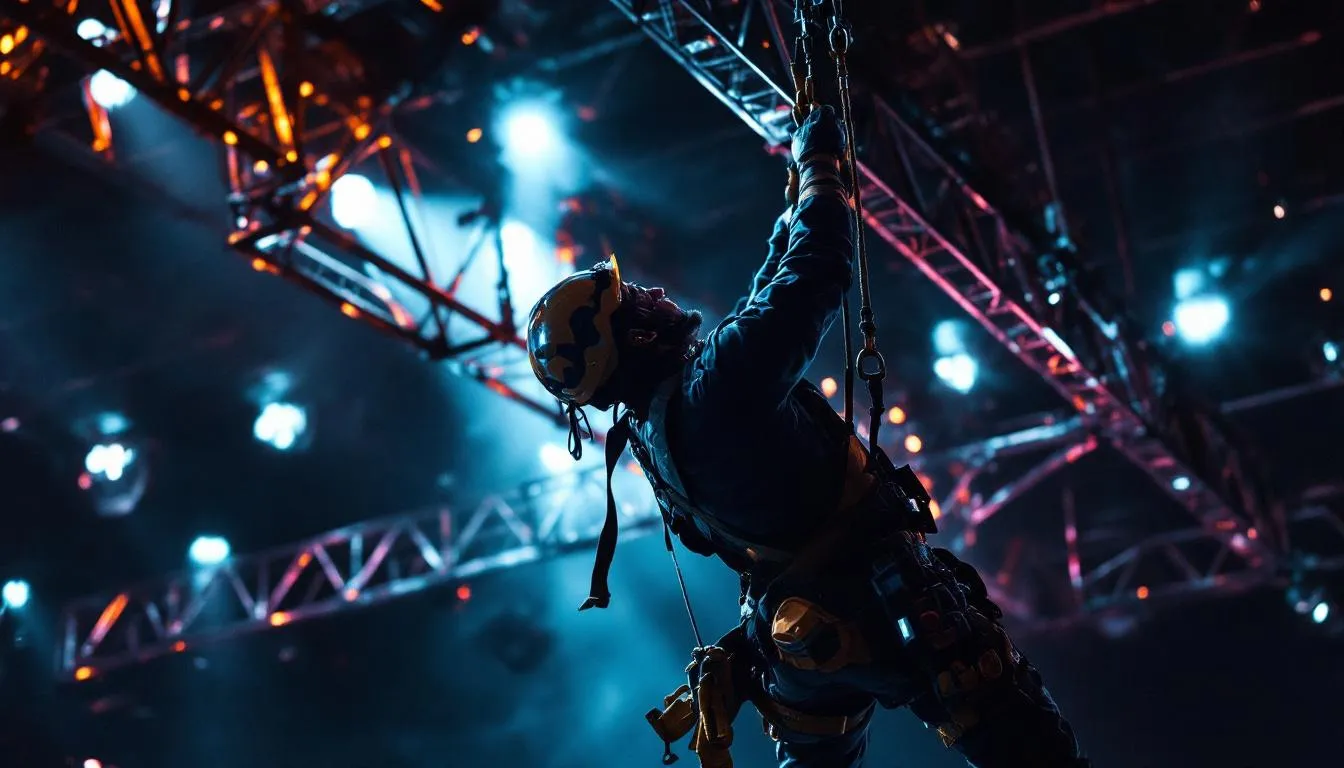
You're 80 feet up, clipped to steel beams, running cables and hanging fixtures while the clock counts down to showtime. The stage has to be perfect. You make that happen. Every rig you hang supports a show that thousands of people paid to see, and if you do it right, no one in the crowd thinks about you once.
You show up hours before doors open and work in the rafters, catwalks, and ceiling spaces of arenas, theaters, and outdoor venues. You're reading blueprints, securing heavy equipment to structural steel, running cable runs, and testing rigs while production managers watch the clock. The work is vertical, precise, and happens fast. You work with electricians, lighting designers, and crew leads who know exactly what they need and when they need it ready. The pressure is real because the show cannot start until your work is done and signed off.
You start by reviewing the rigging plan and understanding load requirements, anchor points, and cable routes. You set up your harness, ropes, and climbing gear, then move through the ceiling structure to designated rigging points. You secure shackles, rig plates, and load cells to steel members, then hang fixtures, speakers, or video screens using rope, cable, or chain hoists. While hanging, you're constantly measuring, leveling, and confirming that weight distribution matches the design. You run electrical cables and control lines, securing them cleanly so nothing interferes with the rig or other equipment. Once a section is rigged, you test load-bearing points, document everything, and get sign-off before moving to the next section. You also troubleshoot problems on the fly: that anchor point is rusted, the cable run doesn't fit the way the plan showed, the speaker needs to be repositioned two feet left. You solve it and keep the schedule moving. If something goes wrong during setup, you're the one who figures out the safe fix, and you're the one who takes responsibility for the load above the crowd.
You need to be comfortable with height and physical work, but more importantly, you need to think in systems. Riggers who last are the ones who read a blueprint, see potential problems before they happen, and ask questions when something doesn't match the plan. You also have to handle pressure without getting sloppy. Shows run on schedules. People are waiting. Equipment is expensive and heavy. You stay calm, follow procedure, and focus on doing it right the first time. A background in climbing, military, construction, or any vertical trade helps, but the real trait is precision under deadline.
Most riggers start as general event crew, hanging lights and setting up stages at small venues or working for rental companies. From there, you move into specialized rigging roles. Look for entry-level positions with regional touring companies, arena management, or AV rental firms. You'll learn on the job, but taking a rigging safety course first (ETCP Rigger or equivalent) makes you hireable faster and shows you're serious. The International Association of Structural Riggers offers training and credentials. Some venues run their own rigger training programs. Start by getting comfortable with basic knots, harness work, and height. Once you prove you can follow procedures and keep people safe, bigger venues and touring shows will hire you. Most riggers are fully productive within 6-12 months of focused work, and unionized venues (IATSE) have structured apprenticeships if you want that path.
The work is seasonal. Summer tour season and holiday events mean steady gigs. January through March, you might be scrambling for work or picking up smaller local events. You're also expected to respond fast when a show books, which can mean flying out on short notice or working weekends and overnight load-ins. The physical toll adds up: you're carrying rope, climbing ladders, reaching overhead, working in heat or cold depending on the venue. Older riggers often deal with shoulder and back issues. There's also real consequence if you screw up. Equipment damage costs come from rigging failures, and in worst cases, people can get hurt. That weight of responsibility is part of the job.