Marine Mammal Trainer
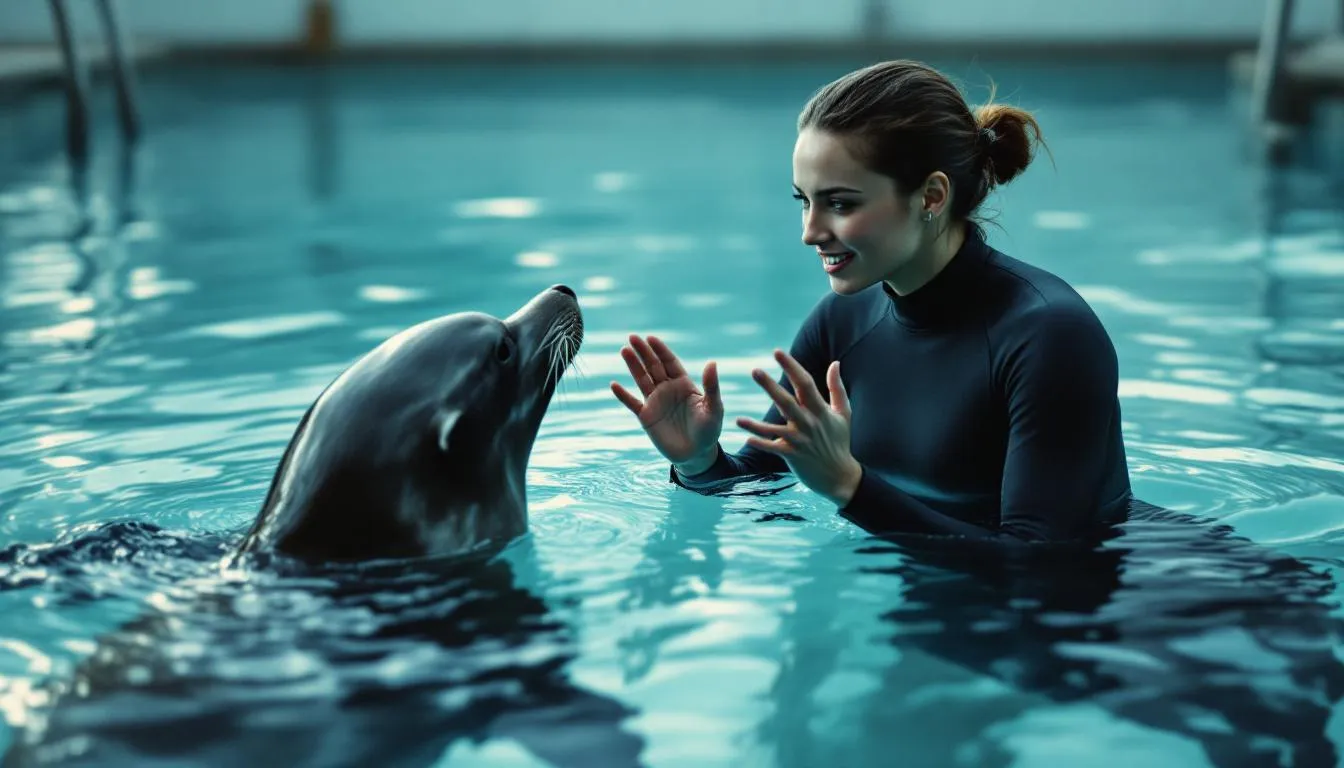
You're in the water with a 600-pound sea lion that knows you by name, or working with dolphins that respond to signals only you've taught them. This job means understanding animal behavior so deeply that you can predict and shape what they do next. Most people never get this close to intelligence that isn't human.
You spend most of your time in or next to salt water, working at marine parks, research facilities, film productions, or aquariums. Your coworkers are other trainers, veterinarians, and facility staff. The pace depends on where you work: parks and shows run on schedules, research facilities move slower, film work is intense and temporary. The work is physical, wet, repetitive, and deeply focused on individual animals. You're reading behavior constantly, adjusting on the fly, and building trust one session at a time. The relationship building is real. You might spend two years with the same dolphin before it fully trusts your hand signals or food reinforcement. You learn each animal's personality, quirks, fears, and motivations. That depth is what makes the job satisfying and also what makes it hard to leave an animal behind if you change jobs.
Most of your day involves food prep, pool maintenance, and behavior observation. You prepare fish diets (dolphins eat a lot), clean equipment, test water chemistry, and observe animals for health changes. You document behavior in logs. Then you work training sessions, which are short and structured, usually 10 to 30 minutes at a time. You use fish as reward, shaping behavior step by step through repetition. An orca learning a new hand signal, a sea lion learning to present its flipper for a health check, a dolphin learning to swim in a pattern for a show. You're standing at the edge of the pool or in a wetsuit in the water, depending on the species and facility. You're watching for micro-changes in behavior that signal whether the animal is stressed, engaged, or losing interest. You modify your approach in real time. Outside training, you attend team meetings, plan sessions with supervisors, and sometimes participate in film shoots or public demonstrations. Research positions involve more data collection and collaboration with marine biologists.
You need patience measured in years, not weeks. You're reading behavior constantly and adjusting your approach when things don't work. You're comfortable getting wet and tired and repeating the same task hundreds of times for progress measured in inches. You respect animals as intelligent individuals, not props. You're detail-oriented enough to notice when an animal's breathing pattern changes or when it's avoiding the pool edge. You also need to be okay with the reality that you might not see the result of your work after you leave a job.
No college degree required, but you need serious hands-on experience before any facility hires you as a primary trainer. Start by volunteering or interning at a marine park, aquarium, or research facility. This gets you in the water, teaches you safety protocols, and shows trainers you're serious. Most places want 1 to 2 years of volunteer or entry-level work (aquatic staff, animal care assistant) before you move into a training role. Some facilities run their own training programs that combine classroom work with on-the-job learning. The International Association of Avian and Exotic Pets (IAAP) and the International Marine Animal Trainers' Association (IMATA) offer certifications and conferences that matter in this field. Join IMATA if you're serious, go to their conferences, and network with established trainers. Many trainers also pursue certifications in marine mammal behavior, nutrition, or veterinary assistance. Expect 2 to 4 years before you're hired as a full marine mammal trainer at a major facility. Film and research positions sometimes move faster if you have specific skills or a background in biology.
Marine mammal training is emotionally and physically draining in ways people don't advertise. You build deep relationships with animals over years, then the job ends, you move facilities, or the animal dies, and you don't get to say goodbye or follow up. It hurts more than most jobs. You're also in salt water most days, which wrecks your skin, hair, and joints over time. Salt water rashes, ear infections, and shoulder problems are common. The work is repetitive and physically demanding despite looking casual. You're standing for 8 hours, lifting heavy buckets, throwing fish hundreds of times. Job security is shaky. Marine parks face constant pressure to close or reduce programs. Research funding runs out. Film productions are temporary. You might move facilities every few years just to find stable work. Pay lags other water or biology fields. You often work weekends and holidays because parks are busiest then. And there's an ongoing debate about marine mammal captivity. Some facilities are improving conditions and research, but others prioritize shows over animal welfare. If you're serious about this job, you'll need to pick a facility whose ethics match yours.