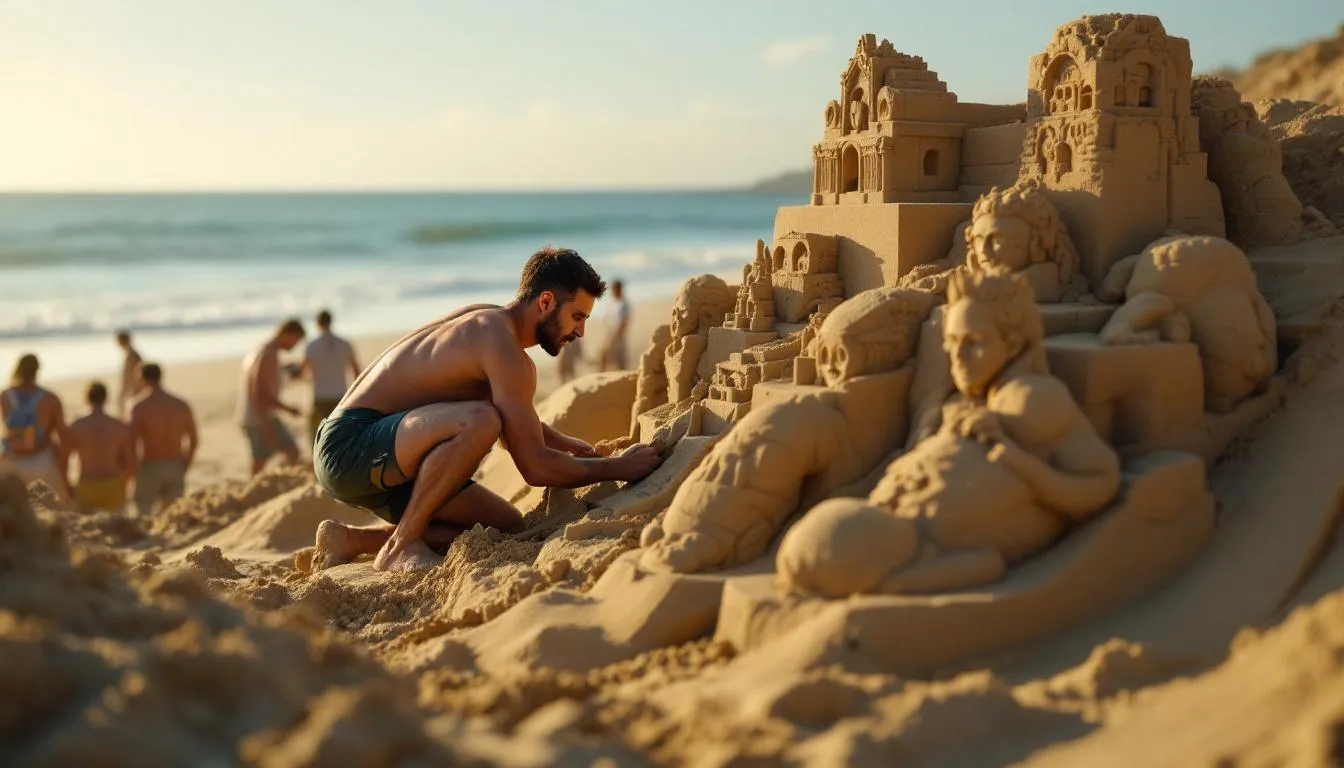
Sand Sculptor (Professional)
Professional sand sculptors compete for purses up to $50,000 per event and land commission work from resorts, festivals, and private clients willing to pay serious money for temporary art. Your medium melts away, but the photos, videos, and reputation stick around forever. Some top sculptors make $100,000+ annually from a combination of competition winnings, commissions, and appearances.
Sand sculpting at the pro level is not a day job. You travel to competitions, festivals, and events across the country and internationally. Some work is seasonal (summer events dominate), other gigs pop up year-round depending on demand. You work outdoors in varying weather, often with tight deadlines and crowds watching. The actual sculpting happens in bursts: intense multi-day competition blocks, commissioned pieces with specific timelines, and occasional teaching or demo work. Between events, you are marketing yourself, managing contracts, and networking with event organizers and high-net-worth clients who commission custom installations.
On competition days, you show up with tools and a plot of sand, then sculpt for 24 to 72 hours straight depending on the event rules. You are managing time, problem-solving structural issues in real-time, and handling weather shifts that can wreck hours of work. Commissions are different: a resort or private client briefs you on vision and theme, you design the piece, show up with a crew if it is large-scale, and execute over several days or weeks. You photograph everything for your portfolio and social media. Off-site, you are answering emails from event promoters, negotiating fees, maintaining your tools and equipment, and constantly building your visual library so clients can see what you can do. Teaching workshops or doing live demos at festivals adds income and builds your brand. The physical work is intense: repetitive motions, standing for long stretches, exposure to sun and salt water if you are working near beaches.
You need the patience to spend 48 hours on something that might collapse or wash away. You also need the ego to handle that and keep creating. Success requires obsessive attention to detail, physical stamina, and genuine passion for the craft itself, not just the money. Top earners are business-minded: they market aggressively, maintain client relationships, and treat competition as part of their brand. You have to be comfortable with feast-famine income swings and willing to travel extensively.
There is no traditional path or certification. Start by building skills through online tutorials, books, and local practice. Enter amateur sand sculpting competitions first (many towns host beach competitions with entry fees under $100) to get real experience and exposure. Build a portfolio of photos showing your best work and range. Follow the professional circuit: World Sand Sculpting Championship, International Sand Sculpting Challenge, regional festivals. Volunteer at events to network with established sculptors and organizers. As you win smaller competitions and build credibility, reach out directly to event organizers and resorts with your portfolio. Commission work comes from visibility, social media presence, and word-of-mouth. Most pros spend 2-3 years building a reputation and income stream before sand sculpting becomes primary income. Some start as a side hustle while working another job, then transition once events and commissions are reliable.
Sand sculpting is physically punishing. Your hands, shoulders, and back take a beating from repetitive carving and shaping. Tendonitis and arthritis are common among long-term professionals. Weather ruins work constantly: high winds, unexpected rain, temperature swings that crack sculptures. You might invest 60+ hours in a piece that collapses 12 hours before judging. Income is highly seasonal, with most major competitions and events clustered in summer and fall. Winter work is sparse for most regions. The work is also geographically dependent: living near major coastal cities or festival hubs matters for opportunity and travel costs. Social media presence is now almost mandatory for landing commissions, meaning you are constantly photographing, editing, and promoting your work alongside the actual sculpting. Many aspiring pros discover the income is less stable than they hoped and quit before reaching the earning potential.