Sideshow Performer
You learn to swallow swords, eat fire, and walk barefoot on broken glass. These are real skills with centuries of history. You perform at festivals, corporate events, touring shows, and private gigs. It's strange work, but it's honest.
Sideshow performance is specialized work. You perform at county fairs, music festivals, corporate events, traveling circuses, and street fairs. Your audience is usually 50 to 500 people at a time, gathered close. You're on stage for 15 to 45 minutes per show, repeating the same act multiple times a day or across a weekend. The rest of your time is spent traveling between gigs, maintaining equipment, healing minor burns and cuts, and practicing new material. Most performers piece together income from multiple venues and events rather than one steady job.
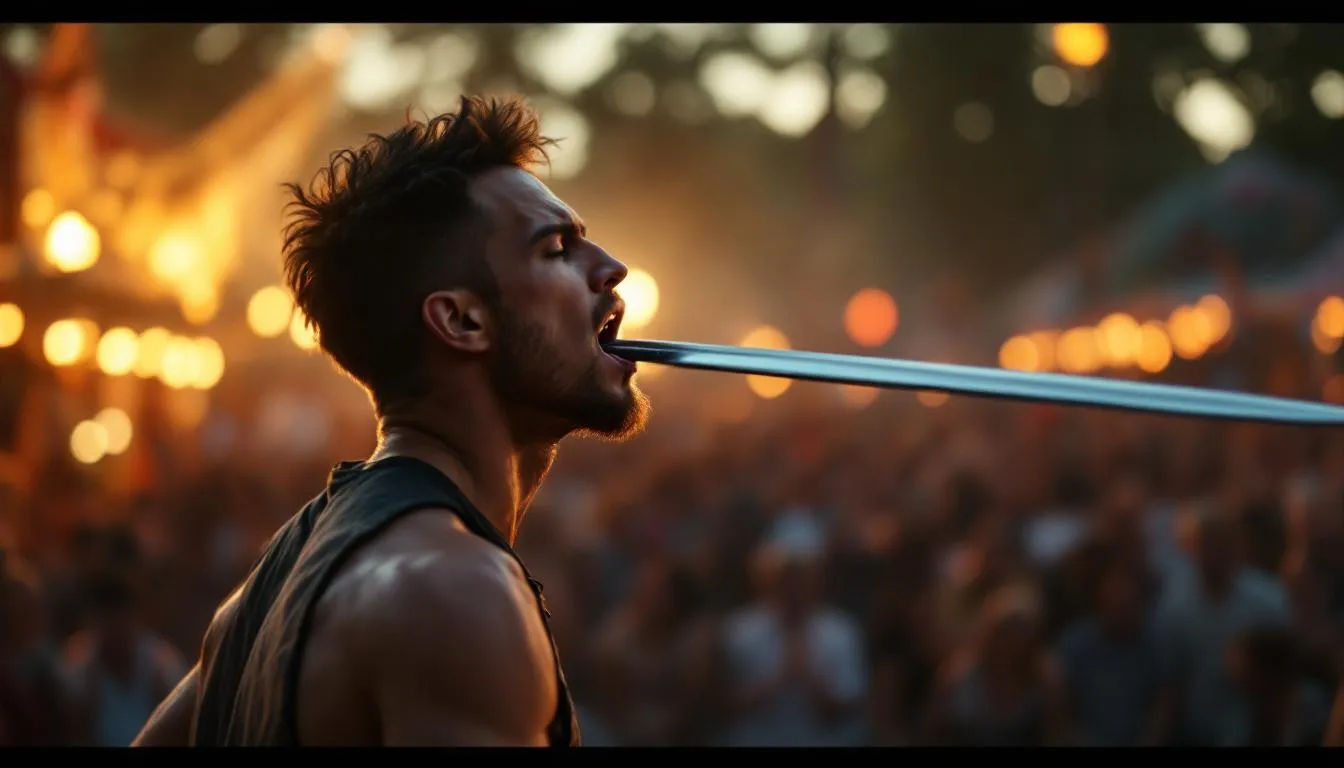
On stage, you open with a few warm-up tricks to read the crowd's energy. Then you move into your main acts. Fire eating involves holding fuel in your mouth, controlling your breath, and knowing exactly how to ignite and extinguish the flame without burning your throat or lungs. Sword swallowing requires years of practice to relax your gag reflex, understand blade angle, and control your body positioning so the sword slides cleanly down your esophagus without puncturing anything. Glass walking means learning how glass fractures, understanding weight distribution, and knowing which foot positions are safe on sharp edges. You also do crowd interaction, answer questions about safety and technique, and sometimes teach beginner workshops. Between shows you clean equipment, practice new acts, manage your own bookings and scheduling, and take care of minor injuries.
You need genuine curiosity about a strange craft and the patience to practice something thousands of times before it's safe to perform. Physical courage matters, but not in the way it sounds. You're not reckless. You're methodical, detail-oriented, and respectful of risk. You handle your own scheduling, taxes, and self-promotion, so you need independence and business-minded thinking. Performers who last also enjoy interaction with crowds and have thick skin for skeptics and hecklers.
There is no formal degree path. Most performers start by apprenticing with an established sideshow performer or joining a traveling circus or carnival company as a general performer first. Some start at sideshow schools or workshops run by established performers, which typically cost $500 to $2,000 for a weekend intensive or multi-week course. You learn fire eating, sword swallowing, and glass walking through direct instruction and thousands of hours of solo practice. The first act usually takes 6 to 12 months of serious practice before you can perform safely in front of an audience. Most performers spend 2 to 3 years building competency across multiple acts before they can reliably book paid shows. Organizations like the Circus Freaks School, regional circus arts programs, and independent mentors are your entry points. Start by researching local carnival companies, street performance communities, and circus arts networks in your area. Many performers begin by busking on the street to build confidence and earn small money while developing material.
Your body will hurt. Fire eating causes mild throat irritation and occasional burns inside your mouth. Sword swallowing can leave you sore, and if you make a mistake, you can seriously injure yourself. Glass walking leaves small cuts on your feet regularly. These aren't life-threatening if you're careful, but they're ongoing minor pain and risk. You're also constantly traveling, which means irregular sleep, unstable income, and periods with no work. Winter is slow. So is midsummer sometimes. You might book three shows in a week and then nothing for a month. Most performers supplement with other work. There's also a real loneliness to the job. You're the product. If the crowd doesn't respond, that's personal. Finally, the sideshow world is small. Your reputation is everything. One accident or one bad show spread through the community quickly.