Truffle Hunter
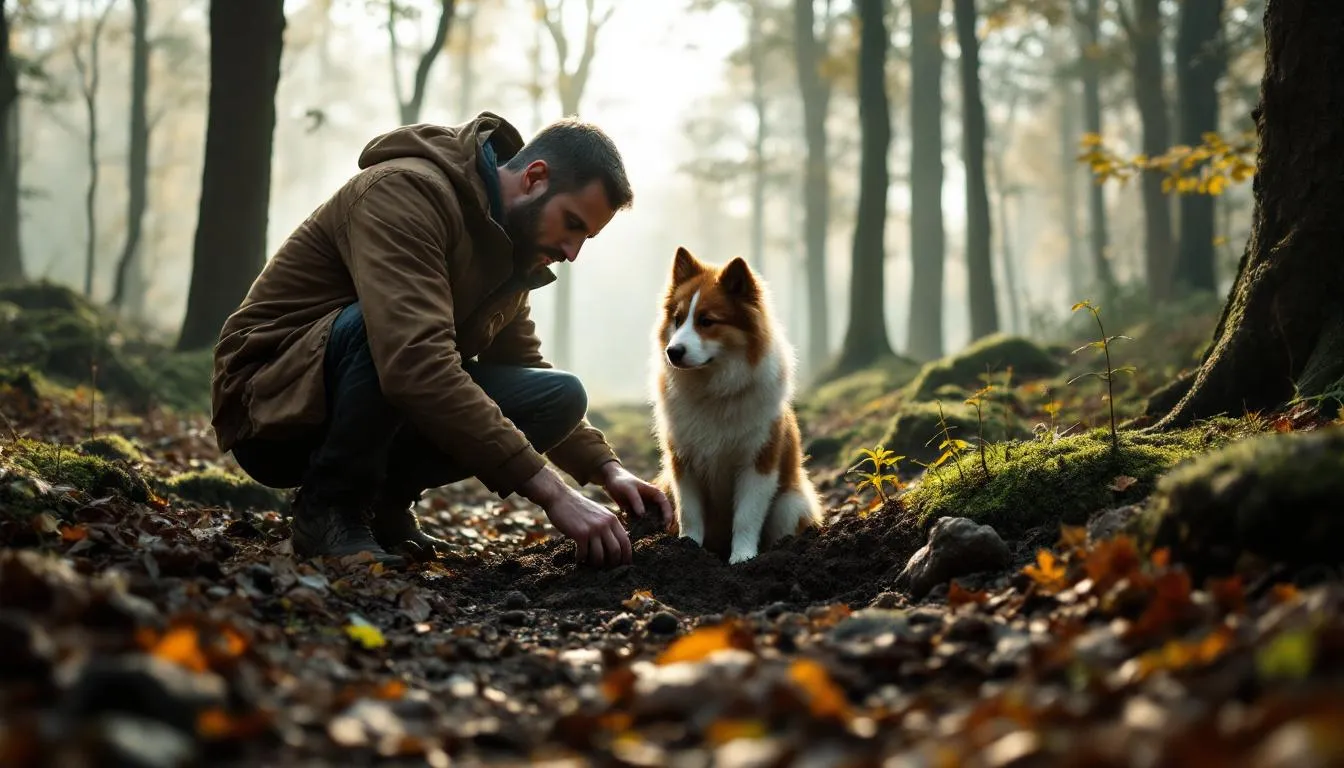
You're walking through forests with a dog trained to sniff out fungi worth $2,000-3,000 a pound. The work is seasonal, solitary, and deeply specialized. It's one of the few jobs where your dog is literally your business partner and your income depends on how well they've been trained.
Truffle hunting is a small, tight world. You're in forests during truffle season (fall and winter in most of North America), usually alone or with your dog, walking the same patches of land over and over. The work is physical, your dog does the heavy lifting, and you spend hours covering uneven ground in weather that ranges from cold rain to snow. Payment comes when you sell, not on a paycheck schedule. You'll develop relationships with a handful of restaurants, specialty distributors, and sometimes direct to high-end chefs. The money can be significant, but it's irregular and depends entirely on what you find and what the market will pay that season.
Most of your day is walking forest trails with your trained dog, watching for signs of truffles and waiting for the dog to alert. When the dog signals, you carefully dig around the area to locate the truffle without damaging it. You extract it, check quality, and mark the location for future seasons. Some hunters train their own dogs from puppies, which takes months of work before you're hunting productively. You'll also spend time maintaining relationships with chefs and restaurants, communicating what you've found and negotiating prices. During off-season, you might train new dogs, maintain your hunting grounds, or work other jobs to cover gaps in income. Some hunters diversify by also selling truffle hunting experiences to wealthy tourists or consulting on land management for truffle cultivation.
You need patience and comfort being alone in the woods for hours. You also need genuine skill with dogs, the ability to train them consistently and understand their behavior. The financial reality suits people who can handle irregular income and plan cash flow across the year. Success requires sales ability too, since you're building and maintaining relationships with chefs and distributors. Hunters who excel typically have some obsessive streak about land knowledge and a real interest in the forest beyond just the money.
Start by getting a dog, ideally a breed with strong scenting ability like a Lagotto Romagnolo (the traditional truffle dog), poodle, or hunting spaniel. Training takes 6-12 months minimum. You can learn through mentorship from established hunters, online courses, or books on truffle dog training. Most hunters start small, learning to recognize truffle habitat in local forests and building a customer base of 2-4 restaurants or distributors. Some attend truffle hunting seminars or join regional foraging organizations to make connections. You need land access, either your own property or permission from landowners. The barrier is low financially compared to most businesses, but the learning curve is steep and success depends on dog training quality, land knowledge, and sales ability. Season length varies by region, so many starting hunters supplement with other seasonal or part-time work until they build a stable client base.
The income is unpredictable. A bad season for truffle production means you might find half what you found last year, even with the same effort. You're dependent on your dog's health and training, and a serious injury or illness to your dog kills your income immediately. It takes months to train a replacement. The physical toll adds up: you're walking uneven forest terrain in cold, wet weather all season, carrying tools and heavy truffles. Knees and lower back take a beating. Land access is a constant issue. You need permission from landowners, and that can be revoked. Finding new hunting territory takes time and relationship-building. The seasonal nature means you need to save during good months to cover the off-season, and that discipline isn't easy. You're also competing with other hunters in your region, and truffle hunting communities can be territorial and suspicious of newcomers. Finally, the market for truffles is thin and mostly driven by restaurant demand in larger cities. If you're in a rural area far from fine dining, your buyer pool shrinks fast and so do prices.