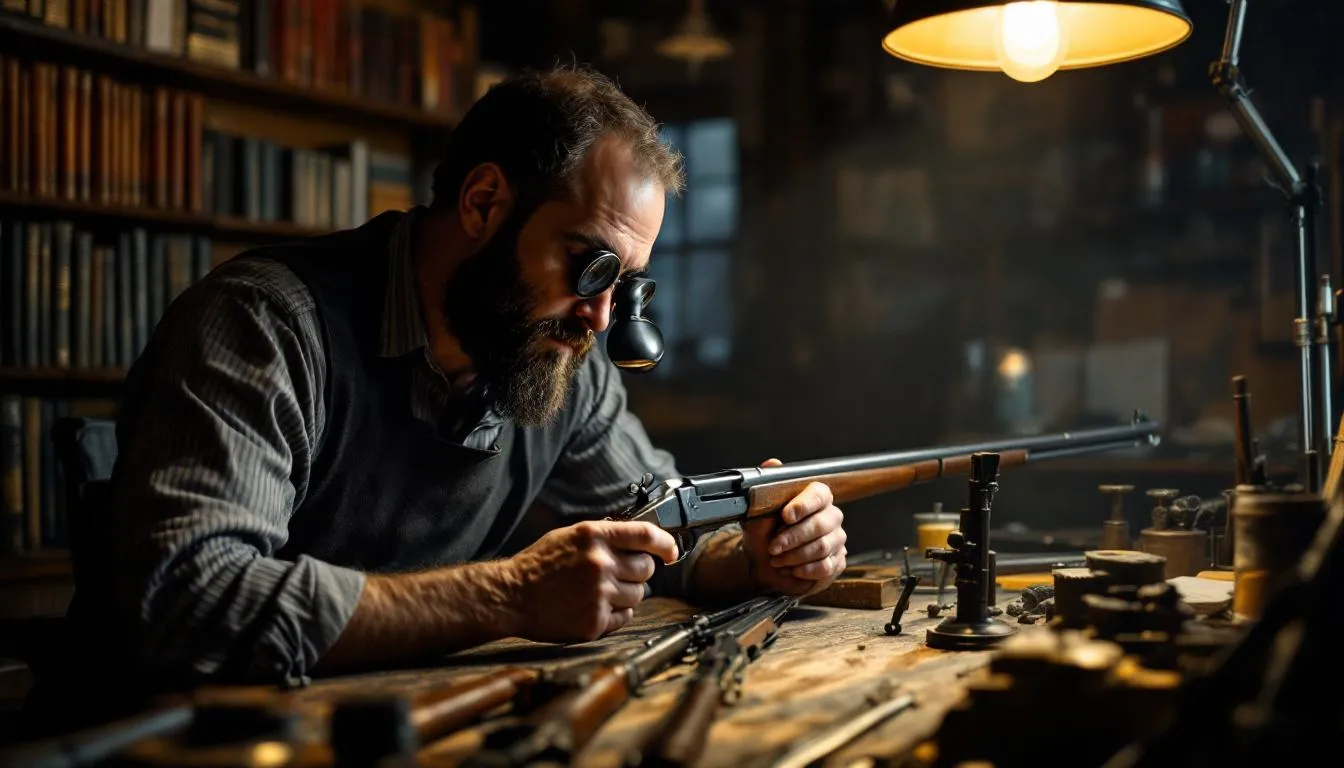
Antique Arms Appraiser
You spend your day handling pieces of real history, some worth five figures, some worth more. Museums, collectors, and auction houses call you because you can tell a Civil War musket from a reproduction in seconds, and you know exactly what it's worth. It's detective work meets valuation, and the items are irreplaceable.
This is a specialist trade, which means your workload is uneven but your expertise is valued when it matters. You might spend a week handling nothing, then get three high-value appraisals in a row. Work happens in your shop or studio, sometimes at client locations, auction houses, or estate sales. You are often the final authority on what something is worth, so accuracy and credibility build your reputation fast. You work alone most of the time, though you collaborate with auctioneers, insurance adjusters, museum curators, and serious collectors. The job requires focus and meticulous documentation. You cannot guess. Every appraisal has to be defensible.
Most of your work starts with a phone call or email: someone has inherited a rifle, or a collector wants to insure a sword collection, or an auction house needs to value a lot before sale. You schedule the appointment, examine the item in detail, research its provenance and comparable sales, photograph it properly, and write a formal appraisal report with your conclusions on authenticity, condition, and fair market value. Examination is hands-on and detailed. You inspect every surface, test weight and balance, look for maker's marks, check wood and metal condition, and use reference materials to pin down manufacture date and origin. You document everything with photos and notes. For firearms, you might disassemble parts to verify authenticity or check serial numbers against known records. For swords, you evaluate the blade, hilt, scabbard, and any inscriptions. Research fills the gaps. You cross-reference auction records, museum catalogs, collector databases, and published price guides. You stay current on market trends for the items you specialize in. Some appraisals are straightforward, others require you to track down obscure information or consult with other specialists. You write the report in clear language that an insurance company or court can understand, backing up your valuation with evidence.
You need genuine curiosity about history and objects, not just casual interest. You have to be obsessive about accuracy and willing to spend hours researching a single item to get the valuation right. You are comfortable saying "I do not know" and finding the answer rather than guessing. You build relationships slowly and trust is everything to you. You enjoy solitary, detail-oriented work and do not need constant interaction or external validation.
There is no formal credential for this job, which means you build yourself through knowledge and credibility. Start by becoming genuinely knowledgeable in a specific category. Buy books on firearms history, swords, or whatever appeals to you. Attend auctions, join collector groups, network with dealers and museums. Handle as many items as you can. Many people who start this path begin as collectors themselves, or they work in antique sales, auction houses, or museum conservation first. If you want formal structure, some appraisers get certified through the American Society of Appraisers (ASA), which requires documented experience, education, and passing an exam. The ASA path takes 2-4 years depending on your starting knowledge. Many successful appraisers skip formal certification and build credibility through years of accurate work and reputation in the collector community. You can start this by working at an auction house, antique shop, or gun dealer to learn the landscape and build relationships. Or you can apprentice under an established appraiser. The key is consistent, obsessive learning and the ability to admit when you do not know something rather than guess. Your reputation is your business, so it has to be clean from day one.
This job starts slow. You will not have steady appraisal work for your first 1-2 years unless you come in with an existing collector network or auction house connections. Many people build this as a side business while working elsewhere. The other tension is that specialization is necessary but narrow. If you become the best Civil War appraiser in your region, that becomes your lane, and work will dry up if the market for those items cools. You also need some capital to build a reference library, photography equipment, and potentially to handle high-value items that require insurance. Finally, authentication can be contentious. A collector who paid big money for an item does not want to hear it is a reproduction, and occasionally you will face pushback or even legal questions about your conclusions.