Fresco Restorer
You're working on art that people travel across the world to see. A fresco restorer spends their days removing centuries of grime, stabilizing flaking paint, and bringing color back to murals that have survived wars, weather, and neglect. This is hands-on work with real stakes.
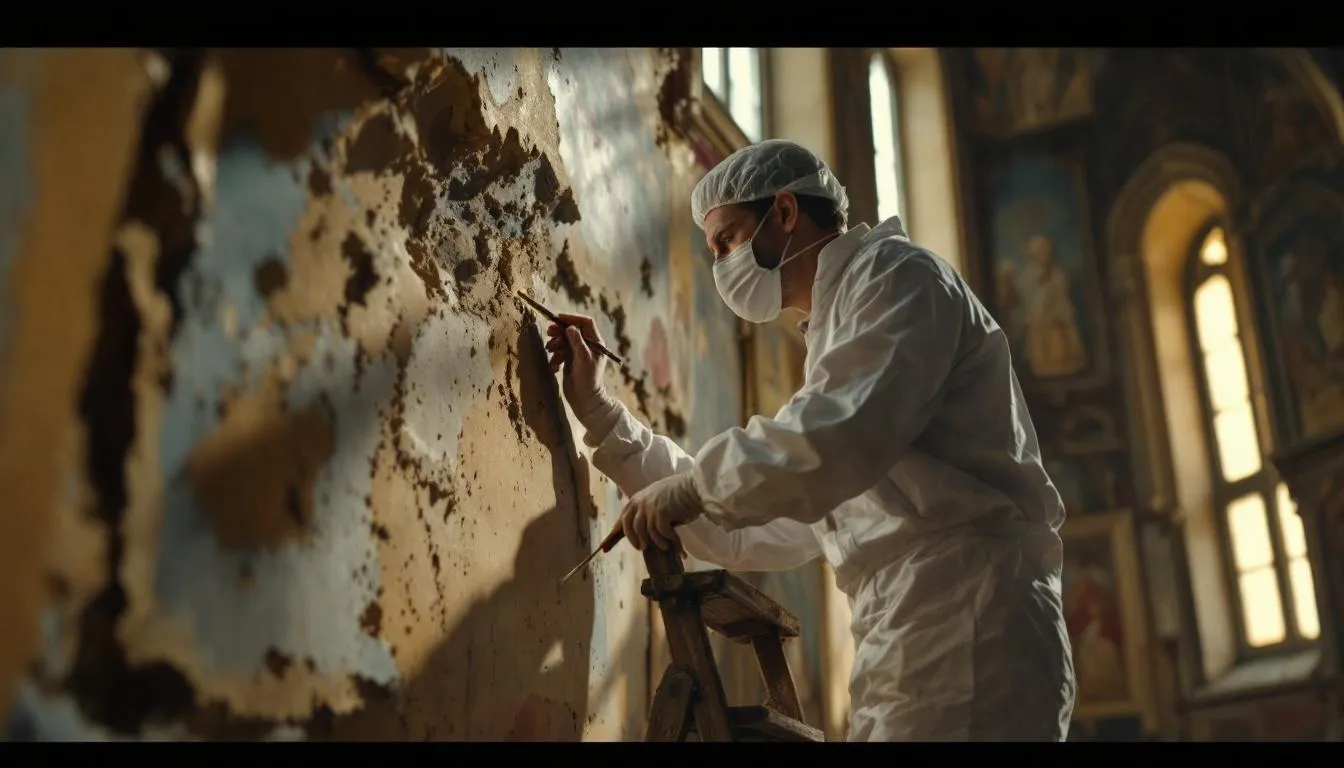
Fresco restoration happens in churches, chapels, palaces, and museums. You'll spend most of your time on scaffolding or lifts, sometimes 30 feet up, working on surfaces that can't be replaced. The work is slow and methodical. You study a section for days before touching it, testing solvents on hidden corners, documenting everything with photos and notes. You work alongside conservators, architects, and sometimes art historians. The pace is deliberate, not rushed. One wrong chemical can permanently damage a 400-year-old painting. The stakes breed a kind of focused respect between crew members. Work is project-based. A major fresco restoration can take months or years. You might be based in one building for a season, then move to another site. Winter work is rare because humidity and temperature matter.
Your day starts with assessment and documentation. You photograph the fresco, measure humidity and temperature, test the stability of the paint layer with specialized tools. You identify what needs to happen: loose paint consolidation, grime removal, structural cracks, pigment loss. Most days involve chemical work. You prepare poultices, mix solvents, apply cleaning solutions to specific areas with cotton swabs and brushes. You work in small sections. A 2-foot square might take a full day. You rinse, dry, assess. Repeat. You're constantly switching between magnifying glasses and full-room perspective, making sure the overall composition stays balanced as you clean. You also do physical stabilization. Injecting consolidating agents into flaking paint, patching cracks with lime mortar that matches the original, carefully filling losses. You mix pigments to blend repairs so they read as one unified surface from a distance. You document every step. Conservation work is 30% execution, 70% recording what you did and why, so future restorers understand your choices.
You need obsessive attention to detail and patience for repetitive work that only you will ever truly see. People who thrive here are comfortable with uncertainty and problem-solving on the fly. You should genuinely care about preservation, not because it's noble, but because you want to figure out how to save something. Restorers are typically methodical, not rushed. They're also comfortable working alone on high scaffolding and okay with irregular schedules tied to specific projects.
No degree required, but you need formal training. Most restorers start with a 2-4 year conservation degree or diploma from accredited programs like Buffalo State College's Art Conservation Department or the Winterthur/University of Delaware Program in Art Conservation. Some programs are 18-24 months focused specifically on wall painting conservation. Before formal training, get experience in related fields. Museum work, fresco archaeology internships, or assistance to working restorers gets you familiar with the chemistry and the discipline. Many programs require or strongly prefer hands-on experience before admission. Once trained, you'll typically start as an assistant on active projects, working under a senior restorer. You'll spend 2-3 years learning site-specific techniques before leading your own sections. Major restoration firms, cultural heritage organizations, and museums hire restorers directly. Networking with conservation programs and historic preservation groups matters because many jobs are filled through word-of-mouth. You can expect to spend $20,000-50,000 on education, then earn while you apprentice.
The work is physically demanding in unexpected ways. You're on scaffolding in awkward positions for 8 hours. Your neck, shoulders, and wrists take real punishment. Repetitive strain injuries are common. You're also working with solvents and chemicals in enclosed spaces, even with ventilation. Respiratory issues develop over time for some restorers. The work can be isolating, especially on large projects where you're the only person on a particular wall for weeks. The other reality is job instability. Restoration is project-based. A major fresco restoration might take 18 months, then you're looking for the next job. You might relocate several times in your career. Funding for cultural heritage work is unpredictable. A promising project can get canceled if grants dry up or institutional priorities shift. You need to be comfortable with periods of uncertainty between major commissions.