Headstone Carver
You're carving names into stone that families will visit for generations. Most headstone carvers work alone or in small crews, setting your own pace and taking real pride in craftsmanship. The work demands precision and artistry, but also pays respect to the people behind each name.
Headstone carvers work in small workshops, stoneyards, or as independent contractors. You'll spend time designing layouts with families or following blueprints, setting up stone, and executing the actual carving. The work is methodical but not repetitive—each stone is different, each family's story is different. Some days you're sketching designs; other days you're operating a CNC machine or working stone by hand with chisels and pneumatic tools. You work mostly alone or with one or two other carvers, which means quiet focus time but also full responsibility for quality. The pace varies. A simple flat stone might take a day. Elaborate 3D carvings or custom artistic pieces take weeks. You're not racing against a timer. You're racing against your own standards and the weight of getting someone's permanent memorial right.
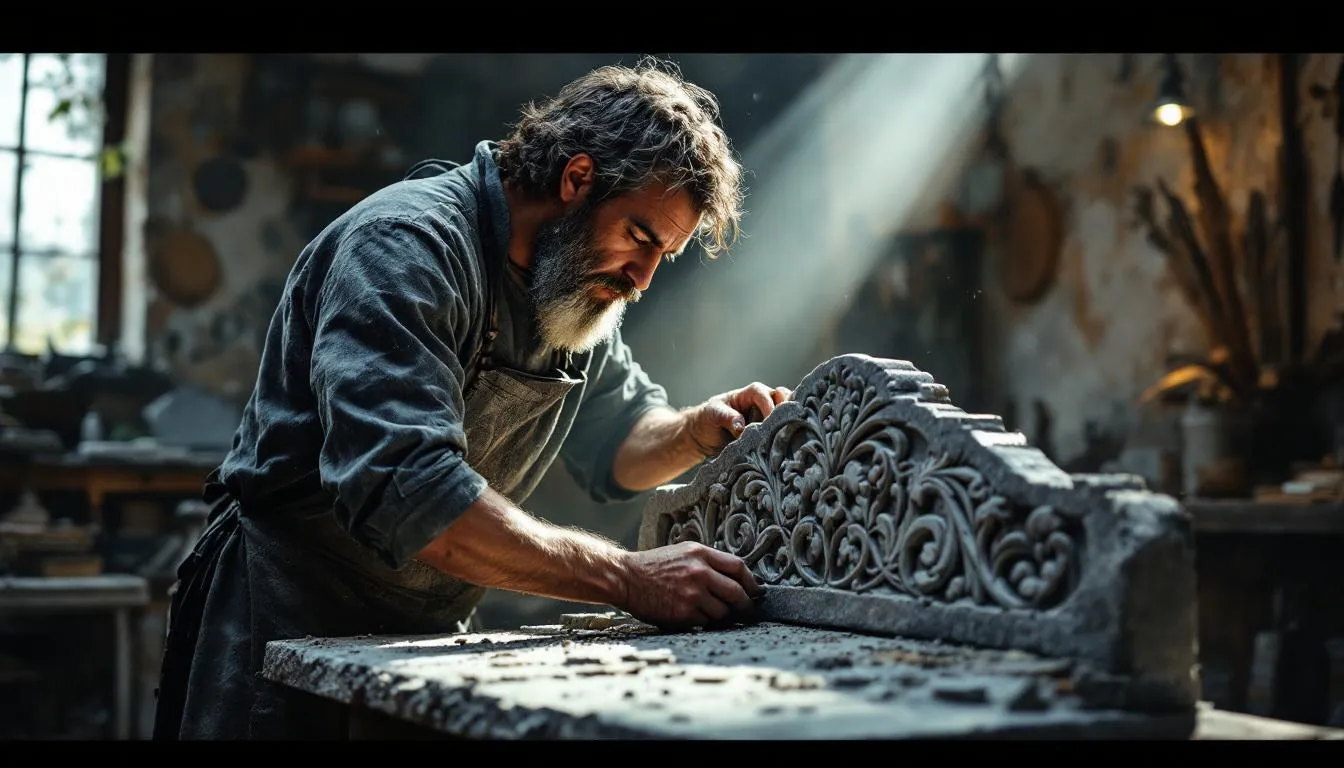
Your day typically starts with a consultation or review of design specs. You'll meet with families to understand what they want: which names, dates, epitaphs, symbols, or artistic elements. You sketch layouts, decide on lettering styles, and talk through costs and timelines. Once a design is locked, you prepare the stone. This means positioning it, marking guidelines, and setting up your tools. For simpler work, you might use a pneumatic engraver or sandblaster to cut letters and basic designs. For more complex pieces, you'll program a CNC machine to handle the heavy lifting, then finish the work by hand. Hand carving involves chisels, mallets, rotary tools, and careful technique. You're cutting granite, marble, or slate, which means the stone is unforgiving. One slip ruins the piece. You'll also handle cleanup, sealing the finished stone, and often installation at the cemetery. You'll maintain your tools, keep your workspace organized, and sometimes handle the business side: quoting jobs, managing timelines, and dealing with suppliers. Custom artistic work—3D sculptures, elaborate portraits, landscape scenes—requires design skills and real artistic judgment. Standard production work is faster but demands consistency and precision.
You need patience and precision. You're making permanent decisions in stone, so sloppy work haunts you. You should be comfortable working alone, making decisions about quality, and standing behind your work without someone looking over your shoulder. People who thrive here are often quiet, methodical, and take genuine pride in craft—not because they're trying to impress anyone, but because they don't know how to do it half-assed. You also need to be comfortable with the subject matter. You're making memorials. If that feels morbid or uncomfortable to you, this job will feel weird.
Most headstone carvers start as entry-level workers in a stoneworks or monument shop with no formal degree required. You'll typically begin by learning the materials and tools under an experienced carver, doing prep work like stone handling, layout marking, and basic finishing. This apprenticeship period usually takes 6 months to 2 years depending on how fast you pick it up and how much hands-on time you get. Some shops offer formal apprenticeships (check the Monument Builders of North America or local stonework unions for programs). Others simply hire you as a helper and train you on the job. The key is finding a shop willing to invest in teaching you. Small family-run operations are often more likely to take someone on than big corporations. Certifications aren't required, but training in stone finishing, CNC operation, and design software (AutoCAD, Adobe Suite) makes you more marketable and increases your earning potential. Community colleges sometimes offer stonework classes. Self-teaching through YouTube and practice is also common in this trade. Before you're earning top dollar, expect 2-3 years of learning the craft. Entry work pays less but gives you hands-on experience. Once you can run a full job from design to installation, you can either move up in a large shop, move to a better-paying shop, or start your own business. Going independent is common in this trade because the startup costs are moderate and the work is portable.
Stonework is physically demanding and can wear your body out. You're standing for hours, lifting heavy stones (some pieces weigh hundreds of pounds), and repeating cutting motions that strain your shoulders, wrists, and lower back. Dust exposure is real—stone dust causes silicosis, a lung disease that develops over years. You need a good respirator and discipline about using it. Even then, long-term exposure adds up. The work is also seasonal in many regions. Winter kills the memorial business in northern climates. Spring and fall are busy; summer is moderate; January-March can be dead. This means inconsistent hours and income unless you work for a large operation that keeps you busy on interior work during the slow season. And the emotional weight is real: you're constantly thinking about death, families in grief, and the permanence of what you're making. Some carvers find meaning in that. Others burn out.