Map Restorer
You're literally touching pieces of history. Maps worth thousands of dollars come through your hands, and you're the one figuring out how to save them. It's detective work mixed with chemistry mixed with craft—and you need zero formal education to start learning.
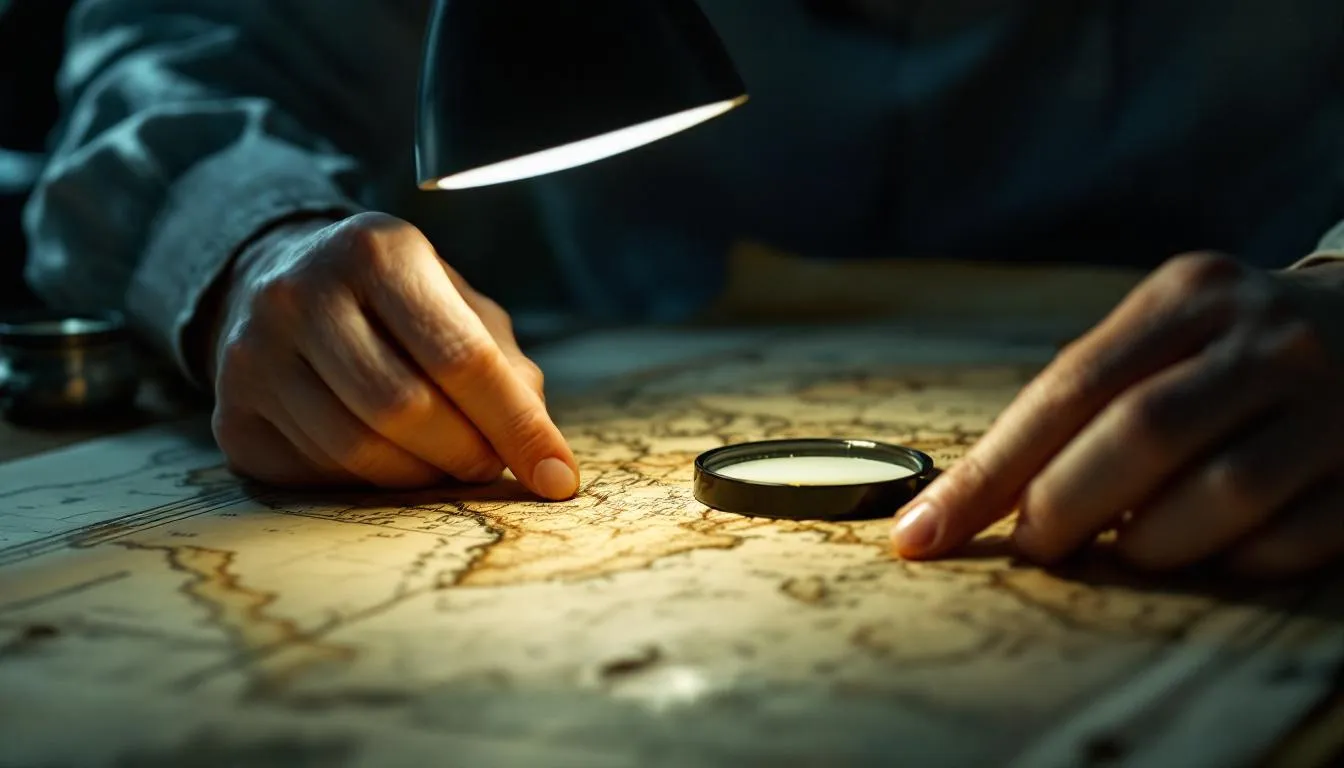
Map restoration happens in controlled environments: museum labs, archive rooms, conservation studios, private collector workshops. The space is quiet, climate-controlled, and precise. You work alone most of the time or in small teams with other conservators. The pace is deliberate and methodical. A single map can take weeks or months depending on damage. You're working with centuries-old paper, ink, and binding materials that demand respect and attention. Interruptions are minimal because the work requires focus.
Your day starts with assessment. You examine a damaged map under magnification, document what you see with photographs and notes, and figure out a conservation plan. You might be removing surface dirt with brushes and specialized erasers, or you might be washing the paper in distilled water baths to remove old adhesives and foxing stains. You test inks to make sure they won't run or fade when wet. If the paper is torn, you repair it by carefully humidifying the fibers and mending with Japanese tissue and wheat paste. You might consolidate flaking paint or reattach lifted surface layers. Binding repair is common too: restitching loose pages, rebacking torn spines, replacing leather or cloth. You photograph the work at each stage for documentation. You maintain detailed conservation reports that will outlive you. Chemistry is part of it: you mix solutions, test pH levels, apply sizing to weakened paper. The work is intricate and sometimes meditative, but always high-stakes because you cannot undo mistakes on irreplaceable objects.
You need obsessive attention to detail and the patience to spend four hours fixing a two-inch tear. You have to be comfortable working alone in silence. You're driven by craft for its own sake, not by fast results or recognition. You need genuine curiosity about how old things were made and how they break. People who thrive here are meticulous, calm under pressure, and capable of making judgment calls with incomplete information. You also need respect for history and objects that doesn't tip into sentimentality. This is not a job for people who need constant feedback or variety.
There is no single path. Most conservators start by apprenticing under an experienced restorer or joining a museum conservation department in an entry-level role like conservation technician or assistant. No degree required, but you need to prove competence through demonstrated work. Look for internships at regional museums, archives, or private studios—many are unpaid or low-paid at first, but they build your portfolio and network. Consider specialized training programs like the Winterthur Program in Art Conservation (a postgraduate certificate program) or shorter workshops through the American Institute for Conservation (AIC), though these cost money and assume some background knowledge. Alternatively, start in a museum or archive and move sideways into conservation. You might begin as a collections assistant or registrar, learn the basics, and transition. Self-teaching is possible but slow. You need hands-on mentorship to develop the judgment required for real work. Build relationships with conservators and curators. Demonstrate obsessive attention to detail in whatever entry role you land. Within 1-2 years of focused work under supervision, you can be doing conservation tasks independently on lower-value pieces. Specialization and reputation take 5-10 years.
The work is slow and can feel invisible. You spend weeks on a map that will be stored in an archive and seen by maybe two people a year. The pay is lower than skilled trades. You are often undervalued by institutions that treat conservation as a cost center, not an investment. The physical reality is hard on your body over time: repetitive fine motor work, hunching over light tables, chemical exposure from solvents and adhesives. You need good ventilation but not all studios have it. Your hands take a beating. Funding for conservation is always tight, which means budget cuts, understaffing, and pressure to work faster than the work deserves. If you work for a museum, you're locked into institutional politics and bureaucracy. If you run your own studio, you are constantly hustling for clients and managing cash flow. The emotional weight is real too: you are responsible for irreplaceable objects. A mistake is permanent.