Organ Builder
You're constructing something that will outlast you by a century. Pipe organs are precision mechanical instruments that blend woodworking, metalworking, and acoustics into machines that produce sound no synthesizer can match. A single large organ takes years to build and costs hundreds of thousands of dollars.
Organ building happens in dedicated workshops, usually small teams of 3-8 people working on one instrument at a time. You're in a climate-controlled space most days, but also making site visits to cathedrals, concert halls, and churches to assess spaces and install finished work. The pace is deliberate and methodical. A large organ project can run 18-36 months, so you're not chasing quick turnarounds. You work alongside other specialists: pipe makers, voicers who tune the sound, cabinetmakers, mechanical technicians. The work is collaborative but requires deep focus. Most shops are small and regional, so you might travel for installation and maintenance jobs.
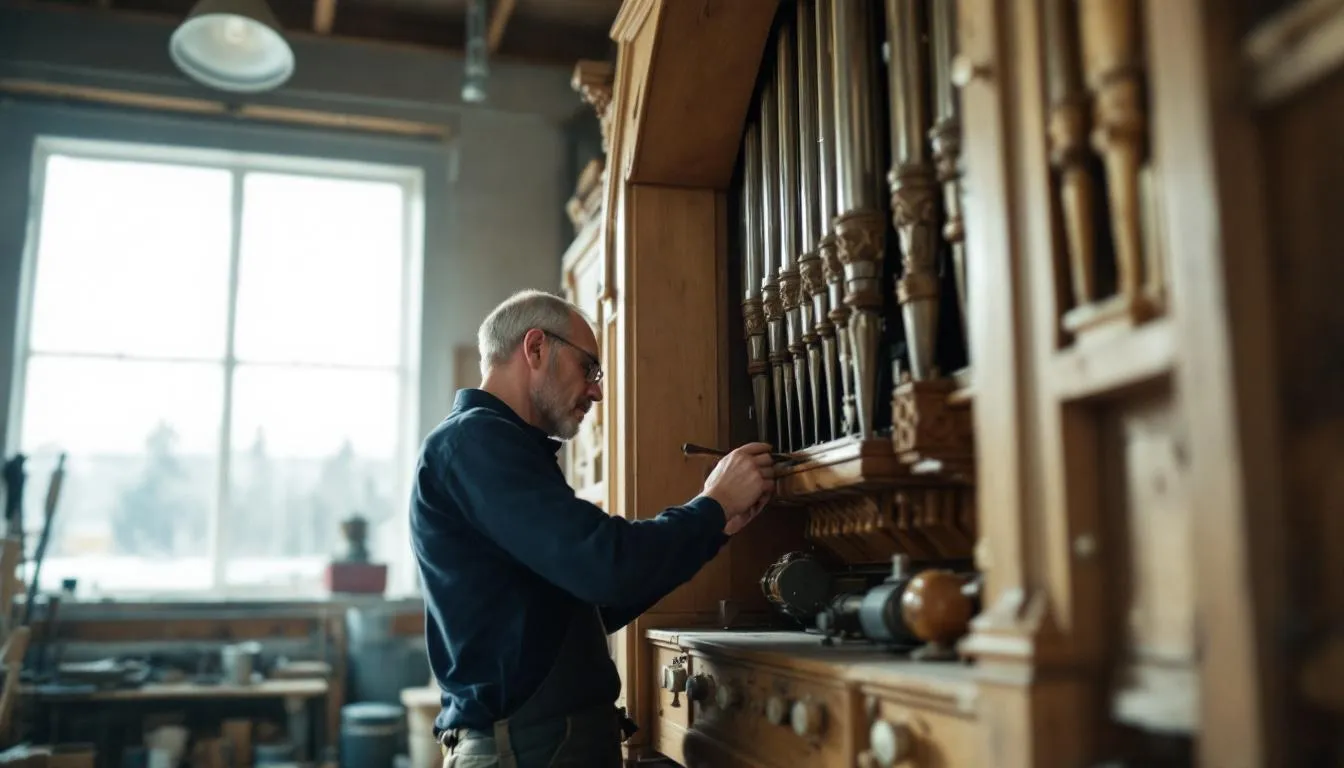
Your day involves designing organ specifications based on the acoustics of a space, then overseeing construction of hundreds of individual pipes made from wood or metal alloys. You machine and assemble the mechanical action—the linkage system that connects keys to pipes, often involving hundreds of moving parts. You work with wood on cabinetry and structural elements, metal on pipes and mechanical components, and leather on bellows and valves. You spend time measuring, hand-fitting, testing, and adjusting. Once an instrument is nearing completion, you travel to the installation site to assemble it on-location, which can take weeks. You make fine adjustments to voicing—the tuning that shapes the instrument's character and sound. After installation, you return periodically for maintenance and repairs. You might also restore historical organs, which requires research into original designs and materials.
You need genuine patience and attention to detail at a level most people don't possess. This work rewards people who enjoy solving mechanical puzzles and take pride in invisible precision that only other specialists will ever notice. You should be comfortable with periods of focused, repetitive work. The field favors people who respect tradition and craftsmanship, but also have the problem-solving instinct to innovate when a design doesn't work. You're not building something for speed or volume; you're building something to last 150 years.
Organ building has no standard degree track, which is exactly why it's accessible. Most builders start through apprenticeship with an established shop, usually 5-7 years of hands-on training before you're leading projects. You need strong woodworking and metalworking skills first. Many organ builders come from carpentry, furniture making, or tool-and-die backgrounds. Some start in music (organ performance) and transition to building. There's no formal certification, but membership in the American Institute of Organ Builders (AIOB) signals credibility. Start by contacting regional organ shops and asking about apprenticeships. You'll need patience—this isn't a fast entry. But if you can find a shop willing to train you, you'll earn while you learn from day one. Trade schools offer woodworking and metalworking programs that provide foundation skills; then you approach a shop with those basics.
Organ building is a dying trade. There are only a handful of shops left in North America. Work is project-based and sometimes unpredictable, so you might face months between major commissions. The pay, while stable once you're experienced, never reaches the heights of other skilled trades. You're competing against synthetic organs and budget-conscious institutions cutting funding. Geographic location matters enormously—you need to be near a region with enough cathedrals, concert halls, or wealthy patrons to sustain organ building work. If you're in the wrong region, you might need to relocate for opportunity. The physical toll is real too: hand fatigue, hearing damage from testing, and repetitive stress injuries are common. You also need to accept that your work is visible only to people who know how to listen for it.