Stone Mason (Restoration)
You will rebuild parts of buildings that have outlasted empires. Stone restoration masons work on cathedrals, castles, and historic structures where the wrong move becomes everyone's problem for the next century. The work demands precision, knowledge of materials that stopped being made 200 years ago, and the ability to match stone that was quarried before your great-grandfather was born.
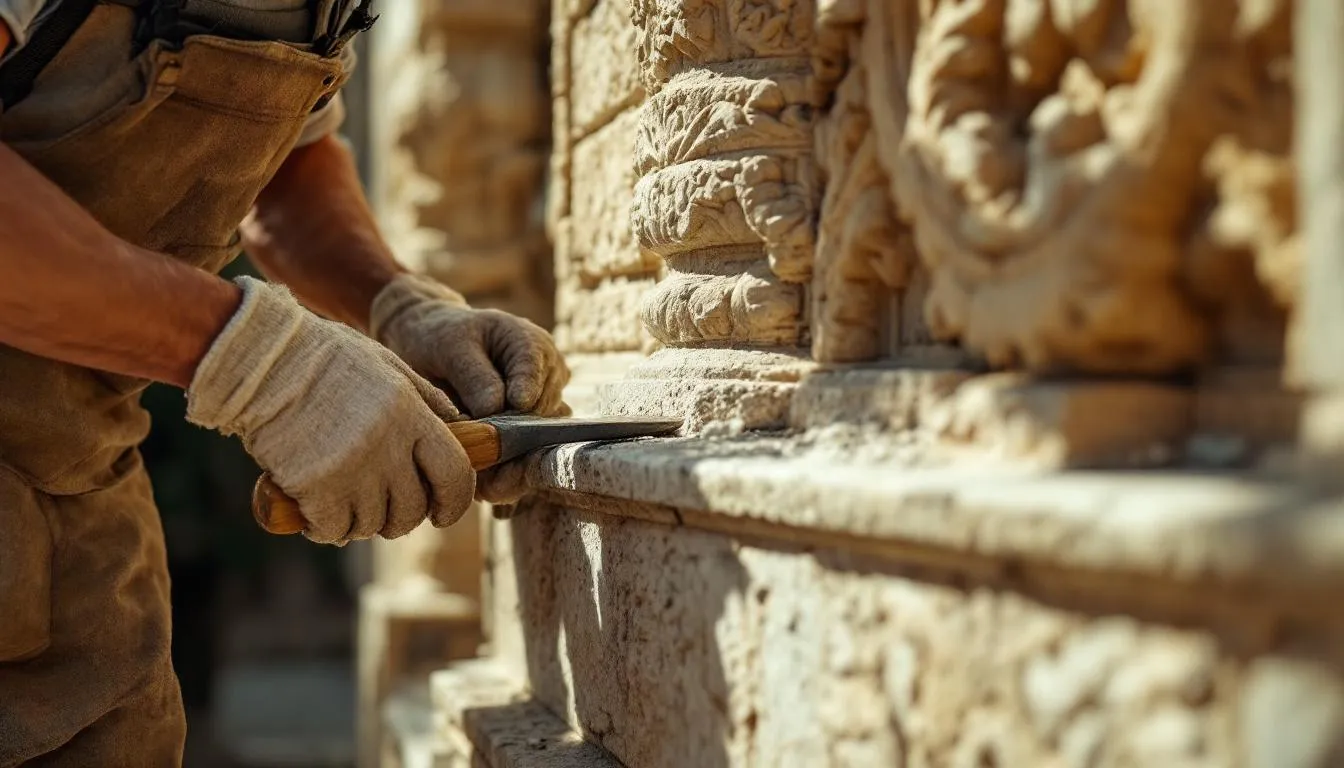
Stone restoration happens on the side of buildings that matter. You work on cathedrals, castles, historic courthouses, and structures listed on national registries. The pace is methodical, not rushed. A single wall section might take weeks. You work outdoors mostly, sometimes on scaffolding 60 feet up. Your crew is small, specialized, and usually quiet. There's an architect, a conservator, sometimes a historian on site watching every move. The work is physical but not fast. Speed is the enemy here.
Your day starts with examining the stone you are replacing or repairing. You study the mortar composition, the weathering pattern, the mineral content. You visit the quarry or supplier to find stone that matches in color, grain, and hardness. Once you have material, you hand-dress it to fit the exact space, sometimes using chisels and hammers for hours to get one stone right. You mix mortar from historical recipes, not modern bags. You lay stone using techniques that were standard in 1620 or 1890, depending on when the building was built. You point joints, shape caps, and sometimes carve new elements that match the original craftsmanship. Between jobs, you study building documentation, learn period techniques, and maintain specialized tools. The work includes climbing, reaching, precision hand-tool use, and standing for long stretches.
You need patience that most people do not have. Restoration masons enjoy solving problems slowly and get satisfaction from precision work that nobody will ever see once the building is finished. You have to respect history and be willing to learn from people who study old buildings for a living. Attention to detail is not a nice-to-have; it determines if your work lasts 50 years or 300 years. Most restoration masons are the type who own their tools, read about masonry in their off time, and can spend a full week on one section of wall without losing focus.
This is not an entry-level trade. You need to start as a general mason first, build 5-10 years of experience, then move into restoration as a specialty. Start by applying to masonry contractors, getting hired as a laborer, and moving into apprenticeship through the local masons union or a trade school program. Masonry apprenticeships run 3-4 years and include classroom hours on materials science and building codes. Once you have your journeyman card, seek work with restoration specialists. Companies like Building Restoration Specialists, Restoration Masonry, or historic preservation outfits hire experienced masons. Some regions have Heritage Skills Centers or university-based restoration programs that accept experienced masons for advanced training. Look into the Preservation Trades Network and the Association for Preservation Technology. Many restoration jobs require membership in the masons union or certification through the Historic Preservation Certification Board (HPCB). The path takes time, but there is almost no competition for restoration work once you have the skill.
Restoration work is feast or famine. A major cathedral project might keep you employed for two years. Then nothing for six months. You need financial discipline and the ability to find work between jobs. The pay is good at the top, but getting there requires years of slogging through regular masonry work. You will spend time on scaffolding in bad weather, sometimes 60 feet up with minimal safety equipment compared to modern construction standards. The physical toll is real: years of hand-chiseling, heavy lifting, and reaching overhead causes shoulder, wrist, and back problems in many masons. There is also a gatekeeping element in restoration circles. Access to the best jobs often depends on knowing the right conservators or architects. Union membership helps, but not everyone in restoration is union, and the old-school guys protect their territory. Historic preservation can also be political and slow-moving. Projects get delayed for funding, permitting, or because someone on the heritage board wants to argue about mortar composition for another three months.